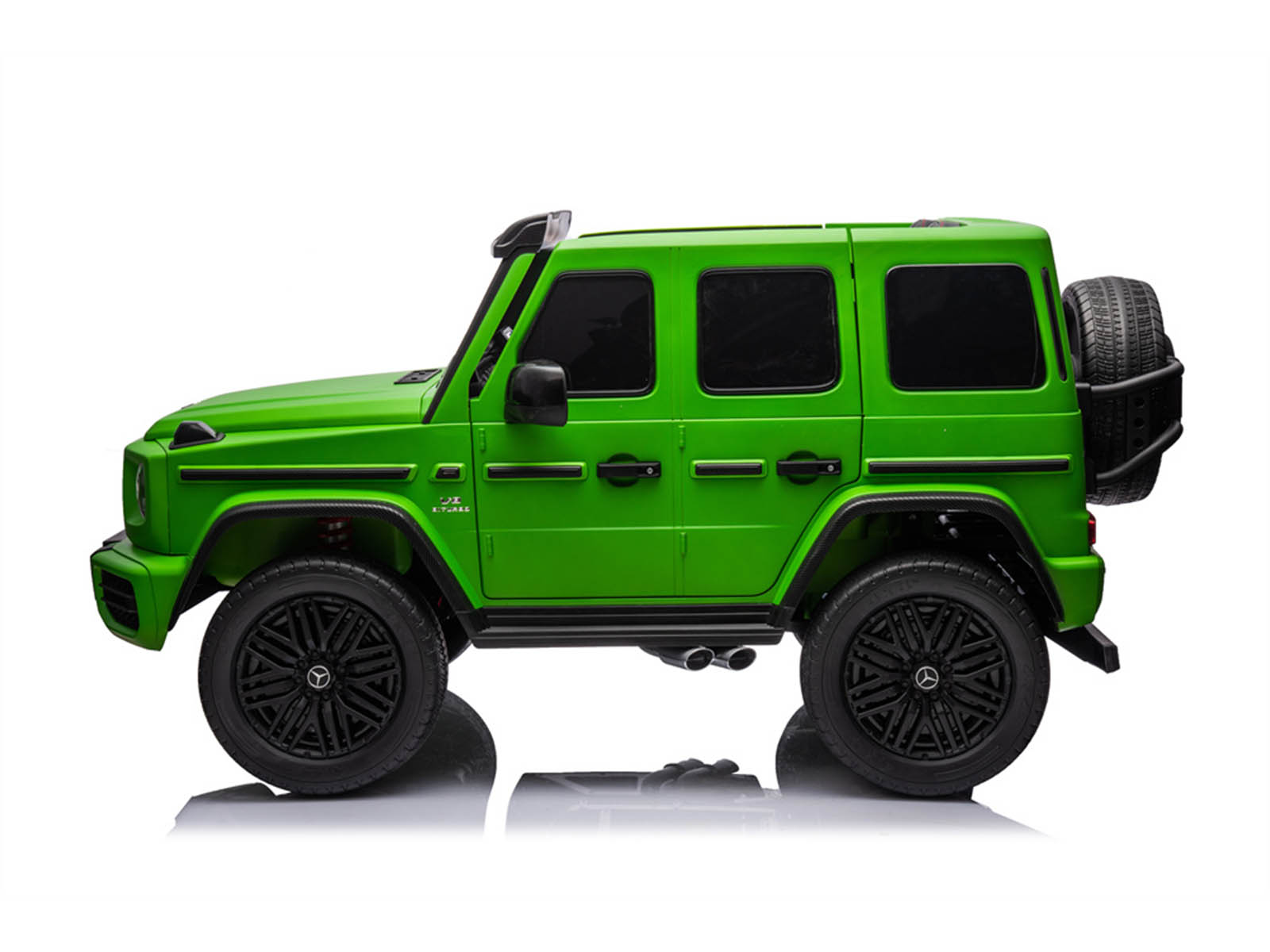
While aesthetic design often drives the initial purchase of a miniature vehicle, the actual usability is entirely dependent on its connection to the ground. You might buy a miniature truck that looks ready for an off-road adventure, only to watch it fail spectacularly on the lawn. Buyers frequently experience remorse when a vehicle that looks like an off-roader gets stuck on short grass, spins its wheels on gravel, or delivers a jarringly harsh ride on pavement due to mismatched tire specifications.
To prevent premature motor burnout and ensure the vehicle can navigate the intended environment, buyers must evaluate tire material, tread depth, and wheel diameter alongside the vehicle's power output. Understanding the mechanics of traction and clearance transforms a frustrating toy into a capable machine. Whether you are looking at a standard ride on car or a heavy-duty model, the wheels dictate performance.
Material Overrules Size for Traction: Upgrading from hard plastic to EVA or pneumatic rubber provides a higher return on terrain capability than simply increasing wheel diameter.
Larger Wheels Require Higher Voltage: Increasing wheel size raises the vehicle's center of gravity and demands more torque; a 24V ride on car is generally required to effectively drive oversized, aggressive-tread wheels without stalling.
Tread Depth Dictates Surface Compatibility: Deep, knobby treads excel in loose dirt and mud but increase rolling resistance and battery drain on smooth pavement.
Ride Quality is a System: Wheel size and tire material must be evaluated alongside the presence of physical suspension and the rim-to-tire ratio to accurately gauge ride harshness.
The Physics of Traction in a Ride On Car
Terrain capability defines how well a vehicle maintains forward momentum without wheel spin, overcomes minor obstacles, and prevents high-centering. A vehicle stuck on a small tree root lacks terrain capability. Success means the vehicle moves predictably across its intended environment without requiring constant human intervention to push it free. We measure this success through a few specific field observations.
The vehicle maintains a steady speed on a 10-degree incline without the rear wheels breaking traction.
The chassis clears standard driveway lips and small yard debris without scraping.
The steering responds accurately on loose surfaces like gravel or wet grass.
The motors operate within normal temperature ranges after 20 minutes of continuous use.
Contact Patch Dynamics
The surface area of the tire touching the ground determines grip. Wider tires distribute weight to float over loose sand and soft turf. Narrow tires sink but may cut through loose top-layers to find grip on hard-pack underneath. The contact patch must match the primary driving surface. A wide footprint prevents sinking in mud, while a narrower profile reduces steering effort on hard concrete. When you observe a vehicle struggling in soft dirt, the tires are usually too narrow, causing them to dig trenches rather than propel the chassis forward.
Material Conformity
Rigid plastic tires have a static, unforgiving contact patch. They do not bend or flex when rolling over a rock. Compressible materials like EVA and rubber conform to uneven surfaces to maximize grip. When a rubber tire hits a pebble, the material wraps around the obstacle, maintaining contact with the ground. Plastic simply bounces over it, breaking traction instantly. This bouncing effect creates a harsh ride and forces the motors to constantly re-engage under varying loads, accelerating gear wear.
Weight Distribution and Wheel Spin
The lightweight nature of a miniature vehicle exacerbates traction issues. Real cars use heavy engine weight to push tires into the pavement. Miniature cars lack this mass, making tread design critical for biting into loose surfaces rather than relying on vehicle weight. If the tread cannot mechanically lock into the dirt or grass, the lightweight wheels will simply spin. Adding weight over the drive axle can temporarily improve grip, but it also increases the load on the electric motors.
Wet-Surface Friction Limits
Wet pavement or dew-covered grass drops the friction coefficient of hard plastic to near-zero. This makes rubberized compounds or deep channels essential for safe braking and acceleration. A plastic wheel on wet grass acts like a sled. Deep treads channel water away from the contact patch, allowing the rubber or EVA material to grip the solid surface beneath the moisture. Field tests consistently show that smooth plastic wheels lose up to 80% of their tractive force on morning dew compared to dry afternoon grass.
Evaluating Tire Materials and Tread Patterns
The market offers three primary tire materials, each with distinct operational realities. Choosing the wrong material guarantees poor performance and rapid wear. You must match the tire compound to the specific ground conditions of your property.
Standard Plastic Tires with Traction Bands
Plastic wheels dominate the entry-level market. Manufacturers often add a thin rubber strip down the center to improve grip slightly. These wheels are manufactured through injection molding, making them incredibly cheap to produce and replace.
Pros: Low cost, highly durable on smooth surfaces, low rolling resistance.
Cons: High slippage on grass/gravel, loud on pavement, zero shock absorption, dangerous on sloped wet surfaces.
Best For: Indoor use, flat concrete, and highly manicured, dry lawns.
When operating on concrete, plastic wheels generate significant noise. The lack of shock absorption means every crack in the sidewalk transfers directly to the steering column and the driver. However, on perfectly flat, dry surfaces, they offer the lowest rolling resistance, maximizing battery life.
EVA (Ethylene-Vinyl Acetate) Foam Rubber Tires
EVA tires offer a massive upgrade over hard plastic. They mimic the look and feel of real rubber without the maintenance. The foam structure provides a dense, slightly compressible surface that grips well without adding excessive weight.
Best For: Mixed-use environments like pavement, grass, and packed dirt.
EVA hits the sweet spot for most residential users. It eliminates the clattering noise of plastic on pavement and provides enough bite to navigate typical suburban lawns. The primary drawback is accelerated wear if driven exclusively on highly abrasive surfaces like rough-aggregate asphalt.
Pneumatic (Air-Filled) Rubber Tires
Pneumatic tires represent the pinnacle of traction and ride comfort. They function exactly like real car tires, utilizing an inner tube or a tubeless design to hold air pressure. This air volume acts as a primary suspension system.
Pros: Maximum traction, conforms to terrain, provides natural suspension via sidewall flex, excellent wet traction.
Cons: Requires maintenance like inflation, risk of punctures, higher upfront cost.
Best For: Farm properties, gravel driveways, and rugged trails.
If you live on acreage or have a gravel driveway, pneumatic tires are mandatory. They absorb the impact of large rocks and conform to uneven ground, preventing the vehicle from getting stuck. However, you must own an air compressor and be prepared to patch occasional leaks.
Tread Aggressiveness and Lateral Stability
Smooth profiles maximize efficiency on hard surfaces. Knobby mud-terrain profiles maximize grip in loose dirt. Aggressive treads clear debris and prevent lateral sliding on inclines. Heavy treads reduce battery run-time on hard surfaces because the motor must work harder to overcome the rolling resistance of the thick rubber lugs. A deep tractor-style tread will tear through mud, but it will vibrate aggressively and drain the battery quickly on a paved driveway.
Tire Material
Ideal Terrain
Shock Absorption
Maintenance Level
Hard Plastic
Concrete, Indoors
None
Zero
EVA Foam
Grass, Pavement, Dirt
Moderate
Low
Pneumatic Rubber
Gravel, Mud, Trails
High
High (Air pressure)
How Wheel Size Impacts Clearance and Ride Quality
Wheel diameter directly alters the mechanical geometry of the vehicle. Bigger wheels change how the chassis interacts with the ground. You cannot evaluate a wheel based purely on its aesthetic appeal; you must look at the functional dimensions.
Ground Clearance and Obstacle Rollover
A larger diameter increases the approach angle. This allows the vehicle to roll over tree roots, rocks, and curbs without bottoming out. Small wheels get trapped in shallow potholes. Large wheels bridge the gap, keeping the chassis elevated and preventing the vehicle from getting stuck on uneven terrain. When a chassis bottoms out, the drive wheels lift off the ground, resulting in a complete loss of forward momentum. Increasing wheel diameter by just two inches can dramatically improve a vehicle's ability to navigate a wooded trail.
The Rim-to-Tire Ratio
Large fake-chrome plastic rims wrapped in thin EVA strips mimic modern luxury cars but offer zero shock absorption. This low-profile pitfall results in a harsh ride and fragile performance on gravel. The thin strip of material cannot compress enough to absorb impacts. Conversely, smaller rims paired with taller, thicker tires allow the tire sidewall to deform under loads. This high-sidewall advantage soaks up bumps and protects the chassis from impact damage. A thick sidewall acts as a pneumatic spring, isolating the driver from harsh terrain.
Center of Gravity Trade-offs
While larger wheels increase clearance, they raise the vehicle's center of gravity. A taller vehicle carries a higher risk of tipping on lateral inclines. You must balance the need for ground clearance against the stability required for side-hill driving. If your property features steep, uneven hills, a wide stance with moderate wheel height provides better safety than a narrow stance with massive wheels.
Steering Resistance and Mechanical Leverage
Wider, heavier tires increase the force required to turn the front wheels. This accelerates wear on the steering linkage. If the vehicle features electric steering assistance, heavy wheels will strain the steering motor. Drivers will find it physically harder to navigate tight turns when the vehicle sits on massive, heavy rubber tires. The mechanical leverage works against the steering column, often leading to bent tie rods if the driver forces the wheel while stationary on high-friction surfaces like dry concrete.
Matching Wheel Specifications to Power Output
Tire grip, wheel size, and electrical power share a critical relationship. Upgrading wheels without considering power leads to mechanical failure. The electrical system must have the capacity to drive the mechanical load.
Torque Requirements for Larger Wheels
Larger, heavier wheels require more rotational force to start moving. They also demand more torque to maintain speed on inclines. The physics of rotational mass dictate that a heavy rubber tire needs a robust motor to spin it, especially when the aggressive tread bites hard into the dirt. If you install heavy pneumatic tires on a weak motor, the motor will draw excessive current, overheat the wiring, and eventually burn out the internal windings.
When a 12V System is Sufficient
A standard 12V ride on car is perfectly adequate for standard-sized EVA or plastic wheels operating on flat to moderately uneven terrain. The 12-volt motors provide enough torque to turn lightweight wheels efficiently without overheating, provided the terrain does not offer extreme resistance. For neighborhood sidewalks, paved driveways, and flat, dry lawns, a 12-volt system paired with EVA tires delivers excellent run-time and reliable performance.
Why Aggressive Treads Demand Higher Voltage
Pairing heavy, oversized rubber tires with a 12V system leads to sluggish performance and overheating. A 24V ride on car provides the necessary torque to push aggressive treads through high-resistance terrain like mud, thick grass, or steep hills. The higher voltage ensures the gearboxes do not stall when the tires dig in. The 24-volt system pushes more wattage to the motors, allowing them to overcome the increased rolling resistance of deep rubber lugs without exceeding their thermal limits.
Implementation Risks: Upgrading and Maintenance
Modifying wheels introduces mechanical risks. You cannot simply bolt on heavier tires without considering the downstream effects on the drivetrain. Every modification shifts the weak point in the mechanical chain.
Post-Purchase Tire Upgrades
Swapping plastic wheels for rubber carries the risk of stripping standard gearboxes. Factory gearboxes are often engineered with the assumption that plastic wheels will slip under heavy load. This slippage acts as a mechanical fuse, protecting the motor. When you install high-grip rubber, the tire stops slipping, and all that stress transfers directly to the plastic gears. We frequently see shattered nylon gears in vehicles that were upgraded to pneumatic tires without corresponding gearbox reinforcements.
Drivetrain and Steering Stress
Maximum traction means zero slip. If a rubber wheel gets wedged in a rut, the torque transfers directly to the drivetrain. We recommend upgrading gearboxes with metal gears if moving to high-grip pneumatic tires. You should also reinforce the steering column, as the added grip makes turning the wheels much harder while stationary. Upgrading the steering linkages to steel rods prevents bending under the increased lateral loads.
Maintenance Realities
Pneumatic tires require ongoing maintenance. You must check the PSI regularly and patch leaks if you run over thorns or nails. Under-inflated tires increase rolling resistance, draining the battery rapidly and causing the motors to run hot. EVA and plastic wheels offer a zero-maintenance reality. Consider your willingness to perform routine maintenance before committing to air-filled rubber tires. If you want a vehicle that can sit in the garage for weeks and be ready to drive instantly, stick with EVA foam.
Conclusion
Measure the average grass height and note any incline grades on your property before selecting a vehicle.
Select EVA tires for flat, paved, or manicured environments to maximize battery efficiency and eliminate maintenance.
Specify pneumatic rubber tires and a 24-volt electrical system if operating on acreage, gravel, or steep hills.
Inspect the rim-to-tire ratio on potential models, avoiding low-profile plastic rims in favor of high-sidewall designs for better shock absorption.
Verify that any aftermarket wheel upgrades are paired with metal gearbox replacements to prevent drivetrain failure.
FAQ
Q: Can a 12V ride on car drive on thick grass?
A: It can struggle. Thick grass creates high rolling resistance. While a 12V system with EVA tires handles short, manicured lawns, thick or unkempt grass usually requires the higher torque of a 24V system paired with aggressive tire treads to maintain steady momentum without overheating the motors.
Q: Are bigger wheels always better for ride on cars?
A: No. Bigger wheels increase ground clearance and rollover capability, but they also raise the center of gravity, making the vehicle more prone to tipping. They add rotational mass, which strains smaller 12V motors and steering components, leading to premature mechanical wear.
Q: What is the difference between EVA tires and real rubber tires on a ride on car?
A: EVA tires are made of dense, puncture-proof foam that mimics rubber. They offer good grip and zero maintenance. Real rubber tires are usually pneumatic, providing superior traction and natural suspension, but they require regular inflation and can go flat if punctured.
Q: Can I replace the plastic wheels on my ride on car with rubber ones?
A: Yes, but proceed with caution. Plastic wheels are designed to slip, which protects the plastic gears in the motor from snapping under heavy load. Upgrading to rubber provides massive grip, meaning you must also upgrade to metal gearboxes to prevent breakage.
Q: Do rubber tires make a ride on car drain the battery faster?
A: Yes. Rubber tires are heavier and grip the surface aggressively. This increased traction and rotational mass require the motors to work harder, drawing more current from the battery and reducing the overall run-time compared to lightweight, slippery plastic wheels.
Q: Why does my ride on car spin its wheels on wet grass even with large tires?
A: Wheel size does not guarantee grip. If the large tires are made of hard plastic, they will slide on wet grass because plastic cannot conform to the surface. You need compressible materials like EVA or rubber with deep treads to find traction in wet conditions.