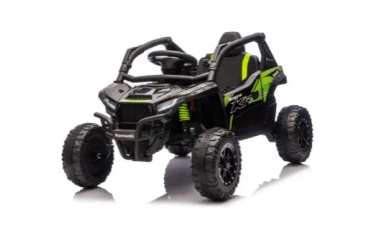
A malfunctioning toy vehicle breaks a child's heart. You might feel tempted to throw the toy away entirely. A broken kids ride on car often looks like a total loss. However, most issues stem from a few easily isolated electrical or mechanical failures. We want to help you fix it safely.
This guide provides a systematic troubleshooting approach. You will learn how to identify the exact point of failure. We focus on isolation testing techniques. This helps you decide whether you need to replace a specific component or the entire toy.
Guessing wastes money. Buying random replacement parts rarely solves the root issue. A methodical approach using a standard digital multimeter prevents unnecessary part replacements. It also ensures proper electrical safety during your repair. Read on to master these diagnostic steps. We will help you get your vehicle running again quickly.
Key Takeaways
Over 70% of ride on car failures are related to degraded batteries, blown thermal fuses, or mismatched chargers.
Accurate diagnosis relies on isolation testing (e.g., bypassing the foot pedal to test the motor directly).
A fully charged 12V battery must read between 12.6V and 12.8V on a multimeter; anything significantly lower indicates a dead cell.
Physical impacts can cause micro-damage, such as cold solder joints on the main control board, requiring careful visual inspection.
Essential Tools and Safety Preparation for a Kids Ride On Car
Before disassembling any toy, you must secure your workspace. Electrical repairs require basic safety protocols to prevent injury or component damage. Preparing properly saves you time and eliminates guesswork later.
Safety First (Risk Mitigation)
Children's toys carry genuine electrical risks. You must respect the power delivery systems inside them. Always disconnect the battery before inspecting wiring or control boards. This prevents accidental short circuits.
Work in a dry, well-ventilated space. Lead-acid batteries can off-gas during heavy charging or severe failure. Wear safety glasses and insulated gloves. You might encounter leaking acid or heavily corroded battery terminals. Protecting your skin and eyes remains non-negotiable.
Best Practice: Take clear photos of wire connections before unplugging them. This visual record ensures you reassemble the wiring harness correctly.
Common Mistake: Never probe circuit boards while the charger is plugged into the wall. You risk frying the proprietary chips.
The Diagnostic Toolkit
You do not need a professional garage setup. A few specific items will cover almost every diagnostic scenario.
Digital Multimeter: Non-negotiable for testing voltage, continuity, and switch logic. Buy one reading DC voltage accurately.
Basic Hand Tools: Phillips head screwdrivers, needle-nose pliers, and standard wire strippers.
Consumables: Electrical tape, dielectric grease, and a simple baking soda and water mixture. You will use the mixture for cleaning battery terminal corrosion.
Symptom-Based Diagnostics: Where to Start Your Evaluation
Diagnosing a faulty ride on car requires a logical path. You must look at the external symptoms to narrow down your internal search. Use the chart below to find your starting point.
Observed Symptom
Primary Evaluation Target
First Diagnostic Action
Completely Dead (No Lights, No Sound)
Power Delivery System
Test battery voltage and thermal fuse.
Dashboard Lights On, Won't Move
Drive Signal / Switches
Test foot pedal switch continuity.
Intermittent or Slow Movement
Battery Health / Mechanical Gears
Check for voltage drop under load.
Parental Remote Unresponsive
RF Receiver / Controller Sync
Re-pair the remote to the board.
Scenario A: The Car is Completely Dead (No Lights, No Sound)
This scenario indicates a total loss of power. Check the primary power delivery first. Electricity is not reaching the main distribution board. Test the battery voltage using your multimeter. Next, inspect the main wiring harness for disconnected plugs. Finally, check for a blown thermal fuse near the positive battery terminal.
Scenario B: Dashboard Lights On, But the Car Won't Move
Power is reaching the board, but the drive signal is failing. The brain of the toy works. However, it does not know you want to drive. Target the foot pedal switch. You should also check the high/low-speed toggle switch. Finally, inspect the physical motor connections for loose spade connectors.
Scenario C: The Car Moves, But Only Intermittently or Slowly
Intermittent power usually points to a dying battery dropping voltage under load. The battery might show a good resting voltage but fail when stressed. Alternatively, this indicates stripped gears in the gearbox. Loose or corroded wire connections also cause stalling over bumpy terrain.
Scenario D: The Car Works, But the Parental Remote is Unresponsive
This strictly isolates the issue to the communication layer. The mechanical and electrical drive systems function perfectly. You must evaluate the RF or Bluetooth receiver on the control board. Sometimes, the remote itself simply has dead AA batteries or water damage.
Resolving Power Supply Failures (Batteries, Chargers, and Fuses)
Power supply problems cause most toy vehicle failures. If you master testing the battery and charger, you will solve most headaches quickly.
Battery Evaluation Criteria
You must test the resting voltage properly. Set your multimeter to DC voltage. Touch the red probe to the positive terminal. Touch the black probe to the negative terminal.
A healthy 12V battery should show 12.6 to 12.8V. A reading below 9V usually means the battery cannot be salvaged. It requires a direct replacement. Deeply discharged lead-acid cells undergo sulfation. This chemical process permanently ruins their ability to hold a charge.
You must check your expectations regarding battery life. The average physical lifespan of a lead-acid toy battery is roughly two years. This assumes proper maintenance. If your unit is older, it likely needs replacing.
Charger Verification
A bad charger will slowly kill a good battery. Verify the charger output voltage matches the battery. Never mix 6V and 12V components. Pushing 12V into a 6V system causes permanent thermal damage. It melts wires and destroys chips.
Plug the charger into your wall outlet.
Set your digital multimeter to DC volts.
Insert the positive probe into the charger's barrel plug center.
Touch the negative probe to the outside metal barrel.
Verify the reading matches the expected output (usually slightly above 12V).
If you see zero volts, power is not flowing. You must replace the charger.
Fuse Inspection
Locate the thermal fuse. You will usually find it inline near the battery positive terminal. It looks like a small black box or an automotive blade fuse. Test it for continuity. Set your multimeter to the continuity setting (the sound wave icon). Touch a probe to each side of the fuse. A continuous beep means it works. If it remains silent, the fuse is broken or burnt. Replace it with an identical amperage rating.
Motor, Pedal, and Control Board Repairs
If your power supply works perfectly, you must move down the electrical chain. The signal path dictates how power reaches the motors.
Isolation Testing the Foot Pedal (Accelerator)
The foot pedal is merely a simple on/off switch. Dust and sand frequently ruin these internal contacts. Disconnect the pedal switch from the wiring harness. You will see two wires. If bypassing the switch causes the motor to spin, you found the problem.
To bypass it, connect the two harness wires directly using a paperclip or jumper wire. If the wheels spin instantly, the pedal switch is the verified failure point. It needs replacement. This isolation method proves the motors and main board still function.
Testing Motors and Gearboxes
You can test the motors independently of the complex electronics. We call this the direct test. Disconnect the motor from the control board. Apply 12V directly to the motor terminals from a known-good battery. If it runs smoothly, the electrical motor is fine.
Listen closely while the motor spins. Grinding noises indicate stripped plastic gears inside the gearbox housing. Electrical motor failure usually presents as total silence or smoking. Grinding requires replacing the specific plastic gearset, not the entire electrical motor.
Diagnosing the Main Control Board
The main control board houses relays. These relays click to send power to the drive wheels. Use the "click" test to evaluate it. Pressing the pedal should produce an audible click from the control board relays. No click often means a dead board. It could also mean a failure in the pedal signal.
Physical impacts complicate things. Children often drop or kick these toys. For cars damaged by physical impact, inspect the board closely. Look for cold solder joints. These look like cracked, dull metal dots where pins meet the green circuit board. If the proprietary board is fried beyond repair, do not panic. Replacing it with a cheap universal control board is a highly viable DIY workaround.
Parental Remote Control and Steering Fixes
Parents rely on the remote control for safety. When the remote drops its signal, the toy becomes a hazard. Restoring this connection requires basic syncing procedures.
Resetting and Re-pairing the Remote
Remotes lose their Bluetooth pairing easily. You can fix this by following the standard pairing protocol.
First, turn the car completely off. Hold the remote pairing button for two to four seconds. Wait until the remote LED flashes rapidly. Next, turn the car on. The receiver board will scan for the remote. The LED stops flashing when pairing is successful. Test the steering left and right to confirm.
Fixing Water-Damaged Remotes
Kids frequently leave remotes outside in the rain. Water corrodes the internal copper traces quickly. You must take immediate action. Remove the batteries immediately to stop galvanic corrosion. Wipe the exterior completely dry.
Use low heat from a hair dryer to dry the internal PCB. Once dry, clean the metal battery contacts. Use high-percentage isopropyl alcohol on a cotton swab. This removes microscopic corrosion. It prevents long-term electrical resistance issues.
Steering Column Maintenance
A kids ride on car takes heavy abuse on its front wheels. If turning feels stiff, check the mechanical linkages. Check for bent steering rods causing binding underneath the chassis.
Apply silicone spray lubricant to the steering linkages. You must avoid petroleum-based greases. Petroleum grease remains sticky. It attracts dirt, sand, and hair. This debris will eventually lock up the plastic steering rack.
When to Repair vs. Replace (and Preventative Maintenance)
You must balance the effort of a repair against the cost of new parts. Some repairs make immediate sense. Others lead to endless frustration.
Evaluation Framework (Cost-to-Outcome)
Evaluate your situation based on the cost-to-outcome ratio. Replace basic parts whenever possible. Batteries, switches, and standard motors are cheap. They are universally available online. Replacing them is highly cost-effective and restores full functionality instantly.
However, know when to replace the car. If the chassis is structurally compromised, safety becomes an issue. Cracked plastic frames cannot hold weight securely. If the proprietary wiring harness and dual-motors are simultaneously burnt out, walk away. A new vehicle is often the safer, more economical choice in these severe scenarios.
Upgrades and Longevity Hacks
You can improve your toy vehicle to prevent future damage. A simple traction upgrade protects the plastic gears. Wrap hard plastic wheels with cut-up rubber mountain bike tires. Screw them securely into the plastic. This provides superior grip on concrete. It prevents the wheels from spinning wildly without overloading the motors.
Focus heavily on battery care. Charge the battery for 8 to 12 hours after use. Never exceed 24 hours plugged into the wall. Modern cheap chargers rarely float voltage; they just keep pushing current. This causes overcharging and battery swelling. Store the toy in a temperature-controlled environment during winter to prevent deep freezes.
Conclusion
Repairing a child's toy vehicle requires patience and a structured approach. Always summarize your diagnostic hierarchy. Test the power delivery first. Verify the electrical signal second. Check the mechanical output third.
Home repairs on a child's ride on car are highly feasible. You only need basic tools to locate the fault. Remember to use isolation testing to pinpoint the exact broken part. This extends the lifespan of the toy significantly. You will save substantial replacement costs. Gather your multimeter today and bring that toy back to life.
FAQ
Q: Can I use a real car battery charger on a kids ride on car?
A: No. Automotive chargers push too much amperage. They will severely damage the small lead-acid or lithium batteries used in ride-on toys. Pushing high amps causes the small cells to boil, swell, or rupture. Use only the OEM charger or an exact-spec aftermarket alternative.
Q: Why are the wheels spinning but the car isn't moving?
A: This is usually a traction issue or a stripped gearbox. For traction, the hard plastic wheels may be slipping on smooth surfaces. Consider the rubber tire modification. If you hear grinding noises, the internal plastic gears in the motor housing are likely stripped and need replacement.
Q: How often should I charge the ride on car battery?
A: Charge it after every significant use. A full cycle typically takes 8-12 hours. Do not leave it plugged in continuously for days. Charge it at least once a month during off-season storage to prevent deep discharge and permanent sulfation.