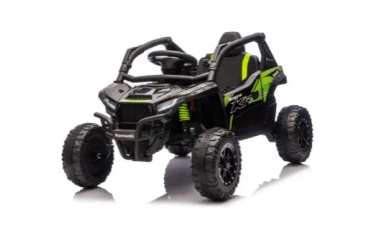
Your child presses the accelerator. The vehicle barely crawls across the thick lawn. They have clearly outgrown the stock speed limits. Most factory models max out around a sluggish four miles per hour. Upgrading feels completely logical. Buying a brand-new, high-end model often proves heavily cost-prohibitive. Increasing power is not merely dropping a bigger battery under the seat. Ignoring the supporting mechanical systems creates severe structural risks. You easily face stripped gears, melted motors, and hidden safety hazards. A balanced approach protects both your child and their beloved vehicle.
This guide breaks down the complex physics of upgrading a kids ride on car. We provide a step-by-step decision framework. You will safely boost torque, speed, and runtime. You will learn to match electrical components to mechanical durability constraints. We carefully structure these upgrades based on your budget and personal technical comfort level.
Key Takeaways
Voltage = Speed, Amperage = Runtime: Upgrading from 12V to 18V or 24V increases speed, while increasing Amp-hours (Ah) extends playtime.
Support Systems are Mandatory: Boosting voltage without upgrading to an Electronic Speed Controller (ESC) or soft-start module will destroy stock plastic gears and 550-class motors.
Traction vs. Torque: Modifying tires for better grip can eliminate the natural "slip clutch" effect, placing all mechanical stress directly on the gearbox.
Drill Battery Hacks Carry Risks: Power tool battery adapters are cheap and popular but require strict voltage regulation to remain safe.
Pre-Upgrade Assessment: Is the Vehicle Structurally Ready?
Before buying any aftermarket parts, you must evaluate baseline constraints. Most stock ride on car chassis utilize injection-molded plastic. Pushing these weak frames past 24V often causes complete structural failure under high torque. Plastic motor mounts warp under immense twisting stress. You must inspect the undercarriage closely. Look for white stress marks near the rear axles. These marks indicate severe structural fatigue.
You must understand the "weakest link" engineering rule. Upgrading one component shifts mechanical stress directly to the next weakest point.
Battery Upgrades: Providing more voltage makes the stock motor your new weakest link. Heat builds up rapidly.
Motor Upgrades: Adding stronger motors transfers intense torque to the fragile plastic gearbox.
Tire Upgrades: Adding extreme grip prevents necessary tire slip. This snaps gearbox teeth instantly upon acceleration.
Keep warranty and safety concerns firmly in mind. Electrical modifications instantly void all manufacturer warranties. Before doubling vehicle top speeds, honestly evaluate your child. Do they possess adequate steering reflexes? Set up a small cone course. Time their reaction speeds. Can they handle sudden acceleration without panicking? Safety should always dictate your final upgrade choices. You must prioritize helmets and protective gear once speeds exceed a normal walking pace.
Not everyone feels ready for complex electrical overhauls. You can utilize several low-cost, zero-risk modifications. These tweaks boost performance without cutting any wires.
Friction Reduction
Friction silently steals valuable speed. Wheel axles collect dirt, hair, and debris over time. Remove the wheels entirely. Clean the metal axles thoroughly. Apply high-quality silicone-based lubricants on wheel axles and external gearbox bearings. This simple maintenance frees up lost RPMs instantly. Avoid petroleum-based greases. They rapidly degrade plastic components over time and attract abrasive dust.
Weight Management
Lighter vehicles naturally accelerate much faster. Factory vehicles often carry heavy cosmetic plastics. Remove redundant cosmetic accessories to shed excess pounds. You can also upgrade to a lighter battery chemistry. Swapping a heavy Lead-Acid unit for a modern LiFePO4 battery saves significant weight. A 12V 12Ah lithium battery weighs roughly one-third of its lead-acid counterpart. It also delivers more consistent power output during long play sessions.
Traction Optimization
Stock vehicles struggle notoriously on wet grass. Hard plastic wheels lack basic grip. Adding custom traction bands dramatically improves incline climbing capabilities. Wrap heavy-duty bicycle inner tubes around the center tread of the plastic wheels. Secure them tightly using heavy-duty glue or low-profile screws. This method improves traction without heavily overloading the drivetrain. Heavy solid rubber tires grip too well. They eliminate necessary slipping mechanisms. They frequently break plastic gears under heavy load.
Tier 2 Solutions: Battery Upgrades & Voltage Math
Upgrading the primary battery represents a core upgrade decision. You must choose the right wiring setup to achieve your specific performance goals.
The Series vs. Parallel Distinction
Wiring dictates whether you gain top speed or extended playtime. Understanding circuit physics prevents costly wiring mistakes.
Wiring Method
Configuration Style
Primary Benefit
Resulting Output (Dual 12V Setup)
Series Circuit
Positive terminal to Negative terminal
Increases Top Speed
24V (Yields ~75-80% speed boost)
Parallel Circuit
Positive terminal to Positive terminal
Increases Total Runtime
12V (Yields doubled playtime)
Series wiring boosts motor speed significantly. You must account for mechanical friction loss. You rarely see a pure 100% speed doubling. Expect roughly an 80% speed increase. Parallel wiring keeps the system voltage identical. It doubles the available Amp-hour capacity instead. Use thick 10-AWG or 12-AWG wires for all custom connections.
Sealed Lead Acid (SLA) vs. Lithium-Ion
Stock SLA batteries offer incredibly reliable safety. They handle abusive charging cycles relatively well. They rarely pose spontaneous fire risks. Lithium-Ion alternatives save immense weight. They provide steady voltage until completely dead. However, they require precise voltage monitoring. You must use a Battery Management System (BMS). Without a BMS, over-discharging lithium cells causes permanent damage or severe fire hazards.
The Power Tool Battery "Hack" Evaluated
Many parents try the incredibly popular 18V drill battery adapter hack. Ryobi, Milwaukee, and DeWalt batteries fit easily into cheap aftermarket docks.
Risk Warning: Tool batteries lack built-in low-voltage cutoffs inside the pack itself. They discharge massive currents rapidly. This extreme power dump frequently fries stock wiring harnesses.
Solution: You must always pair battery adapters with a 30A inline fuse. Add a step-down converter to manage dangerous voltage spikes effectively. Install a separate low-voltage alarm to protect the tool battery from deep discharging.
Tier 3 Solutions: Motors, Gearboxes, and Thermal Management
High-intent buyers must carefully match mechanical parts to their upgraded electrical output. Upgraded batteries absolutely demand heavy-duty support systems.
Motor Upgrades (550 vs. 775 Series)
Stock vehicles typically utilize 550-class motors. These motors survive perfectly fine at 12V inputs. Pushing them to 18V invokes the squared heat physics rule. Upgrading from 12V to 18V increases heat generation by 2.25 times. The stock internal brushes simply melt under this thermal load. We strongly recommend upgrading to 775-series motors. They feature larger internal cooling fans. They provide superior heat dissipation. They handle 24V torque loads much more reliably. Pay close attention to motor RPM ratings when purchasing replacements.
Gearbox Reinforcement
Stock plastic gears shear easily under high torque loads. The added stress snaps the fragile teeth instantly. You need specific steel-gear replacement kits. Look primarily for 7R steel gearboxes. You must also adjust your final gear ratios based on local driving conditions. Choose lower ratios (fewer teeth) for aggressive hill climbing and thick grass. Select higher ratios (more teeth) for maximum flat-ground pavement speed. Always pack new metal gearboxes with premium lithium grease.
The Role of Tires as "Physical Clutches"
Plastic wheels intentionally slip on pavement. Factory engineers design them to act as physical clutches. They absorb excess torque safely. Never upgrade to spiked wheels or pure rubber tires without installing a metal gearbox first. The extra grip transfers 100% of the mechanical twisting stress inside the chassis. Plastic gears will shatter immediately upon the first hard acceleration.
The Crucial Safety Component: Electronic Speed Controllers (ESC)
Protecting your financial investment and your child is strictly paramount. Proper electrical management separates dangerous amateur hacks from professional upgrades. Demonstrating respect for electrical engineering prevents devastating accidents.
The Problem with Stock Switches
Standard kids vehicles use rudimentary binary pedal switches. They only recognize fully "On" or fully "Off" states. Applying 24V directly through a binary switch causes a violent launch sequence. This instantaneous power delivery causes severe neck whiplash for small children. It also destroys gearboxes aggressively upon initial acceleration. The vehicle jerks violently backward.
How an ESC / Soft-Start Module Works
You absolutely need an Electronic Speed Controller (ESC). A soft-start module utilizes a technology called Pulse Width Modulation (PWM). Alternatively, you can install a hall-effect variable pedal. These advanced modules smooth out the raw power delivery. The vehicle ramps up to its top speed gradually over three seconds. It behaves exactly like a real car throttle.
Implementation Guidelines
Purchase specifically rated 25A to 60A control boards. These specific amperage ratings safeguard your electrical harness perfectly. They keep the mechanical drivetrain entirely intact while delivering thrilling performance. Ensure you mount the ESC board in a well-ventilated area under the seat. ESC boards generate moderate heat during continuous operation.
Decision Framework: Choosing Your Upgrade Path
Selecting the right modifications prevents completely wasted money. Follow this strategic logic to shortlist your immediate next steps.
Stage 1 (Budget/Grass Focus): Focus purely on grip and maintenance. Add custom traction bands to the rear wheels. Install a fresh 12V SLA battery. Apply silicone lube generously to all moving parts. This specific setup suits slight inclines and tight budgets perfectly. You require zero electrical knowledge here.
Stage 2 (Moderate Speed Boost): Focus on mild voltage increases. Install an 18V power tool adapter securely. Wire in a 30A inline fuse directly to the positive terminal. Add a basic soft-start module immediately. This stage fits intermediate DIYers comfortably. It provides noticeable speed bumps without demanding full gearbox replacements.
Stage 3 (Complete Overhaul): Focus on extreme durability and speed. Build a dedicated 24V battery bank. Mount upgraded 775-series motors. Install heavy-duty steel 7R gears. Wire a fully variable ESC pedal system. This intensive path serves serious hobbyists aiming for maximum possible performance. It requires soldering skills and basic circuit understanding.
Conclusion
Increasing the power of a ride-on vehicle requires strategic engineering balance. You must carefully match higher voltage inputs against mechanical durability limits. Upgrading one single part inevitably exposes the next weakest link in the chain.
Evaluate the existing chassis strength before buying aggressive electrical upgrades.
Mandate safety through inline fuses, thick wiring, and soft-start modules.
Match your tire grip strictly to your specific gearbox material strength.
Prioritize physical helmet usage and upgraded braking considerations for your child.
Safety must always dictate your ultimate upgrade budget and timeline. Assess your child's vehicle chassis today. Determine realistically which upgrade tier serves your specific family best. A well-planned upgrade brings years of joy. Start small, test your modifications thoroughly in a safe area, and enjoy the substantially faster ride.
FAQ
Q: Will doubling the voltage from 12V to 24V double the speed?
A: No, basic physics dictates otherwise. While you double the raw voltage, mechanical friction, motor heat, and load losses constantly consume power. You will typically see roughly a 75-80% increase in actual top speed, rather than a perfect 100% doubling.
Q: Can I just plug an 18V drill battery into a 12V ride-on car?
A: Yes, but doing so without an inline fuse and a soft-start module remains highly dangerous. The incredibly rapid discharge rate will likely burn out the stock 550 motors and shear the plastic gears very quickly.
Q: Why is my kid's ride-on car suddenly slipping and not moving forward?
A: You likely have fully stripped plastic gears inside the gearbox enclosure. When you introduce too much torque or excessive tire traction, the fragile plastic teeth shear off. It is absolutely time to upgrade to heavy-duty metal gears.
Q: Does adding a second battery in parallel make the car faster?
A: No, parallel wiring only increases the total Amp-hour (Ah) capacity. The system voltage remains identical to a single battery. You gain significantly more driving time per charge, but you do not gain any additional top speed.