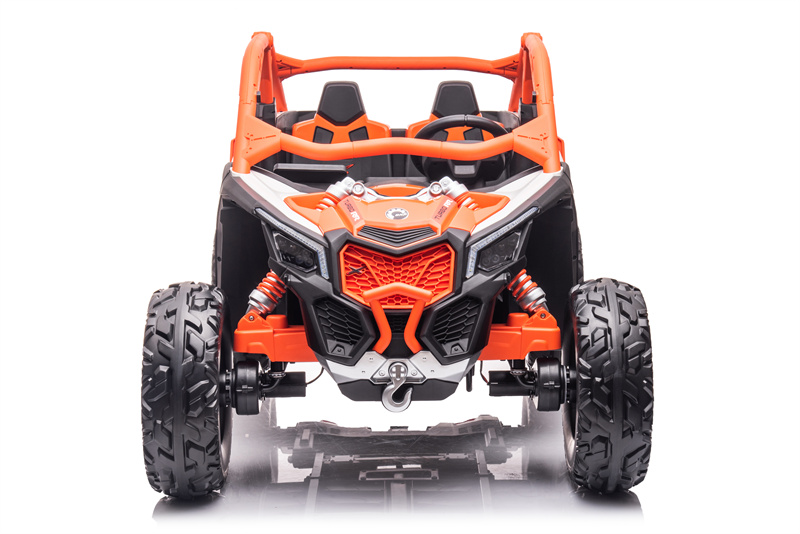
Kids grow up incredibly fast. Before you know it, they outgrow the speed and torque of their original 12V setup. They might start struggling on grass. They might get stuck on uneven terrain. Often, they simply crave a faster, more exciting driving experience. You might think upgrading an electric car for kids is easy. Many parents assume they can just drop in a larger battery. This is a dangerous misconception.
A safe 24V conversion requires extensive planning. It demands new electrical components and careful wiring. Our guide provides a transparent, step-by-step evaluation of what a proper upgrade actually requires. We will show you how to safely enhance performance. You will also learn the hidden risks of DIY modifications. Finally, we will help you decide whether a full wiring overhaul makes sense, or if upgrading directly to a factory 24V vehicle is the smarter path.
Key Takeaways
**Battery-only swaps are a fire hazard:** Stock 12V control boards have a maximum tolerance of around 18V; applying 24V directly will cause components to smoke and fail.
**A true upgrade requires a system overhaul:** Safe conversions require 14AWG wiring, upgraded 775 motors, high-amp fuses, and step-down converters to preserve lights and sounds.
**18V/20V is often the "sweet spot":** Using power tool batteries (e.g., Dewalt/Milwaukee) via adapters offers a noticeable speed bump with a lower risk of destroying stock gearboxes.
**The DIY vs. Buy threshold:** When factoring in the cost of a full conversion kit, motors, and labor, buying a purpose-built 24V ride on car with factory safety features (like soft-start) is often the more pragmatic choice.
The Reality Check: Can Your 12V Ride on Car Handle a 24V Battery?
Many DIY enthusiasts fall for the plug-and-play myth. They believe more voltage simply equals more speed. They assume they can connect a massive battery without any negative consequences. This assumption often ends in melted plastic, smoke, and disappointed children.
Factory 12V motherboards are highly sensitive. Manufacturers design them to handle a specific electrical load. Most standard control boards have a maximum voltage tolerance of around 18V. If you introduce a 24V load directly into this system, the motherboard will instantly burn out. The internal relays and microchips cannot process the sudden surge in power. You will likely hear a pop, followed by the distinct smell of burning electronics.
Beyond the motherboard, you must consider gearbox and motor stress. Stock vehicles typically use standard 550-size electric motors. These motors are completely inadequate for a 24V power source. When you double the voltage, you drastically change the acceleration dynamics. This creates a severe "torque snap." The motor spins violently the second your child presses the pedal. The plastic gears inside the factory gearbox cannot withstand this sudden kinetic impact. The teeth on the gears will strip off almost immediately. You will be left with a motor spinning freely and wheels doing nothing.
Finally, we must address the warranty. Modifying the electrical system voids the manufacturer's warranty instantly. Companies build these toys under strict safety guidelines. Any aftermarket modification shifts liability entirely to you. If a modified toy malfunctions, the manufacturer will reject any claims. You take on total responsibility for the vehicle's safety.
Core Components Required for a Complete 24V Upgrade
Upgraded Motors and Gearboxes
You cannot use original components for a reliable upgrade. You must swap the stock 550 motors for heavy-duty 775 motors. The 775 motors feature thicker internal coils. They dissipate heat much better under heavy loads. Upgrading the motors also requires paying close attention to the gearbox. You must match the gear pitch perfectly. Most successful heavy-duty conversions use an RC 5mm bore with a 32-pitch gear. If you ignore this alignment, the gears will grind against each other and fail.
24V Speed Controllers and Wiring
The original wiring harness is basically useless for a 24V system. You face an absolute necessity of replacing the factory motherboard. You have two main options. You can install a dedicated aftermarket 24V controller. Alternatively, you can wire a robust 6-pin relay system to manage the power distribution manually.
Wire thickness is a critical safety factor. Stock toys often use extremely thin wire, sometimes 18AWG or 16AWG. You must upgrade all core power lines to at least 14AWG wire. Thicker wire creates less resistance. Less resistance means less heat. If you push 24V through stock wiring, the high amperage draw will literally melt the insulation. This creates a severe short-circuit hazard.
Fuses and Step-Down Converters
You must prioritize safety at the battery source. Mandatory installation of inline fuses is non-negotiable. You should install a 30A or 40A inline fuse directly off the positive battery terminal. If the motors stall or draw too much power, this fuse will pop. It cuts the power instantly, saving your wiring from a catastrophic meltdown.
You also need to protect the toy's accessories. Factory LED lights and the radio sound board run on 12V. If you send 24V into these circuits, they will explode. Implementing a 24V-to-12V step-down converter is the only solution. This transformer isolates the accessory circuit. It takes the 24V main power and safely regulates it down to exactly 12V for the lights and sounds.
Power Tool Batteries (18V/20V) vs. Dedicated 24V Kits
The 18V/20V Power Tool Mod
Many parents consider running 18V or 20V the true sweet spot. Power tool batteries from brands like Dewalt or Milwaukee offer a massive performance boost. They provide excellent speed enhancement while maintaining component longevity. 18V pushes the stock motors to their absolute safe limit without guaranteeing immediate destruction.
To do this correctly, you must use proper battery adapters designed for standard 20V drill batteries. However, lithium-ion tool batteries require special care. You must install a low-voltage cutoff (LVC) module in the circuit. Power tools have built-in sensors to stop drawing power when the battery runs low. The toy vehicle does not have this feature. Without an LVC module, the toy will drain the lithium cells completely dead. This will ruin the battery permanently.
Standard 24V Lead-Acid Conversion Kits
If you want genuine 24V power without risking lithium batteries, you can use sealed lead-acid (SLA) kits. This involves wiring two 12V batteries in series. For example, connecting two 12V 12Ah batteries together achieves a true 24V output. This setup requires extra physical space under the hood.
This conversion method delivers incredible performance. It provides up to a 33% increase in run time alongside a massive speed boost. Lead-acid batteries are highly stable and do not require complicated low-voltage cutoff modules.
Connection Types: Spade vs. Soldered
How you connect these components dictates the long-term reliability of your project. You generally choose between two methods.
Spade connections: These offer high flexibility. They make it easy to swap out a single dead battery. You can also easily revert the vehicle back to its stock 12V configuration if needed. However, they can vibrate loose over time on rough terrain.
Soldered connections: This approach delivers the lowest electrical resistance. It provides the strongest physical bond possible. Soldering your joints drastically reduces the amperage draw under heavy loads. It creates a bulletproof electrical path, though it is permanent.
Comparison: Power Tool Mod vs. 24V Lead-Acid
Feature
18V/20V Power Tool Mod
24V Lead-Acid Series Kit
Speed Increase
Moderate to High
Very High
Component Wear
Manageable (Sweet Spot)
High (Requires new motors)
LVC Module Needed?
Yes (Mandatory for Lithium)
No (SLA handles deep drain)
Weight Added
Very Low
High (Heavy batteries)
Wiring Logic: Avoiding the Most Common DIY Failures
Mapping the Power Flow
A successful project requires understanding the exact sequence of power. If you mix up the order, the vehicle will fail. Follow this critical power flow sequence carefully:
Battery Source: Power originates here.
Inline Fuse: Placed immediately after the positive terminal.
Low Voltage Cutoff: Installed next if you use lithium-ion batteries.
Controller/Relay: The brain of the operation receives the power next.
Motors: Power finally reaches the wheels.
Isolating Accessories
You must protect the dashboard accessories. You must know exactly where the step-down converter splices into the circuit. You wire the converter's input directly to the main power lines after the main switch. You wire the output explicitly to the accessory wiring harness. This ensures lights and sounds receive exactly 12V, regardless of battery output spikes. Never wire the accessories in series with the motors.
Thermal Testing
Never let a child jump into a newly modified vehicle immediately. You must conduct comprehensive thermal testing first. Prop the vehicle up on blocks so the wheels remain suspended off the ground. Press the accelerator to test the rig under a free-spinning load. Keep it running for a few minutes.
Carefully check for wire heat. Feel the connections. If any 14AWG wire feels hot to the touch, you have a weak joint or excessive resistance. Check for reverse polarity issues. Ensure the wheels spin forward when the shifter is in drive. Finally, monitor the controller temperature. If the motherboard feels dangerously hot without a rider's weight, it will certainly fail once a child gets in.
DIY Conversion vs. Upgrading to a Factory 24V Vehicle
When you evaluate a major electrical modification, you must look beyond just the thrill of tinkering. Modifying toys carries inherent safety variables. Sometimes, the most logical choice is skipping the workbench entirely.
The Safety Gap (Soft-Start Technology)
The biggest difference between a garage project and a factory vehicle lies in power delivery. Factory 24V cars are built with "soft-start" modules. This technology regulates the initial burst of electricity. When a child presses the pedal, the car accelerates gradually over two or three seconds. This smooth curve completely prevents whiplash.
Conversely, DIY 24V rigs typically lack this refinement. Without a specialized, expensive controller, a converted toy snaps to 100% power instantly. The sudden jolt can throw a younger child backward violently. It places immense physical strain on their necks. Soft-start technology is incredibly difficult to replicate perfectly at home.
Advanced Safety Features
Voltage is only one part of the equation. Factory models feature structural designs meant for higher speeds. They typically include upgraded mechanical braking systems that can actually stop a heavier, faster vehicle. They utilize advanced structural harnesses to keep riders secure during sharp turns.
Furthermore, commercial models usually feature parental remote overrides. If your child loses control of a fast vehicle, you can press a button to stop it instantly. A homemade 24V conversion rarely integrates seamlessly with factory remote systems. You lose your emergency braking capability.
Final Verdict
We recommend DIY conversion kits mainly for dedicated hobbyists. If you enjoy electrical engineering, soldering, and tinkering on weekends, a conversion is a fun project. However, we strongly suggest purchasing a purpose-built 24V ride on car for parents whose primary metrics are reliability and out-of-the-box child safety. Factory engineering provides a tested, cohesive safety ecosystem.
Conclusion
Converting a 12V toy to 24V is a complex electrical project. It is never a simple battery swap.
You face an absolute necessity of upgrading supporting components. You must install 775 motors, 14AWG wires, and high-amp fuses to prevent catastrophic failure.
Evaluate your technical comfort level and safety requirements carefully. Decide honestly between committing to a comprehensive DIY build or purchasing a factory-new 24V model.
FAQ
Q: Will putting a 24V battery in a 12V car make it faster?
A: It will briefly run faster before permanent failure occurs. The extreme voltage will almost immediately burn out the stock control board. The sudden torque will also strip the plastic gears inside the factory motors.
Q: How do I keep the radio and lights working on a 24V conversion?
A: You must use a 24V-to-12V step-down converter. You wire this transformer specifically into the accessory circuit. It safely drops the high voltage down, protecting the sensitive LED lights and sound boards from exploding.
Q: Is it safer to use an 18V drill battery instead of 24V?
A: Yes. An 18V-20V drill battery provides a highly noticeable speed increase. It keeps the voltage within the upper tolerance limits of many stock gearboxes. However, you must install a low-voltage cutoff module to protect the lithium cells.
Q: Does modifying the voltage void the toy's warranty?
A: Yes. Any non-factory modification to the electrical system will instantly void manufacturer warranties. The manufacturer will reject any claims, shifting all safety and liability responsibility directly to you.