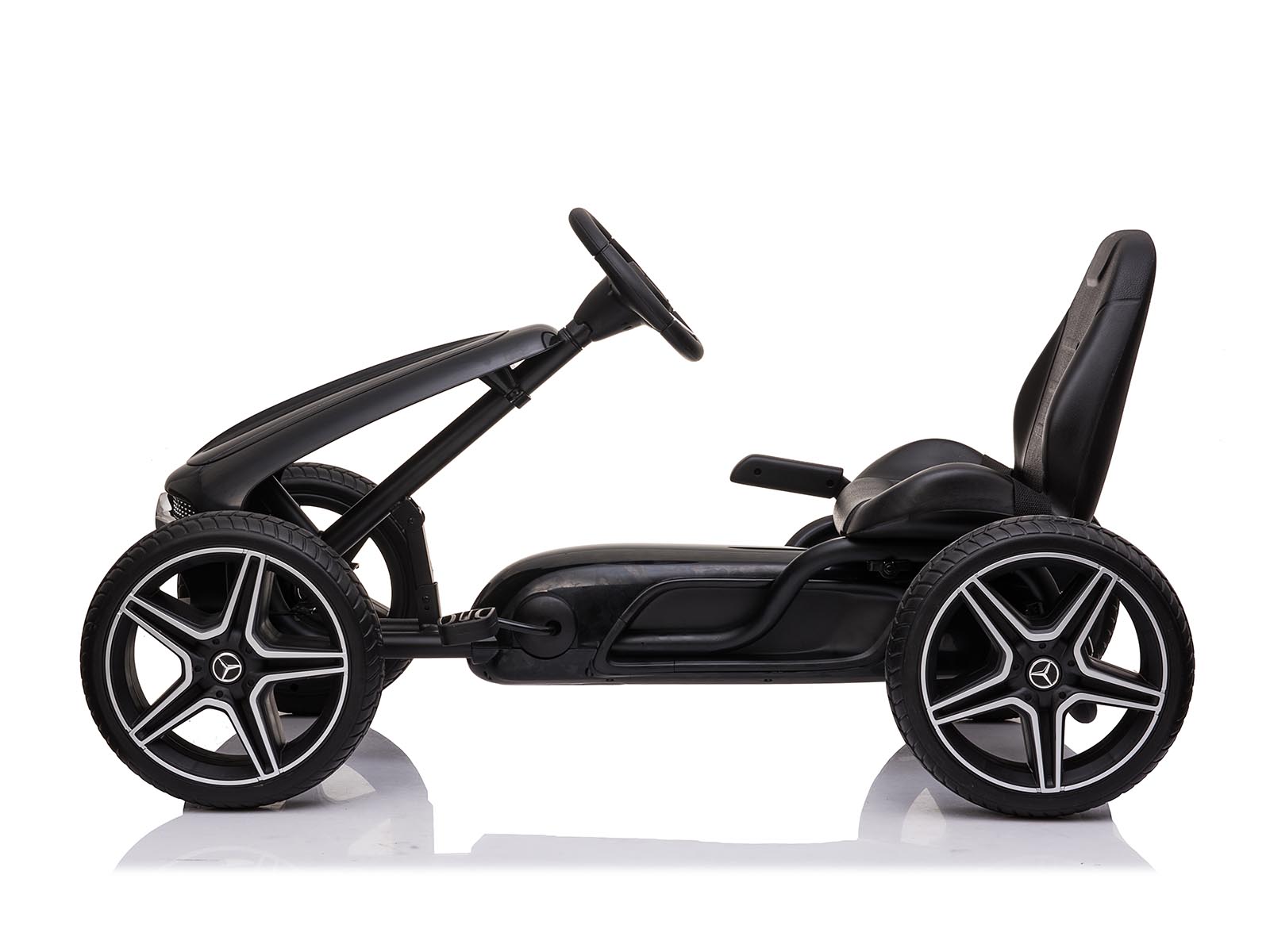
Buyers often want to know exactly how pedal-powered vehicles work before making a substantial investment. You want to understand their mechanical reliability, underlying physics, and safety features. Getting these details right ensures you bring home a high-quality machine. However, not all karts are built the same. Understanding the difference between a basic direct-drive chassis and an advanced BFR (Brake Freewheel Reverse) system is crucial. It prevents you from purchasing a fragile toy your child will quickly outgrow or break.
We evaluate these vehicles through a strict engineering and long-term ownership lens. Our focus remains heavily on drivetrain efficiency, structural integrity, and terrain adaptability. By examining the physical components closely, we help you separate disposable plastics from durable, multi-year investments. You will learn the hidden mechanics behind single-wheel drive systems, chassis dynamics, and what specific features guarantee a safe, scalable ride.
Key Takeaways
Drivetrain dictates experience: Premium karts use a BFR system to allow coasting and reverse braking, while entry-level models rely on direct drive (pedals always move with wheels).
Single-wheel drive is a feature, not a bug: Most pedal karts drive via one rear wheel to allow for smooth cornering and prevent tire scrubbing (a mechanical alternative to a complex differential).
Frame scalability matters: A high-quality pedal go kart for kids should feature an adjustable seat track and a heavy-duty tubular steel frame to ensure a multi-year lifespan.
Traction determines terrain: Wide, pneumatic (air-filled) tires offer superior grip on grass and uneven terrain compared to hard plastic wheels.
The Drivetrain Mechanics: Direct Drive vs. BFR Systems
The core propulsion mechanism serves as your most critical pre-purchase decision. Most buyers overlook the drivetrain entirely. They assume all human-powered toys operate like standard bicycles. This assumption leads to poor purchasing choices.
The Single-Wheel Drive Principle
You might notice only one rear wheel connects to the pedal axle. Many parents mistakenly view this as a manufacturing defect. It actually represents a brilliant engineering solution. If you hard-link both rear wheels to a solid axle, the vehicle drags during turns. The outer wheel must travel a longer distance than the inner wheel. Driving a single wheel acts as a simplified mechanical differential. It allows for smooth cornering and prevents severe tire scrubbing.
Direct Drive (Fixed Gear)
A direct drive system operates on a fixed gear mechanism. The pedals link permanently to the wheel rotation. If the tires are moving forward, the pedals are spinning forward. You cannot coast. This straightforward design excels for toddlers between ages one and five. Young children need simple, predictable speed control. They push to go and resist the pedals to stop.
BFR (Brake Freewheel Reverse) Systems
Premium models utilize a BFR system. This setup features an integrated clutch mechanism inside the hub. It allows the driver to keep their pedals completely static while coasting downhill. You simply pedal backward to engage the coaster brake. If you continue pedaling backward after stopping, the vehicle shifts into reverse. This setup proves essential for older kids. It guarantees high-speed safety. You never want fast-spinning pedals aggressively striking a driver’s legs during a steep downhill coast.
Steering, Braking, and Chassis Dynamics
Physical control systems dictate safety. We must deconstruct how steering geometry and braking mechanisms prevent dangerous tipping risks.
Steering Geometry & Center of Gravity
Modern steering linkages rely on sophisticated geometry. They keep the chassis stable during sharp turns. Contrast this with crude DIY "bogey" steering. Bogey setups pivot the entire front axle like a rusty wagon. They carry a notoriously high center of gravity. This creates an extreme roll-over risk. A proper kart utilizes independent front steering knuckles. It maintains a low-slung chassis for superior cornering stability.
Braking Mechanisms
Friction brakes differ entirely from mechanical brakes. Standard bicycle caliper brakes fail miserably on thick kart tires. They lack the leverage to clamp down on wide rubber profiles. Quality models implement safer alternatives. They use either an internal coaster brake via the BFR hub or a dedicated mechanical handbrake lever. The handbrake connects directly to the rear axle, providing instant stopping power.
Tire Physics
Your tire choice impacts everything. Manufacturers offer pneumatic (air-filled) rubber tires or solid EVA plastic. Pneumatic tires provide essential traction. They bite into loose dirt and wet grass efficiently. More importantly, they act as the vehicle's only true suspension system. They absorb shocks on bumpy terrain, ensuring dynamic stability.
Evaluating Alternatives: Pedal vs. Electric Go Karts
Buyers often find themselves on the fence between power sources. We provide a strict, objective comparison to simplify your decision.
Feature Category
Pedal-Powered Models
Electric-Powered Models
Terrain Adaptability
Superior on grass, dirt, and mild inclines. Zero risk of motor burnout.
Best on flat, hard surfaces. Grass often strains smaller motors.
Maintenance Needs
Near-zero effort. Requires occasional lubrication and air inflation.
High effort. Requires strict charging regimens and wiring checks.
Range limitation
Unlimited. Driven entirely by the rider's stamina.
Limited by battery capacity and eventual cell degradation.
Physical Benefits
Builds lower-body strength and improves motor coordination.
Focuses strictly on sensory feedback and speed management.
Performance & Terrain Adaptability
A high-quality pedal go kart dominates uneven ground. It tackles grass, dirt tracks, and mild inclines seamlessly. You never worry about burning out a tiny electric motor. It offers unlimited range. Electric alternatives perform best on flat, hard pavement. They often require soft-start motors to prevent whiplash for younger children. Furthermore, battery degradation severely limits their long-term viability.
Maintenance Routines
Ownership demands differ vastly. Human-powered karts require near-zero maintenance. You simply perform periodic lubrication and check tire pressure. Electric models demand constant attention. You must follow strict charging regimens to prevent premature battery failure. Wiring issues also complicate long-term ownership.
Physical ROI
Consider what your child actually gains. Electric models deliver sensory feedback and effortless speed. Conversely, human-powered models function as highly effective aerobic tools. They actively build lower-body strength. They force riders to develop genuine motor coordination.
How to Choose a Pedal Go Kart for Kids (Evaluation Criteria)
You need a rigid checklist for the decision stage. This separates durable goods from disposable, single-season toys.
Age, Sizing, and Scalability ("The Growth Test"): Do not buy purely based on suggested age brackets. Evaluate the maximum weight capacity instead. Check whether the vehicle features a multi-position adjustable seat. A quality pedal go kart for kids must "grow" with the child over several years.
Frame Construction: Look for solid metal or heavy-duty tubular steel frames. Inspect the photos for clean, uniform weld joints. Avoid frames held together entirely by plastic clips. A high-quality chassis holds genuine "hand-me-down" value for younger siblings.
Safety Features: Treat specific design elements as mandatory requirements. You need roll-over absorption elements built into the steering column. Insist on enclosed chain guards to prevent shoelaces and loose clothing from entangling in the drivetrain. Finally, verify the inclusion of non-slip pedal surfaces for wet conditions.
The DIY Route vs. Buying Commercial
Many parents explore building a kart at home. We must address the DIY illusion while objectively highlighting the engineering bottlenecks.
The Illusion of Cheap DIY
Reusing old bicycle parts looks tempting. It often limits builders to a highly optimistic $50 budget. However, this approach introduces severe mechanical limitations. Bicycle frames do not transition easily into four-wheel platforms.
Implementation Risks
You immediately face the freewheel dilemma. Adapting a standard bicycle freewheel hub to a four-wheel dual-axle setup requires custom metal machining. This complex process instantly negates any perceived cost savings. Furthermore, liability becomes a serious issue. Welding steering knuckles at home without calculating proper Ackerman geometry fails consistently. It usually results in severe understeer and dangerous tipping hazards during cornering.
The Final Verdict
Unless the project serves strictly as an educational father-son engineering lesson, avoid building from scratch. Commercial karts offer rigorously tested stress thresholds. They feature proprietary safety drivetrains. You simply cannot replicate these complex clutch systems reliably in a standard home garage.
Long-Term Maintenance: The "MOT" Checklist for Your Kart
Proper post-purchase care ensures your investment survives for a decade. Treat this routine like an annual MOT vehicle inspection.
The Loose Screw Test
These vehicles undergo high vibration across rough terrain. Outline a schedule to routinely check every structural fastener. Grab a wrench and torque the steering linkage bolts. Ensure the seat track knobs remain tight. Vibrations easily back out loose nuts over time.
Lubrication Protocols
Do not reach for standard WD-40. Traditional oil-based sprays attract dust and turn into grinding paste. We strongly recommend using a dry silicone spray instead. Apply it generously to the ball bearings, chain, and steering linkages. It maintains incredibly smooth operation without any destructive grit buildup.
Tire Pressure Dynamics
Never ignore the tires. Properly inflated pneumatic tires dramatically reduce pedal resistance. When tires hold maximum recommended air, the contact patch shrinks slightly. This makes the vehicle roll faster. It becomes significantly less exhausting for the child to maneuver over thick grass.
Conclusion
Understanding the mechanics behind these vehicles transforms your buying experience. Prioritize a BFR drivetrain for riders over age five to ensure downhill safety. Insist on pneumatic tires if you plan to conquer grass yards or dirt trails. Finally, invest in a tubular steel frame if you want the toy to last for multiple siblings. Make your choice confidently. Direct your attention to vetted categories like Toddler Karts or Off-Road models based on your specific terrain and age requirements. Your driveway awaits.
FAQ
Q: Why does my pedal go-kart only drive one wheel?
A: It acts as a mechanical differential. If both rear wheels were rigidly locked to the drive axle, the kart would drag and heavily resist turning. Driving a single wheel allows the outer wheel to spin freely during tight corners, ensuring smooth maneuverability.
Q: Can pedal go-karts go on grass?
A: Yes, but only efficiently if equipped with wide, air-filled pneumatic tires. Hard plastic wheels will simply lose traction and spin out. Pneumatic tires provide the necessary bite and suspension to roll over uneven, grassy surfaces easily.
Q: What is the weight limit for a typical pedal go kart?
A: It varies significantly by category. Standard kids' models typically hold between 60 and 100 lbs safely. However, adult or commercial-grade steel frames feature reinforced tubular construction that can effortlessly support up to 250 lbs.
Q: Is it hard to pedal a go-kart?
A: On a 1:1 gear ratio with properly inflated tires on hard surfaces, it is remarkably easy. However, attempting to drive through high grass or using severely under-inflated tires will exponentially increase rolling resistance and tire out the driver quickly.