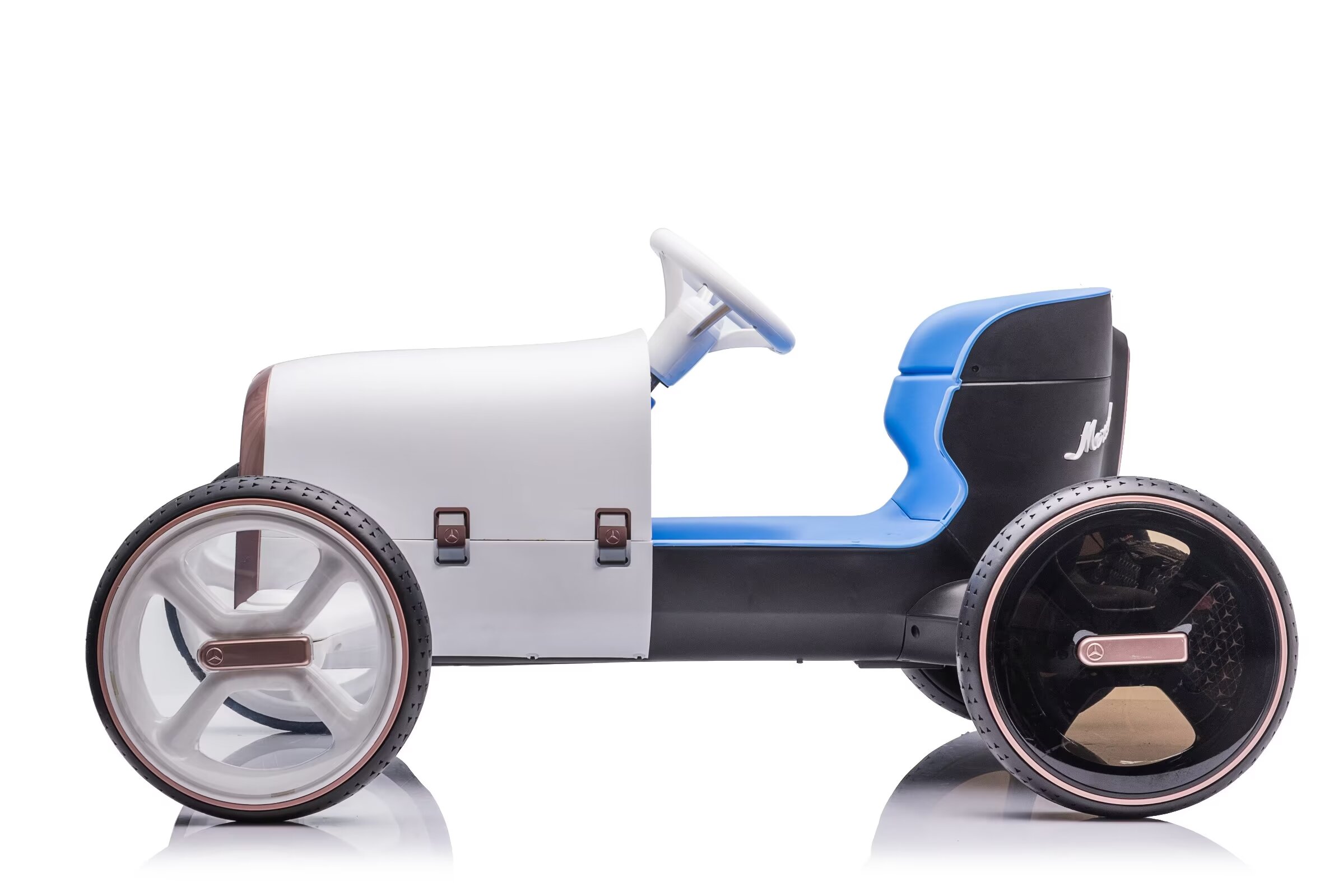
Purchasing a premium motorized toy only to discover it permanently scratches hardwood floors or lacks the torque to cross a flat lawn represents a costly misalignment of product specifications and use-case realities. Parents and buyers frequently evaluate vehicles based on aesthetics or brand licensing, ignoring the critical engineering differences—such as tire compound, motor voltage, and chassis clearance—that dictate where a vehicle can safely and effectively operate. You might buy a visually stunning truck, but if it has hard plastic wheels and a low-clearance chassis, it will get stuck on the first patch of uneven grass it encounters.
To prevent property damage, premature motor burnout, and safety hazards, buyers must evaluate ride-on vehicles through a technical lens. This guide breaks down the structural, electrical, and safety differences between indoor and outdoor models to facilitate an evidence-based purchasing decision. We will look at the exact mechanical thresholds that separate a living-room cruiser from a backyard off-roader.
Tire Material Dictates Environment: Indoor models utilize smooth, non-scuff plastics or polyurethane to protect flooring, while outdoor models require EVA foam or rubberized treads for traction on uneven surfaces.
Voltage Determines Terrain Capability: A standard 12V ride on car is optimized for flat, hard surfaces and indoor use, whereas a 24V ride on car provides the necessary torque to navigate grass, gravel, and slight inclines without stalling.
Chassis and Suspension Trade-offs: Outdoor environments demand higher ground clearance and active suspension systems; indoor models prioritize a low center of gravity and a tight turning radius for navigating hallways.
Safety Governance Varies by Space: Indoor vehicles require strict speed limiters and compact frames to avoid wall collisions, while outdoor vehicles prioritize roll bars, wider wheelbases to prevent tipping, and long-range parental remotes.
Framing the Decision: Defining Your Primary Operating Environment
Establishing Success Criteria
Before evaluating specifications, define the exact ratio of indoor to outdoor use. This foundational step prevents over-investing in unnecessary power or underestimating the space required for safe operation. If you anticipate 80% indoor use, your priorities shift entirely toward floor protection and maneuverability. Conversely, a primary outdoor use case demands a focus on traction and battery endurance. You need to map out the physical boundaries of the play area before looking at vehicle specs.
Indoor Constraints
Assess spatial limitations, doorway widths, flooring vulnerability, and acoustic tolerances. Standard interior residential doorways measure 30 to 32 inches wide. If you purchase a wide-stance off-road buggy, it simply will not fit through the hall. Flooring is another major factor. Hardwood floors are highly susceptible to scoring from hard plastic wheels that have picked up grit. Tile floors present a different challenge: the grout lines cause hard wheels to clatter loudly. Motor whine and hard plastic wheel noise on hard floors can quickly become disruptive indoors, making acoustic dampening a priority.
Outdoor Variables
Evaluate terrain types like pavement, wet grass, and loose gravel. Factor in gradient inclines and exposure to environmental elements, including moisture, dirt, and UV degradation. A flat concrete driveway requires vastly different engineering than a sloped backyard with thick Bermuda grass. Grass introduces significant rolling resistance, forcing the motors to work harder and draw more current from the battery. Loose gravel requires aggressive tread patterns to prevent the wheels from spinning out.
Alternative Footprints (Swing Cars vs. Motorized Ride-Ons)
Assess whether an ultra-confined indoor playroom is better suited for a compact, non-motorized swing car or a traditional foot-to-floor toy rather than a motorized ride on car. Motorized vehicles require a minimum turning radius that many standard bedrooms cannot accommodate. If the space is too tight, the child will spend more time reversing and getting unstuck than actually driving.
Environment
Primary Challenge
Required Vehicle Characteristic
Indoor Hardwood
Floor scratching, tight corners
Non-scuff wheels, narrow wheelbase
Indoor Carpet
High friction, static buildup
Higher torque 12V motor, smooth tires
Outdoor Pavement
Rapid tire wear, high speeds
EVA rubber tires, speed limiters
Outdoor Grass/Gravel
Rolling resistance, uneven ground
24V system, high clearance, knobby treads
Powertrain and Performance: 12V vs. 24V Ride On Car Architectures
When a 12V Ride On Car is Sufficient
A 12-volt system offers a specific performance envelope ideal for flat indoor playrooms, smooth patios, and paved driveways. These systems typically utilize dual 25W to 35W motors attached to the rear wheels. For a standard 12V ride on car, this provides enough thrust to move a 40-pound child across a flat surface at speeds up to 3 mph. However, these systems exhibit severe limitations in torque when transitioning to soft ground or inclines. The moment a 12V vehicle hits thick grass, the amp draw spikes, the motors bog down, and the vehicle often stalls.
Why Outdoor Terrains Demand a 24V Ride On Car
Higher voltage is necessary for overcoming rolling resistance on grass and gravel. A true 24V ride on car utilizes larger motors—often 45W to 200W each—capable of delivering sustained torque. Dual-motor and four-wheel-drive (4WD) configurations provide sustained outdoor performance and prevent stalling on uneven terrain. When one wheel loses traction in a muddy patch, a 4WD 24V system ensures the other three wheels continue pulling the vehicle forward.
Weight Capacity and Motor Load Dynamics
Vehicle weight limits scale directly with powertrain capability. Outdoor 24V systems support heavier, multi-rider frames, often rated for 100 to 130 pounds. This allows two children to ride simultaneously without burning out the motors. Indoor 12V systems feature restricted weight thresholds, usually capped around 60 pounds, to protect lower-torque gearboxes from overheating under heavy loads.
Thermal Management and Motor Burnout
Forcing an underpowered indoor vehicle to perform on outdoor terrain creates significant implementation risks. When a 12V motor is forced to push through thick grass, it draws excessive current. This leads to overheated wiring, melted plastic motor housings, and stripped gearbox gears. The thermal cutoff switch may trip repeatedly, shutting the vehicle down every few minutes until the motors cool off.
Wheel Construction and Traction Mechanics
Indoor Wheels (Non-Scuff and Low-Friction)
High-density plastic and polyurethane caster wheels prevent floor scoring and grip smooth indoor surfaces reasonably well. These wheels are intentionally designed to slip slightly, which protects the internal plastic gears from snapping when the vehicle suddenly stops or changes direction on a high-grip surface like linoleum. However, they suffer from zero traction on wet or loose outdoor surfaces, spinning uselessly on wet grass.
Outdoor Wheels (EVA Rubber and Knobby Treads)
Ethylene-Vinyl Acetate (EVA) and pneumatic rubber tires offer massive structural advantages outdoors. EVA foam provides a puncture-proof, rubber-like grip that conforms slightly to the terrain. Tread depth impacts grip, shock absorption, and puncture resistance on rugged terrain. Aggressive knobby treads bite into loose dirt and gravel, transferring the motor's torque into forward momentum rather than wheel spin.
The Risk of Cross-Use
Using outdoor tires indoors tracks abrasive dirt and leaves rubber marks on light-colored flooring. The aggressive grip of rubber tires on carpet can also cause the vehicle to jerk violently during acceleration. Conversely, using indoor tires outdoors results in rapid plastic degradation. Asphalt will chew through hollow plastic wheels in a matter of weeks, eventually wearing a hole straight through the center of the tire.
Inspect the wheel material by pressing a fingernail into the tread; EVA will yield slightly, while hard plastic will not.
Check for a central rubber traction band on plastic wheels, which offers a slight compromise for paved driveways.
Measure the tread depth; outdoor use requires at least a quarter-inch of tread relief to handle loose dirt.
Verify if the wheels are hollow or solid; hollow plastic wheels will crack under the impact of dropping off a curb.
Chassis, Clearance, and Suspension Systems
Ground Clearance Requirements
Outdoor models utilize raised chassis designs, typically requiring a 4 to 5-inch minimum clearance, to prevent high-centering on rocks, roots, or uneven lawn transitions. If a vehicle has only 2 inches of clearance, the plastic undercarriage will drag on the grass, acting like a brake and draining the battery rapidly. Indoor models sit much lower to the ground to maintain a low center of gravity and prevent tipping on flat surfaces.
Shock Absorption Systems
Rigid frame designs are standard for indoor use to maintain stability on flat floors. Active spring or coil suspension systems are required to protect the rider and the vehicle's axles during outdoor use. Without suspension, every bump and rock transfers kinetic energy directly into the plastic chassis, which can lead to stress fractures over time. Rear-wheel suspension is the minimum requirement for outdoor use, while 4-wheel independent suspension is ideal.
Turning Radius and Frame Dimensions
A wide, stable wheelbase is an outdoor necessity to prevent tipping on slopes. When a child drives across a slanted section of the yard, a narrow vehicle will roll over. A narrow, compact frame is an indoor necessity for navigating standard residential doorways and tight corners. You cannot have both; you must choose the chassis width based on where the vehicle will spend the majority of its time.
Seating Capacity and Frame Footprint
Indoor-optimized models favor single-seat configurations to maintain a narrow profile. Outdoor-capable vehicles leverage wider chassis designs to accommodate two-seater layouts. A two-seater requires a wider track, which inherently improves lateral stability on uneven outdoor terrain but makes the vehicle impossible to maneuver in a standard hallway.
Safety Features and Speed Governance
Speed Limiters and Acceleration Profiles
Indoor models require capped top speeds (typically 2-3 mph) and soft-start technology to prevent whiplash and indoor collisions. Soft-start modules gradually ramp up the voltage to the motors, ensuring the vehicle rolls forward smoothly rather than jerking aggressively. Outdoor models safely accommodate higher speeds (up to 6 mph) but require variable speed lockouts so parents can restrict the top speed while the child is learning to steer.
Parental Remote Controls
Evaluate the range and override capabilities of 2.4GHz remote systems. These are critical for outdoor environments near streets or hazards, allowing a parent to instantly brake or steer the vehicle away from danger. The 2.4GHz frequency prevents interference from other remote-control toys. While useful indoors, remotes are less critical in enclosed spaces where the child cannot wander into traffic.
Physical Safety Restraints
Multi-point seatbelts, roll bars, and higher side doors are necessary on outdoor models to mitigate ejection risks on uneven terrain. A simple lap belt is sufficient for a slow indoor vehicle, but a 5-point harness is highly recommended for a 24V off-road buggy that might encounter sudden stops against tree roots or curbs.
Longevity and Maintenance Realities
Wear and Tear Trajectories
Environmental exposure accelerates the degradation of outdoor models. UV rays fade plastic body panels, making them brittle over time. Moisture from wet grass or rain can rust exposed steel axles and corrode electrical terminals. Indoor models, preserved in a climate-controlled environment, experience significantly less material degradation and can often last through multiple children.
Licensed vs. Generic Build Quality
Licensed replicas often feature higher-quality plastics, better paint finishes, and more reliable wiring harnesses. These upgraded components withstand outdoor UV exposure and vibration slightly better than budget generic models. The wiring in premium models is usually better insulated against moisture, reducing the risk of electrical shorts when driving through damp grass.
Maintenance and Storage Realities
Outdoor models require hidden labor: cleaning mud from the undercarriage, lubricating axles to prevent rust, and winterizing batteries. If a lead-acid battery is left in a freezing garage, its capacity will permanently degrade. Indoor-exclusive models offer a low-maintenance reality, requiring little more than plugging in the charger and occasionally wiping down the plastic body.
Conclusion
Measure the narrowest indoor choke points, such as doors and hallways, to ensure the vehicle can physically navigate your home. Assess the steepest gradient in your yard to determine if you need the high-torque output of a 24V system. Review the manufacturer's specific tire material specifications rather than relying on product photos, which often make hard plastic look like rubber. Finally, verify the weight capacity and storage constraints to ensure you have a safe, dry place to park the vehicle when not in use.
FAQ
Q: Can a 12V ride on car be used on grass?
A: Yes, but only on very flat, dry, and shortly cut grass. It will likely struggle, slow down significantly, or stall on thick grass or slight inclines due to insufficient torque.
Q: Will outdoor ride on car tires scratch hardwood floors?
A: Hard plastic tires with outdoor debris embedded in them will scratch floors. Clean EVA rubber tires generally will not scratch, but they may leave rubber scuff marks on certain finishes.
Q: Is a 24V ride on car too fast for indoor use?
A: Typically, yes. A 24V system accelerates faster and has a higher top speed, making it a collision hazard in confined indoor spaces unless it features a strict, parent-controlled low-speed lockout.
Q: Can I upgrade indoor plastic wheels to rubber tires for outdoor use?
A: While aftermarket modifications exist, adding high-traction rubber tires to a vehicle with a low-power motor and plastic gearboxes often results in stripped gears, as the motor cannot handle the increased traction resistance.
Q: How much ground clearance is needed for an outdoor ride on car?
A: For reliable outdoor use on grass and uneven terrain, look for a minimum of 4 to 5 inches of ground clearance to prevent the chassis from dragging or getting stuck.
Q: Are licensed ride on cars better for outdoor durability?
A: Licensed models often feature higher-quality plastics, better paint finishes, and more reliable wiring harnesses, which can withstand outdoor UV exposure and vibration slightly better than budget generic models.
Q: Do outdoor ride on cars have higher weight capacities than indoor models?
A: Yes. Outdoor models, particularly those featuring 24V electrical architectures, are constructed with reinforced steel-alloy or heavy-duty plastic frames to handle the structural stress of rough terrain, giving them significantly higher weight capacities.