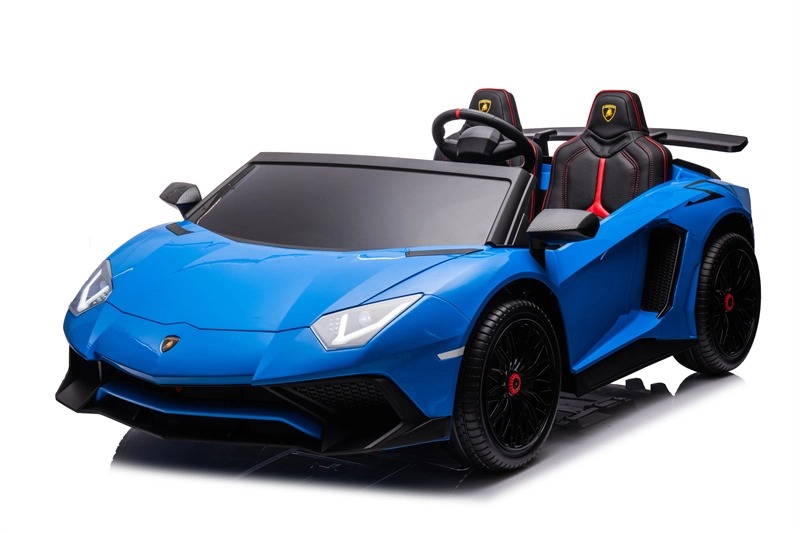
Parental remote control can make a Ride on Car easier to supervise, particularly while a child is still learning how pedals, steering, and space around the vehicle work together. Its value is not that it makes a product hands-free. Its value is that an adult can guide or intervene with a compatible model while the child develops control. Used correctly, the remote belongs to a wider safety approach that includes an age-appropriate vehicle, a clear riding surface, correct load, safe boundaries, charged equipment, and direct adult attention.
Key Takeaways
A parental remote control can let an adult guide or intervene with a compatible Ride on Car, but its exact operation varies by model.
It is especially useful for early sessions, short routes, turns near a boundary, and children still learning pedal response.
Pairing, battery condition, operating range, selected mode, and interference can affect remote performance.
Remote control cannot make roads, slopes, water, loose obstacles, or an unsuitable vehicle safe.
Know What the Remote Actually Does
Remote-control systems are not identical. Some models allow an adult to drive while the child rides; others use a particular mode for directional assistance or stopping. Before a child sits in the vehicle, the adult should read the product instructions and understand how to pair the remote, switch modes, start movement, change direction, and stop. A remote included in the box should not be assumed to override the child controls in the same way on every model.
The feature is most helpful when it makes learning gradual. An adult can choose a flat, open area, guide the first movements, and allow the child to become familiar with steering without immediately handling every decision alone. It can also help when a child hesitates, turns too close to a boundary, or is distracted by lights and sounds. The adult must remain close enough to see the route clearly and act before the situation becomes difficult.
The Ride on Car collection includes models described with parental remote-control features. Buyers should always check the relevant individual product information rather than assuming the entire category shares a single remote-control design.
Where It Helps in Everyday Play
The first advantage is controlled introduction. Children gain pedal response, steering coordination, spatial awareness, and stopping habits at different rates. A remote-control Ride on Car gives the adult a way to offer support while the child practices. A short route with one gentle turn and a planned stop can be more instructive than allowing a child to immediately navigate a complicated outdoor space.
The second advantage is route management. A young child may focus on movement and not scan consistently for a garden edge, wall, doorway, or obstacle. A supervising adult can help steer the vehicle back into the agreed area. This does not make it suitable to ride among pedestrians, near traffic, or close to water. It simply gives the adult more control in a space that has already been made appropriate.
The third advantage is a smoother handover. As the child shows consistent control, an adult can gradually allow more child-led driving where the model permits, while keeping the remote available. The handover should be based on observed skill, not only age or enthusiasm.
Remote Control Is One Layer, Not the Whole Plan
Safety layer
What it contributes
What it cannot replace
Parental remote control
Adult guidance or intervention on compatible models
A clear riding area and close observation
Speed setting or soft start
More manageable initial movement where supplied
Correct age, load, and use conditions
Seating and restraint
Helps maintain the intended riding position
Proper entry, exit, and supervision
Play boundary
Keeps the route away from hazards
Active attention to the child
Product instructions
Defines limits and operating procedures
Judgement when the environment changes
Remote function can also be affected by ordinary practical conditions. Low batteries in the vehicle or remote can change response. Incorrect pairing, accidental selection of another control mode, physical obstructions, excessive distance, or interference may reduce reliability. Before play, test steering and movement under the product’s stated procedure. If the controls do not work normally, do not begin the session.
Prepare the First Ride Deliberately
Choose a dry, level area away from roads, driveways with moving vehicles, pools, steps, slopes, open gates, and crowded walkways. Remove stones, toys, hoses, loose sand, and other objects that may affect wheels. Confirm that the child is within the stated age and load guidance. Inspect the vehicle, charger connection, and remote before use.
Explain a few simple rules before the Ride on Car moves: hands stay on the steering wheel, the child remains seated, the adult decides the route, and the vehicle stops when asked. If the product has several speed or control modes, begin with the manageable option permitted by the instructions. Stay within the specified remote range and keep a direct line of sight. A remote should not be operated from inside a home, around a wall, or while the adult is doing another task.
Communicate the Feature Accurately
Retail listings should describe a remote as a supervision tool rather than a promise of automatic safety. State its intended control function, then place age guidance, load limit, charging information, and surface conditions nearby. This helps families use the feature as intended and avoids the expectation that any child can operate any size of vehicle anywhere.
BIG RIDE ON CARS lists a 24V remote-control three-seat Willy Jeep. With any larger or multi-seat Ride on Car, it is particularly important to review the exact published load limit, seating instructions, age guidance, and remote-control procedure. The remote is part of the operating system; it does not override the rest of the product limits.
Common Mistakes to Avoid
Do not assume the remote works wherever its signal reaches. It is intended for a suitable play area under close adult observation. Do not choose an oversized, too-powerful, or poorly matched vehicle on the theory that remote control will compensate. It will not. It also cannot solve poor traction on wet grass, loose gravel, slopes, or a route with hidden obstacles.
Avoid modifying a remote, wiring, antenna, or control setting to change range or response. If a control behaves unusually, stop use and follow the product’s troubleshooting guidance. Correct use is more valuable than trying to add capability that the product was not designed to provide.
Build a Consistent Supervision Routine
Remote control is most useful when the adult uses it consistently rather than only after a close call. Before every session, define the route and decide who is supervising. One adult should hold responsibility for the controls rather than passing the remote casually between people. Confirm the vehicle mode, remote pairing, battery condition, and riding surface before the child begins. This is particularly important at family gatherings, where several children and adults may be present and it becomes easy to assume somebody else is watching.
During play, keep the route simple. An adult can use cones, chalk, or natural fixed boundaries to show where the Ride on Car may travel. Give one instruction at a time, especially for a newer rider: start, follow the line, slow for a turn, stop at the marker. Watch for fatigue, distraction, or a change in the surface. A child who drove safely for ten minutes may still need the adult to take more control as the battery level changes or other children enter the space.
The vehicle should be stopped before the child enters, exits, changes seating position, or allows another child to approach. Do not allow a passenger or onlooker to push the vehicle while controls are active. Do not overload the body or add cargo unless the product instructions clearly allow it. These details are not remote-control functions, but they determine whether the feature is being used in a safe operating situation.
If a child begins to drive directly more often, retain the same pre-ride check and boundary rules. Independence should grow from repeatable control, not from removing every layer of support at once. A remote remains available for an adult who is present and attentive; it should never be treated as a reason to observe from a distance.
For commercial buyers, this routine can be converted into a short quick-start card supplied with the product. The most helpful copy is specific: charge as instructed, check mode and pairing, choose a dry level area, stay in direct view, observe the age and load guidance, and stop use when controls behave unexpectedly. Concise, accurate guidance supports families more effectively than a broad claim that remote control makes every situation safe.
When to Stop and Reassess
Stop the session if the Ride on Car responds irregularly, the remote loses normal response, the child becomes unable to follow simple stopping instructions, or the route changes because of rain, people, pets, or obstacles. Move to a simpler area or end the session rather than testing whether the system can recover. An adult should also reassess when a child grows, begins carrying a passenger, or shifts from a small paved space to a larger outdoor route. Those changes can alter the correct vehicle and supervision plan.
Keep Remote and Vehicle Care Connected
Store the remote in a dry place and check it as part of the vehicle’s normal care routine. A remote with weak batteries or damaged buttons is not a dependable backup control. Keeping a simple record of the model, control mode, charger, and service contact also helps an adult respond correctly if pairing or movement becomes inconsistent.
Use the Same Rules With Every Caregiver
Children benefit when every adult follows the same route, stop instruction, and supervision expectation. Share the remote-control procedure with grandparents, babysitters, and other caregivers before they supervise a session. Consistency keeps a child from receiving mixed signals about where and how the vehicle may be used.
If more than one child takes turns, reset the situation between riders. Confirm the seating position, route, and control mode rather than assuming the next child will use the Ride on Car in exactly the same way. This preserves the value of the remote as a deliberate supervision tool.
Conclusion
Parental remote control improves Ride on Car safety by giving an adult a practical way to guide early sessions and intervene on compatible models. It works best alongside a suitable vehicle, a dry and clear route, correct mode selection, charged equipment, and attentive supervision. BIG RIDE ON CARS includes remote-control options within its broader product range, but every product should be judged on its individual instructions and limits. The remote is a useful layer of control, not a replacement for responsible set-up and adult care.
FAQs
Does parental remote control override the child’s Ride on Car controls?
It depends on the model and selected mode. Read the product instructions and test the remote before the child rides.
Can a remote-controlled Ride on Car be used near a road?
No. Ride-on vehicles should be kept away from roads, traffic, and uncontrolled spaces. A remote is not a traffic-safety device.
How close should the adult stay?
Remain within the stated operating range and keep a direct, unobstructed view of the vehicle and the child.
What should be checked before the first ride?
Check battery condition, pairing, selected mode, steering response, stop behaviour, load guidance, and the riding surface.
Is remote control useful for an older child?
It can still support supervision, but the vehicle, child, and space must remain appropriate to the product’s stated guidance.