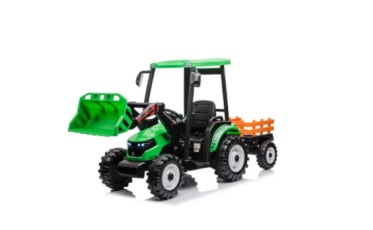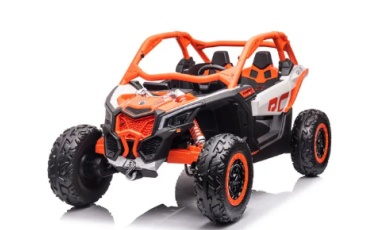
When parents, distributors, and resellers ask us how to make a 24V ride on car faster, they are usually asking two questions at the same time. The first is simple: how can the vehicle deliver better speed and stronger performance? The second is more important: how can that improvement be achieved without sacrificing safety, reliability, or product life? From our perspective as a manufacturer working with ride on car products, this is the right way to think about speed upgrades. A 24V ride on car already has a stronger electrical platform than many 6V or 12V models, so there is room to improve performance. But real speed improvement is not just about installing a bigger part and hoping for the best. It is about understanding the relationship between battery output, motor capability, gearing, wheel traction, vehicle weight, and control system limits. When these elements are matched correctly, a ride on car can feel quicker, smoother, and more responsive. When they are mismatched, the car may overheat, wear out faster, or become unsafe for children.
Why a 24V Ride On Car Already Has a Speed Advantage
A 24V ride on car generally offers more power potential than lower-voltage models. Higher voltage allows the electrical system to deliver more energy to the motors, which can support stronger acceleration and better climbing ability. In many cases, a 24V platform is chosen for larger ride on cars, heavier body styles, bigger wheels, or dual-motor and four-motor configurations.
That said, not every 24V ride on car is equally fast. Two products with the same voltage can perform very differently because of differences in motor wattage, controller programming, gearbox ratio, wheel diameter, and total vehicle weight. This is why some 24V models feel lively while others feel only slightly faster than a good 12V model.
Before making changes, it helps to understand what actually influences speed.
Main Factors That Affect Ride On Car Speed
Factor | How It Affects Speed | Notes |
Battery voltage and output | Higher and more stable output can improve motor performance | Battery quality matters as much as nominal voltage |
Motor power | Stronger motors can support higher speed and torque | Must match controller and gearbox |
Gear ratio | Taller gearing can increase top speed | May reduce hill climbing torque |
Wheel size | Larger wheels may raise effective speed | Can also increase motor load |
Vehicle weight | Heavier cars move slower | Includes child weight and accessories |
Terrain | Smooth surfaces allow better speed | Grass and gravel reduce performance |
Controller settings | Can electronically limit speed | Important for safety compliance |
Start With the Battery Before Changing Anything Else
In our experience, one of the most overlooked reasons a 24V ride on car feels slow is battery condition. A weak battery can make a good vehicle feel underpowered even if the motors and controller are working properly. Before considering upgrades, we always recommend checking whether the existing battery is fully charged, healthy, and correctly matched to the vehicle.
A battery that no longer holds voltage well under load will reduce acceleration and top speed. In some cases, replacing an aging battery with a high-quality 24V battery of the correct specification restores the expected performance without any other changes.
Here are the most important battery-related checks:
Make sure the battery is fully charged before testing speed
Confirm that charger output matches the battery specification
Inspect wiring and terminals for heat damage or corrosion
Check whether the battery capacity is too low for the motor demand
Replace old batteries that show significant performance drop
If the car slows down quickly during use, struggles on flat ground, or loses speed after only a few minutes, the battery should be the first suspect.

Upgrade the Motor Only If the Whole System Can Support It
Many people assume that the fastest way to improve a ride on car is to install a stronger motor. Sometimes that works, but only if the rest of the system can handle it. A motor upgrade without matching the battery, controller, gearbox, and wiring often creates new problems.
For example, a higher-speed motor may spin faster, but if the gearbox is not designed for that load, gear wear can increase. If the controller has a fixed output limit, the new motor may never reach its potential. If the wiring is too light, heat buildup may occur. That is why we view motor upgrades as a system-level decision rather than a single-part solution.
When a Motor Upgrade Makes Sense
A motor upgrade is more reasonable when:
The existing motor is underpowered for the car size
The gearbox and controller are rated for the higher demand
The battery can provide stable current
The product is used by an older child within the recommended range
Safety speed limits have been reviewed
In many cases, improving motor efficiency and battery delivery gives better real-world results than chasing extreme top speed.
Consider Gear Ratio for Real Speed Gains
Gear ratio is one of the most direct ways to change how a ride on car performs. Lower gear reduction usually means more speed but less torque. Higher reduction usually means better pulling power but lower top speed. This balance matters because children’s ride on vehicles often need enough torque to start smoothly, handle gentle slopes, and avoid stalling under load.
If the goal is to make a 24V ride on car faster on flat ground, changing to a taller gear ratio may help. But there is always a trade-off. The car may become weaker on grass, ramps, or uneven surfaces. It may also place more strain on the motors during startup.
Speed vs Torque Trade-Off
Setup Change | Top Speed | Acceleration | Climbing Ability | Motor Stress |
Taller gear ratio | Higher | Moderate | Lower | Higher on inclines |
Shorter gear ratio | Lower | Stronger | Better | Lower under load |
Higher power motor + matched gearing | Higher | Stronger | Good if balanced | Depends on system match |
From a product development point of view, the best result is usually not the highest possible top speed, but the most balanced combination of speed, drivability, and durability.
Reduce Rolling Resistance and Improve Efficiency
Not every speed gain comes from electrical modification. Sometimes the vehicle can be made faster by reducing the things that slow it down. We often suggest checking rolling resistance and mechanical drag before making bigger upgrades.
A ride on car may lose performance because of:
Overly tight wheel installation
Misaligned axles
Gearbox friction
Low-quality tires with poor traction
Excessive body weight
Dirt or debris around moving parts
Simple maintenance can improve performance more than people expect. Free-spinning wheels, clean drivetrain components, and proper lubrication in the correct areas can help the car move more efficiently. Even tire choice matters. Wheels with better grip on the intended surface can improve usable speed by reducing wasted power from wheel slip.
What We Recommend as a Manufacturer
From our perspective, the best-performing ride on car is not simply the fastest one. It is the one that delivers stable output, smooth acceleration, reliable operation, and safe driving behavior under real-world conditions. That is why, when we design and evaluate ride on car models, we pay attention not only to voltage, but also to motor match, controller logic, gearing, traction, and child usability.
In our daily work, we see that customers increasingly want ride on cars that combine excitement with safety and dependable quality. That is exactly why understanding speed improvement in a complete, system-based way is so important. If you are evaluating 24V models, comparing performance setups, or looking for better solutions in ride on car design and supply, it is worth working with a manufacturer that understands both performance and safety. At BIG RIDE ON CARS Co., Ltd., we focus on practical product performance, user experience, and long-term reliability. For buyers who want to learn more about ride on car specifications, speed configurations, and suitable product options for different markets, our team can provide further product information and professional support.
FAQ
1. Can I make a 24V ride on car faster just by changing the battery?
A better battery can improve performance if the original battery is weak or aging, but battery replacement alone will not always create a major speed increase. The motor, controller, and gearbox also affect how fast the ride on car can go.
2. Is upgrading the motor the best way to increase ride on car speed?
Not always. A motor upgrade can help, but only if the battery, controller, wiring, and gearbox can support it. A mismatched upgrade may cause overheating, gear wear, or unreliable operation.
3. Does a larger wheel make a ride on car faster?
A larger wheel can increase effective speed, but it also increases load on the motor. If the system is not strong enough, the car may actually feel weaker during acceleration or hill climbing.
4. What is the safest way to improve 24V ride on car performance?
The safest method is to improve performance in stages: check battery health, inspect the drivetrain, review controller settings, and make only balanced upgrades. Always keep the child’s age, driving surface, and vehicle stability in mind.