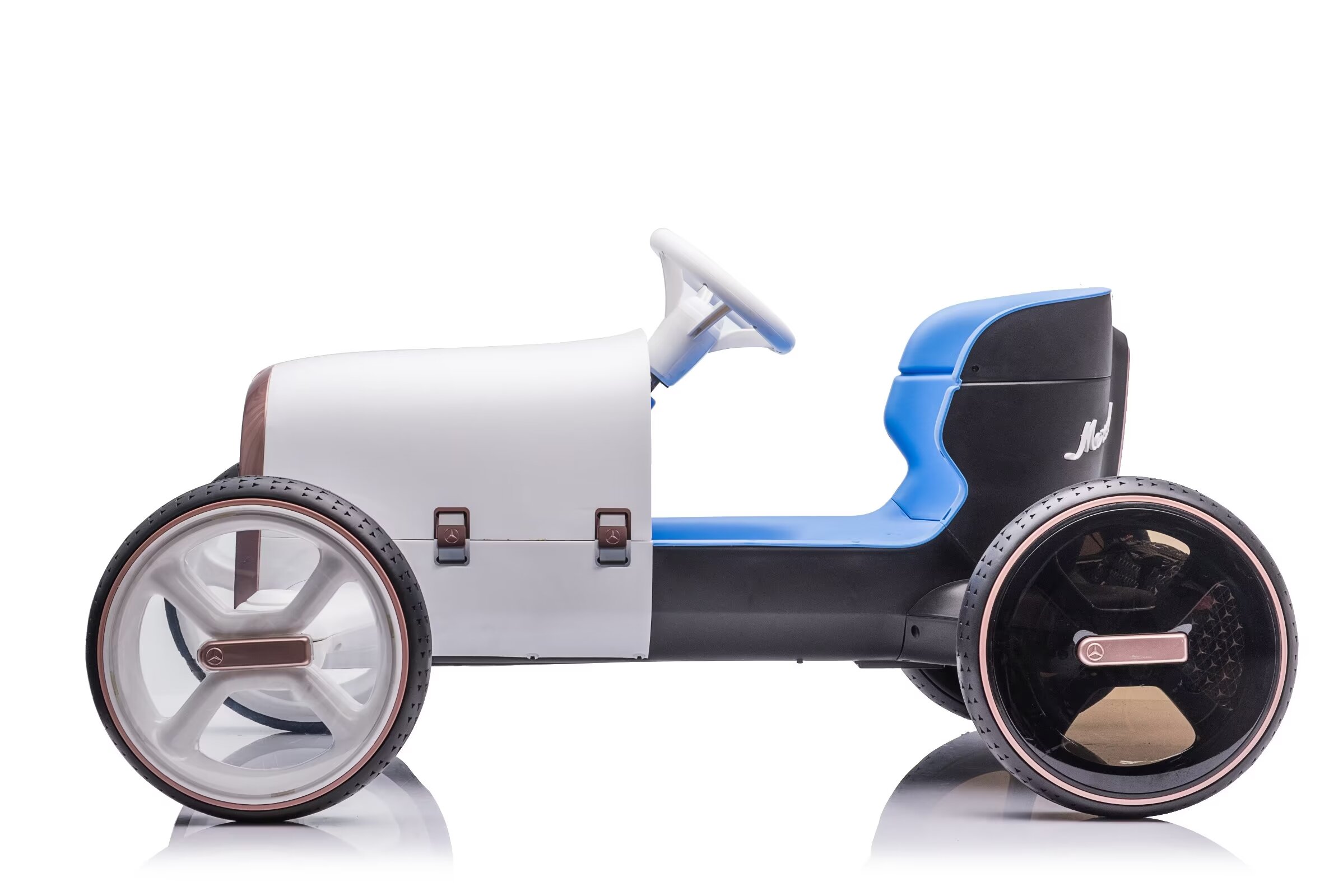
Parents often buy a stunning Mercedes Benz Ride on car purely for its looks. They imagine their child cruising effortlessly around the yard in a miniature luxury vehicle. However, buyers frequently overlook the primary terrain at their home. This oversight leads to serious mechanical problems.
Without properly evaluating your terrain, you risk undercarriage scraping, stuck vehicles, and premature battery failure. High friction burns out motors quickly. A premium toy can quickly become a frustrating lawn ornament if it lacks the right hardware for your yard.
To ensure a successful purchase, you must match the vehicle’s specifications to your property's exact surface conditions. We will explore how voltage, tire composition, and drive systems impact daily performance. You will learn realistic operational limits. You can then make an informed, practical decision based on physics, not just aesthetics.
Key Takeaways
Pavement & Concrete: The baseline surface for all models; yields maximum battery life and top speed.
Grass & Turf: Requires at least a 12V dual-motor setup; thick or wet grass drastically reduces operational time due to friction.
Gravel & Dirt: Demands EVA (Ethylene-Vinyl Acetate) rubber tires and 4WD to prevent wheel spin and undercarriage damage.
Model-to-Terrain Matching: Low-clearance models (like the Mercedes Simplex Ride On Car) are strictly for smooth surfaces, while SUV variants (G-Class) are required for mixed terrain.
The Mechanics of Surface Friction on a Mercedes Benz Ride on car
Toy vehicle performance relies heavily on basic physics. Surface resistance directly impacts how much power the electric motors pull from the battery. When you drive on smooth concrete, rolling resistance remains very low. The motors spin freely. They draw minimal amperage from the battery system.
Higher friction surfaces change this equation entirely. Thick grass acts like a series of tiny obstacles. The motors must work much harder to push the wheels through these physical barriers. Higher friction results in a higher amperage draw. This increased draw significantly shortens your overall ride time. Motor temperatures also rise under heavy loads.
Traction presents another major mechanical challenge. Manufacturers typically equip entry-level models using hollow, hard plastic tires. These plastic wheels spin aggressively on loose surfaces like gravel or wet dirt. Energy meant for forward movement transforms into useless friction. Upgraded EVA (Ethylene-Vinyl Acetate) tires solve this problem. They provide a softer, rubber-like grip. They dig into uneven ground to create actual traction.
Ground clearance dictates where you can safely drive. Real-world users often report painful scraping sounds when crossing driveway transitions. Standard sedans sit very low to the ground. Upgraded SUV models offer lifted suspensions. Checking the manufacturer's exact clearance specification remains critical before completing your purchase. A low chassis will inevitably catch on uneven terrain.
Surface Category Evaluation: Where Does It Perform Best?
Smooth hardscapes offer the most optimal driving environment possible. Asphalt, poured concrete, and indoor tile produce the lowest rolling resistance. This lack of friction allows the battery to deliver maximum run times. Electric motors remain cool because they do not fight environmental obstacles. Top speeds are easily achieved and maintained.
These flat environments suit almost any vehicle design. Sedans and low-profile sports models thrive here. For example, the classic Mercedes Simplex Ride On Car performs beautifully on flawless concrete. Its vintage design lacks off-road capability, making hardscapes its natural habitat. Steering feels highly responsive. Tires grip well without excessive wear.
Manicured Grass and Artificial Turf
Driving on grass yields moderate performance at best. Even well-manicured lawns introduce constant drag against the tires. The vehicle requires steady momentum to prevent stalling. Artificial turf acts similarly. It introduces drag while sometimes generating static electricity or excess heat during summer months.
Grass driving requires specific baseline hardware. You need a minimum 12V battery system to generate enough torque. A 2WD setup is only acceptable if your yard sits perfectly flat. Dual-motor configurations help push the vehicle through thicker patches. However, you should expect a noticeable drop in battery longevity compared to pavement driving.
Loose Surfaces (Gravel, Packed Dirt, Mulch)
Standard ride-on models face high-risk scenarios on loose surfaces. Gravel pathways and dirt trails destroy hollow plastic wheels quickly. The rigid plastic shatters or wears through. Packed dirt turns minor bumps into severe chassis hazards. Standard 2WD systems will almost certainly get stuck.
Operating here demands specialized equipment. A mandatory 4WD system keeps the vehicle moving when one wheel loses contact. EVA tires absorb shocks and maintain necessary grip. A parental remote control acts as a vital safety net. You will need it to assist when the vehicle inevitably loses traction.
You must observe strict limitation warnings regarding extreme terrain. Sand destroys plastic gearboxes within minutes. Deep mud introduces moisture into exposed electrical components. These environments remain strict "no-go" zones for any electrical toy vehicle.
Hardware Matrix: Specifying the Right Build for Your Yard
Matching your yard's terrain to the vehicle's hardware prevents immediate buyer's remorse. Every component plays a distinct role in overcoming outdoor obstacles.
Drive System and Voltage Recommendation Chart
Terrain Profile
Recommended Drivetrain
Minimum Voltage
Tire Type Requirement
Indoor / Smooth Pavement
2WD
6V or 12V
Standard Plastic
Flat, Manicured Grass
2WD (Dual Motor)
12V
Plastic or EVA
Sloped Grass / Packed Dirt
4WD
24V
EVA Rubber
Loose Gravel / Uneven Trails
4WD
24V
EVA Rubber Only
You must view the drivetrain configuration as a required upgrade for difficult yards. A standard 2WD system sends power to the rear wheels only. If your yard contains slopes or non-paved primary driving surfaces, 4WD becomes mandatory. Four powered wheels pull the vehicle up inclines and over uneven dirt.
Voltage output dictates raw pulling power. A 12V system provides sufficient energy for flat pavement and short grass. However, a 24V setup is necessary for heavier kids. It also handles steep driveway inclines or thick rural lawns easily. The higher voltage translates directly to increased motor torque.
Suspension systems on toy cars often mislead buyers. Clarify your expectations early. Ride-on car suspension remains highly rudimentary. Manufacturers use simple spring-based mechanisms. This setup slightly improves traction on minor bumps. It stops the child's head from jarring over cracks. It absolutely does not make the toy a true off-roader.
Implementation Risks and Terrain Limitations
Ignoring environmental limitations destroys electrical toys rapidly. Wet conditions pose the most immediate threat to vehicle health. Driving on wet grass introduces moisture into low-hanging motor housings. Puddles splash water directly onto exposed wiring looms. Water damage instantly voids manufacturer warranties. Corroded wiring leads to total system failure.
Incline limits represent another major implementation risk. Physics restricts how steep a toy car can climb.
Maximum Threshold: Most vehicles handle a 10 to 15-degree maximum incline.
Hard Surface Risks: Exceeding this threshold on asphalt forces motors to draw massive amperage, burning out internal coils.
Loose Surface Risks: Attempting steep climbs on dirt or grass causes backward slipping.
Weight Factors: A heavier child reduces the maximum climbable incline by several degrees.
Transition zones often catch new owners by surprise. High-centering occurs when the front wheels drop off a ledge while the rear wheels remain elevated. The chassis rests on the transition point. Moving from a flat driveway to a raised lawn edge traps low-profile sedan models easily. Always inspect your driveway borders before driving.
Shortlisting Logic: Selecting Your Mercedes Model
Selecting the right model involves filtering aesthetic desires through practical physical constraints. Different chassis designs serve completely different household environments.
Analyze Indoor and Suburban Needs: Flat suburbia demands less aggressive hardware. Classic or sports models thrive here. They offer high aesthetic value where off-road capability isn't needed.
Evaluate Mixed-Use Yards: Properties blending grass and pavement require versatility. Mid-tier SUV variants, like GLC or GLE replicas, work perfectly. They utilize 12V batteries and provide remote overrides for parental safety.
Assess Rural Properties: Uneven, rural land requires maximum hardware. Top-tier G63 AMG 4WD 24V models represent the only logical choice. They feature EVA tires, superior ground clearance, and massive torque.
Do not compromise on ground clearance if your yard has varied textures. An SUV body style naturally accommodates larger wheel arches. Larger wheels raise the entire underbelly of the toy. This extra inch of clearance prevents daily frustration. It stops the car from getting stuck on tree roots or driveway lips.
Remote overrides become essential when pushing terrain limits. Even a highly capable 24V SUV might find a rut it cannot escape. The parental remote allows you to manually reverse the vehicle. You save yourself from constantly walking over to physically lift a heavy toy out of a ditch.
Conclusion
Your purchasing success ultimately depends on objective analysis. The best toy car is the one mathematically suited to your actual terrain. You cannot base this decision solely on a child's favorite aesthetic design. Attempting to force a low-clearance sedan across a thick, uneven lawn will only result in broken parts and tears.
Take actionable steps before hitting the checkout button. Walk your yard carefully. Measure any steep driveway inclines. Check for high transition curbs between your patio and the grass. Note the presence of gravel or loose dirt. Use these physical constraints to filter your product search. Prioritize Voltage and Tire Type above paint color or brand badging. Doing so guarantees years of reliable, uninterrupted playtime.
FAQ
Q: Can a 12V Mercedes ride-on car drive on grass?
A: Yes, on short, dry, flat grass. A standard 12V system provides enough power for manicured lawns. However, thick or wet grass will cause standard plastic tires to spin aggressively. This increased friction forces the motors to work harder, which rapidly drains the battery and may cause overheating.
Q: What are EVA tires, and do I need them for gravel?
A: EVA tires are made from a specialized foam-rubber composite. They are strictly necessary for gravel surfaces. Unlike hard plastic wheels, EVA rubber digs into loose rocks to provide actual grip. They also significantly reduce the loud, jarring ride caused by plastic wheels rolling over uneven stones.
Q: Will the Mercedes Simplex Ride On Car work on uneven terrain?
A: No. Its vintage design and lower ground clearance make it highly susceptible to undercarriage scraping on uneven terrain. It is explicitly designed for smooth, flat surfaces like concrete, asphalt, or indoor flooring. Taking it off-road will likely damage the chassis and void the warranty.
Q: How do I prevent the undercarriage from scraping?
A: Match the vehicle body type directly to your environment. Choose SUV models for uneven ground because they feature larger wheels and higher ground clearance. You must also avoid abrupt transitions from flat pavement to elevated lawns. Always map out a flat driving route for low-profile vehicles.