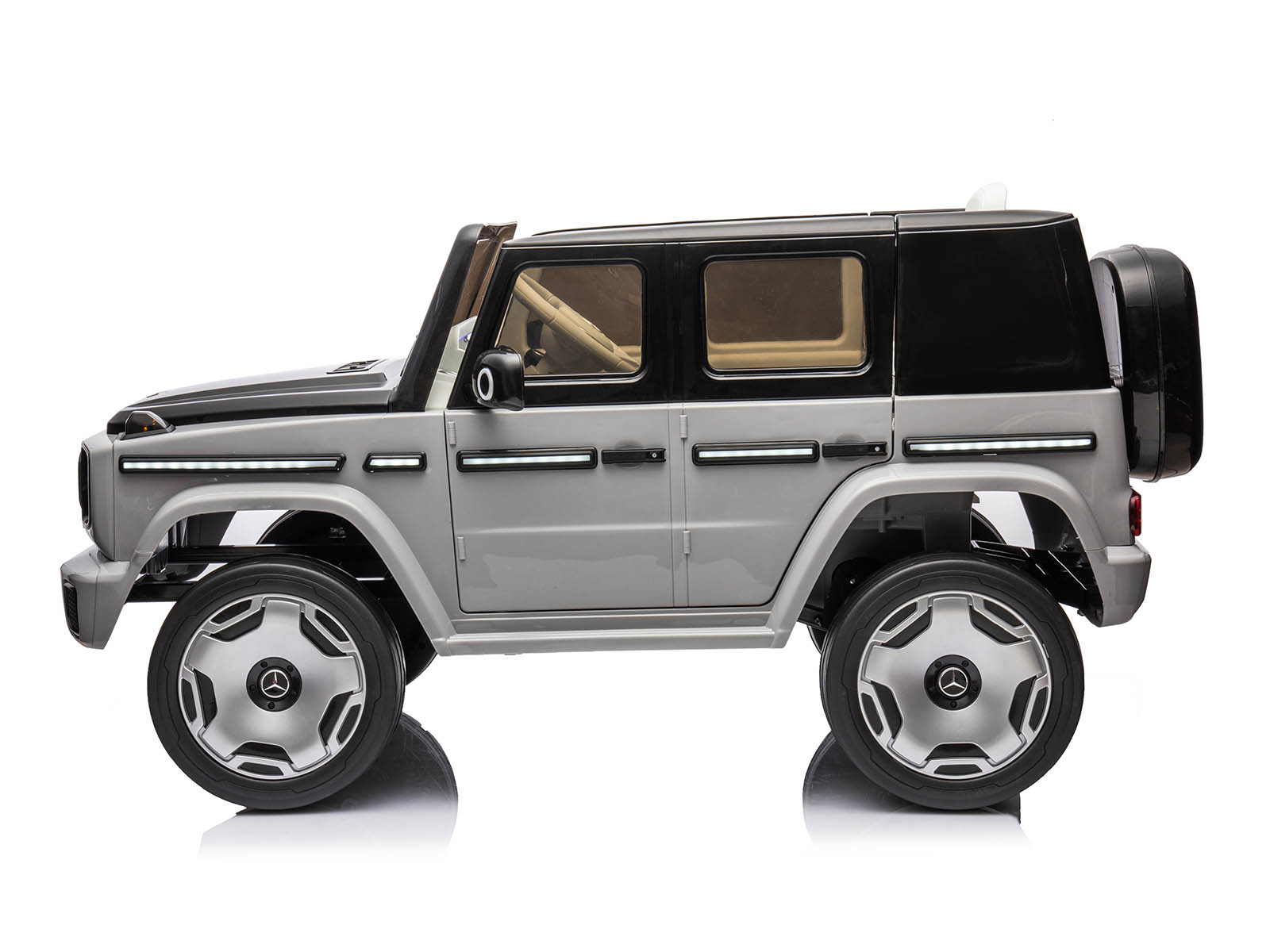
Purchasing a premium licensed toy implies a high expectation of quality. You want a flawless experience for your child. However, battery physics often remain the primary bottleneck for these scaled-down vehicles. Buyers frequently notice a frustrating gap between manufacturer runtime claims and real-world backyard performance. Test environments use perfect, frictionless conditions. These laboratory settings rarely match the thick grass in your yard.
We want to solve this dilemma for parents. This guide equips you with essential baseline data, voltage comparisons, and proper maintenance frameworks. You will learn how to evaluate specific battery capacities accurately. You can then determine if a specific model meets your household's usage expectations before completing a purchase.
Key Takeaways
Baseline Expectation: A standard 12V Mercedes Benz Ride on car typically yields 45 to 90 minutes of continuous runtime on a full charge under normal load.
Voltage Dictates Performance: 24V models (like the Mercedes EQG Ride On Car) offer higher torque for uneven terrain, which prevents the rapid battery drain seen when 12V systems are overworked.
The Maintenance Variable: Improper charging (e.g., leaving the battery depleted or overcharging) is the leading cause of premature battery failure, overriding out-of-the-box runtime specs.
Replacement Reality: Lead-acid batteries have a finite cycle life (usually 1–3 years); factor a future $30–$60 battery replacement.
Defining Realistic Runtime: Manufacturer Specs vs. Real-World Application
Understanding battery specifications requires a look behind the marketing numbers. Manufacturers rely on standardized metrics to grade their vehicles. However, real-world driving introduces endless variables. We must break down these metrics to set realistic expectations for daily play.
The Industry Standard for Batteries
Most licensed ride-on toys utilize Sealed Lead Acid (SLA) batteries. The industry prefers SLA chemistry for its safety, stability, and affordable replacement cost. Standard models usually feature a capacity ranging from 7Ah to 9Ah (Amp-hours). The Amp-hour rating directly measures how much energy the battery holds. A 9Ah battery stores more energy than a 7Ah battery. When you browse specifications, you will see these numbers frequently. Higher Amp-hour ratings provide a larger energy reservoir for the motors to draw from.
Continuous vs. Intermittent Play
Parents often misunderstand the phrase "one hour of continuous runtime." Continuous runtime means holding the pedal down without stopping for sixty solid minutes. Children rarely play this way. They drive to the edge of the driveway. They stop to pick up a stick. They reverse, turn around, and pause to talk. This intermittent play pattern extends the overall session significantly. One hour of continuous motor operation often translates to two or three hours of stop-and-go backyard play. Your child will likely get tired before the battery completely dies.
Understanding the Decline Curve
Battery drainage does not follow a perfectly linear path. SLA batteries experience something called voltage sag. As the battery depletes, the voltage drops slightly. You will notice speed and torque tapering off in the last 15 to 20 percent of the charge cycle. The vehicle will feel sluggish. It might struggle to climb a small bump it easily cleared earlier. This decline curve serves as a natural warning system. It tells you the play session should wrap up soon. Pushing the vehicle hard during this sluggish phase stresses the internal cells.
A Practical Evaluation Metric
Do not obsess over finding the maximum theoretical battery capacity. Instead, calculate your required runtime based on your child's average attention span. Evaluate how long they typically spend outside per session. A toddler might lose interest in driving after thirty minutes. An older child might want to explore the yard for an hour. Match the battery capacity to their actual outdoor habits. This practical metric prevents you from overspending on massive battery upgrades you might never fully utilize.
12V vs. 24V Systems: Matching Power to Your Environment
Voltage acts as the electrical pressure pushing energy to the motors. Choosing between 12-volt and 24-volt systems dictates where the vehicle can successfully drive. You must match this power level to your specific yard terrain to achieve a satisfactory runtime.
12V Systems: The Standard Entry
A standard 12V Mercedes Benz Ride on car serves as the perfect entry point. It suits younger or lighter toddlers typically between ages two and four. These systems thrive on flat surfaces. They perform exceptionally well on concrete pavement, smooth asphalt, and indoor floors. 12V systems run highly efficiently on flat ground. You can easily achieve the advertised runtime under these optimal conditions.
However, forcing a 12V vehicle into demanding environments destroys its runtime. Performance plummets if the child drives over thick grass, loose dirt, or steep inclines. The motors lack the necessary torque to push through high resistance easily. They pull excessive amperage trying to turn the wheels. This rapid power draw drains the SLA battery in minutes instead of hours.
24V Models: The Performance Upgrade
A 24V system provides a serious performance upgrade. These models handle hilly terrain, thick grass, and gravel effortlessly. They accommodate older or heavier children typically ranging from ages five to eight. 24V systems inherently draw more raw power from the battery. Yet, their higher torque prevents the motors from stalling on rough terrain.
When a motor stalls, it demands a massive spike in electrical current. This spike drains batteries incredibly fast. Because 24V motors power through obstacles without stalling, they manage energy more efficiently on uneven ground. They maintain momentum where a 12V system would stop entirely.
Applying the Decision Logic
Evaluate your primary driving environment before making a choice. We strongly recommend avoiding 12V models if your yard features slopes or highly textured surfaces. The battery will constantly underperform in those settings. Furthermore, pushing a 12V system beyond its limits degrades the battery cells much faster. Choose a 24V model if you have a challenging landscape. The vehicle will run longer, drive better, and survive multiple seasons of heavy use.
Runtime Expectations Based on Surface Resistance
Surface Type
12V Expected Runtime
24V Expected Runtime
Motor Strain Level
Smooth Pavement
60 - 90 mins
90 - 120 mins
Low
Short Dry Grass
45 - 60 mins
60 - 90 mins
Medium
Thick Grass or Slopes
Not Recommended
45 - 60 mins
High
Evaluating Premium Models: The Mercedes EQG
Premium vehicles introduce exciting features beyond basic driving. These high-end models utilize battery power differently than standard versions. You must account for these extra electrical demands when evaluating expected playtime.
Complex Feature Integration
Top-tier options like the Mercedes EQG Ride On Car pack incredible technology. They often feature complex 4-wheel drive (4WD) systems. They include bright LED headlights, taillights, and under-glow kits. Many also boast built-in media players for Bluetooth audio. These integrated features create a more immersive experience for the child. However, every single glowing light and playing speaker requires energy from the main battery pack.
The 4WD Power Drain
The transition from 2WD to 4WD impacts runtime heavily. Models featuring four independent motors consume significantly more amperage than two-motor setups. Pushing power to four distinct gearboxes creates additional mechanical drag. While 4WD offers unmatched traction in mud or tall grass, it aggressively depletes stored energy. A standard 7Ah battery simply cannot support four motors for very long. You need a larger energy reservoir to maintain the standard 45-to-90-minute play benchmark.
Focusing on the Right Outcome
Guide your purchase based on total electrical demand. Look for higher Amp-hour ratings when purchasing heavily optioned SUVs. Seek out specifications like 24V 9Ah or 24V 14Ah. These larger batteries provide the necessary volume of energy. They ensure the extra luxury features do not cannibalize actual driving time. A high-capacity battery lets your child enjoy the 4WD traction and the media player simultaneously without cutting the afternoon short.
Four Variables That Will Actively Drain Your Runtime
Manufacturer claims assume a specific set of ideal conditions. Real backyard environments introduce dynamic variables. Understanding these four factors helps you manage expectations and optimize daily performance.
Payload Weight: A direct correlation exists between rider weight and motor strain. A heavier payload forces the motors to work harder to achieve the same speed. This strain increases exponentially if two children ride together in a two-seater model. Approaching the vehicle's maximum weight limit reduces overall runtime by up to 30 percent. Always factor in your child's current weight and expected growth.
Terrain Resistance: Different surfaces create vastly different levels of rolling resistance. Driving on smooth concrete offers very low rolling resistance. The motors use minimal energy to keep the wheels turning. Conversely, plush grass or loose gravel creates high rolling resistance. The tires constantly sink slightly into the surface. The motors must pull continuous, heavy amperage to push through this friction.
Speed Settings: Most vehicles feature a high-speed and low-speed switch. Operating the toy continuously in high-speed mode drastically increases battery discharge rates. Low-speed mode limits the voltage sent to the motors, conserving energy effectively. Teach your child to use high speed only on flat straightaways. Switching to low speed for complex maneuvering or grass driving extends the play session noticeably.
Accessory Parasitic Draw: Luxury features create a small but compounding drain. Leaving the headlights on during daytime play wastes energy. Blasting the Bluetooth radio at maximum volume also draws continuous current. While these accessories consume far less power than the drive motors, the effect adds up. Turning off unnecessary lights during daytime use reclaims a few extra minutes of driving time.
How you treat the battery after unboxing determines its ultimate lifespan. Improper charging habits ruin batteries faster than rough terrain. Follow these implementation steps to protect your investment.
The Critical First Charge Rule
Never let your child drive the vehicle straight out of the box. The initial charge is a critical requirement. You must charge the battery for 8 to 12 hours before its very first use. This initial long charge establishes proper battery memory and overall chemical health. It ensures all internal lead plates activate correctly. Skipping this step permanently stunts the battery's maximum capacity. It will never hold a full charge if you skip this crucial first protocol.
Avoiding Deep Discharge Damage
Do not let your child drive the toy until it completely dies. SLA batteries degrade rapidly if repeatedly drained to absolute zero. This practice causes severe stress to the chemical components. Instead, monitor the vehicle's speed. When you notice the car becoming sluggish or struggling on minor bumps, stop the play session immediately. Plug the charger in right away. Keeping the battery in a partially or fully charged state preserves its internal integrity.
Winterization and Seasonal Storage
Neglecting the battery over the winter guarantees failure. Provide a clear compliance protocol for off-season storage. Always remove the battery from the vehicle and store it indoors. Freezing garage temperatures damage the internal cells. More importantly, you must charge the battery once a month during storage. Leaving an SLA battery depleted for months causes sulfation. Sulfation hardens lead sulfate crystals on the internal plates. This guarantees a "dead on arrival" battery when spring returns.
Understanding Replacement Scalability
Every SLA battery eventually loses its charge capacity. This chemical degradation is completely normal. It typically happens after 200 to 300 charge cycles. When the runtime drops to an unusable level, reassure yourself. Replacing the battery is a straightforward, low-cost DIY swap. You only need a screwdriver and a few minutes. A dead battery does not mean a total loss of the toy. You can easily scale up the fun by dropping in a fresh power unit for a fraction of the vehicle's initial price.
Conclusion
Properly managing a ride-on vehicle requires understanding the underlying power dynamics. A high-quality model offers a reliable 1 to 1.5 hours of active play when matched correctly to the child's weight and the yard's terrain. Continuous driving drains power faster than intermittent backyard exploring. Always factor the environment into your expectations.
Your actionable next step is simple. Check the exact Voltage and Amp-Hour (Ah) rating on the specification sheet of your shortlisted model before checkout. Prioritize 24V systems for uneven terrain, sloped yards, or multi-child use. Ensure you commit to the initial 12-hour charge and monthly winter maintenance. These proactive steps guarantee your child enjoys endless afternoons of driving excitement.
FAQ
Q: How long does it take to fully charge a Mercedes Benz Ride on car?
A: The standard benchmark for a full charge is between 8 and 12 hours. Always plug it in after a long play session. However, caution against exceeding 15 hours of continuous charging. Leaving it plugged in for days can overcharge and swell the battery, causing permanent damage.
Q: Can I upgrade the battery to make it last longer?
A: Yes, you can swap to a higher Amp-hour (Ah) battery of the same voltage (e.g., upgrading from 12V 7Ah to 12V 12Ah) to increase runtime. However, never increase the voltage (like putting a 24V battery in a 12V car) without upgrading the motors and controllers, as this will fry the electronics.
Q: Why is my ride-on car battery dying after 15 minutes?
A: Short runtimes usually indicate bad cells caused by improper winter storage or deep discharging. It could also result from a failing charger that isn't pushing power correctly. Extreme overloading, such as driving over the weight limit on thick grass, will also drain a healthy battery in minutes.
Q: Do lights and music drain the battery significantly?
A: No, the impact is quite minimal. The heavy drive motors consume over 90% of the electrical power. While leaving headlights on or playing Bluetooth music does draw parasitic current, these accessories have a negligible overall effect compared to driving up a steep hill.