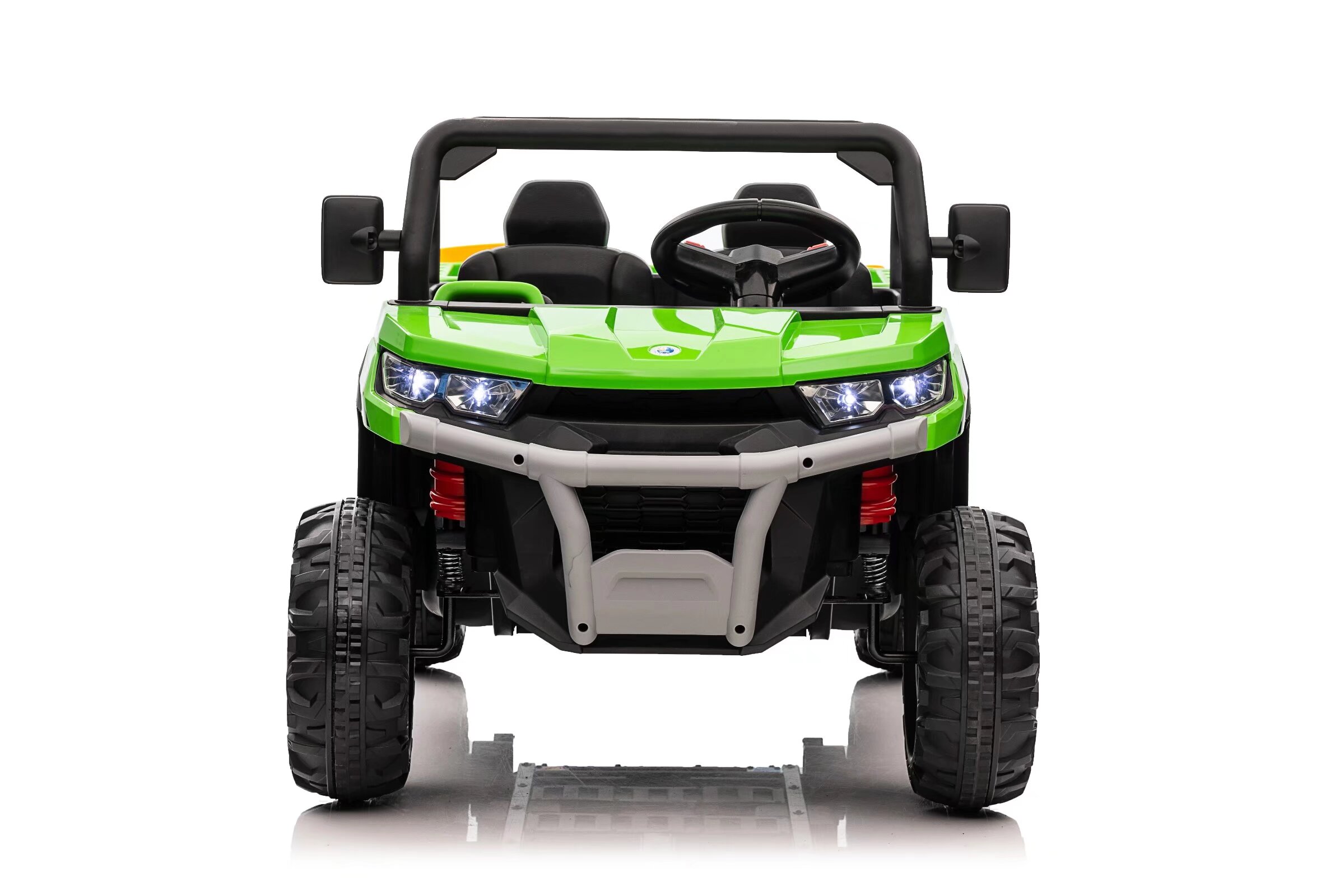
Every parent wants their child to enjoy the thrill of outdoor play. You naturally want to give them the freedom to explore the backyard. However, managing this desire against the safety realities of a hilly or uneven yard creates a tough dilemma. Most standard battery-powered toys are built specifically for flat, smooth pavement. When you introduce slopes, the physics of driving change drastically. Traction diminishes, battery draw spikes, and braking systems face extreme stress.
We provide an evidence-based framework to help you navigate these challenges. You will learn how to evaluate which vehicles can truly handle inclines safely. We will also show you how to mitigate serious risks like rollovers and runaway vehicles. By understanding the mechanical limits of these toys, you can make an informed decision for your family.
Key Takeaways
Not all electric ride-on toys are equipped for inclines; voltage (24V minimum) and tire material (rubber/EVA) are non-negotiable for hilly terrain.
The maximum safe incline for most standard ride-on toys is 10 to 15 degrees; anything steeper requires specialized all-terrain models.
Auto-braking systems and parental remote overrides are mandatory safety baseline features for any slope usage.
Weight distribution (single vs. two-seater) significantly impacts the vehicle's center of gravity and tipping risk on an incline.
The Physics of Slopes: How Topography Impacts a Ride-On Car
Driving on an angle introduces forces absent on flat pavement. Gravity actively fights the vehicle's forward momentum. Understanding this dynamic is crucial for preventing accidents.
Traction vs. Surface Material
Traction dictates whether a vehicle moves forward or slips backward. A ride on car on uneven ground faces severe traction challenges. Bumpy grass, loose gravel, and packed dirt offer less grip than concrete. When climbing a hill, the tires must bite into the surface. If the ground is loose, the wheels will simply spin. This loss of grip increases the risk of unpredictable backward slippage. Slippage can quickly turn a fun ride into a dangerous slide.
Center of Gravity & Tipping Risks
Topography heavily manipulates a vehicle’s center of gravity. When a vehicle faces upward on a steep slope, its weight transfers backward. This shift concentrates downward pressure on the rear axle. If a heavy child sits near the rear wheels, the front end becomes dangerously light. This creates a high risk of wheelies. In severe cases, the vehicle can tip backward entirely. A low center of gravity is essential to keep all four wheels planted firmly on the ground.
Battery Drain and Motor Strain
Hills demand raw power. Pushing a heavy toy up a ride on car incline forces the internal motors to work overtime. The motors draw exponentially more amperage from the battery to maintain momentum. Standard 6V or 12V models simply lack this electrical capacity. Attempting steep hills with low voltage leads to rapid overheating. It also causes severe battery depletion. Overworked motors often stall midway, leaving the child stranded on a dangerous angle.
Hardware Evaluation: Defining the Criteria for a Hill-Ready Vehicle
You cannot judge a toy vehicle by its exterior styling. The internal hardware determines whether it will survive a sloped backyard.
Voltage and Motor Count (The Power Requirement)
Voltage dictates top speed and climbing torque. A 24V or 36V system is the absolute baseline for a kids electric car on hills. Higher voltage pushes more energy to the motors without overheating. You also need a 4-wheel drive (4WD) setup. A 4WD system distributes power to every wheel, ensuring continuous momentum if one wheel loses grip. A basic 12V 2-wheel drive (2WD) system will stall on a moderate hill. It lacks the torque required to overcome gravity.
Tire Composition (The Traction Requirement)
Tires are your only contact point with the ground. Material selection is critical for safety.
Table: Tire Composition Comparison
Tire Material
Traction Level
Performance on Slopes
Hard Plastic
Low
Spins out easily. High risk of backward rolling. Unsafe for hills.
EVA Foam
Moderate
Absorbs bumps well. Provides decent grip on mild, dry inclines.
Pneumatic Rubber
Maximum
Bites into grass and dirt. The safest option for steep or uneven terrain.
Braking Mechanisms (The Safety Requirement)
Reliable stopping power is mandatory. Automatic electronic braking is the industry standard for safety. This system engages motor resistance the moment the driver releases the accelerator pedal. It stops the vehicle abruptly and holds it in place. Manual brakes rely entirely on the child’s reaction time and leg strength. On a steep hill, a child might panic and miss the brake pedal. Electronic braking removes this human error.
Stance and Suspension
A wide wheelbase prevents lateral rollovers. When navigating uneven ground, one side of the vehicle may dip into a rut. A narrow toy will tip over immediately. Active suspension systems absorb these shocks. They keep the chassis level while the wheels articulate over bumps. This mechanical flexibility is crucial for maintaining a safe, upright posture on unpredictable yards.
Best Practice: Always check the undercarriage for exposed wires. Sloped, uneven ground can hide rocks or sticks that easily snag vulnerable wiring looms.
The "All-Terrain" Label: Separating Marketing from Reality
Manufacturers frequently use aggressive marketing terms. Parents must learn to look past the packaging and evaluate the engineering.
Balanced Claim Analysis
The term all-terrain ride on car is highly misleading. In the toy industry, this phrase is completely unregulated. It does not carry the same mechanical guarantees as real adult ATVs. A manufacturer might slap an "all-terrain" sticker on a 12V plastic-wheeled toy simply because it has knobby tire treads. You must scrutinize these claims. True all-terrain capability requires rubber tires, 24V+ power, and dedicated suspension components.
Wet and Winter Conditions
A hill that feels safe on a dry summer day becomes a hazard after rain. Moisture changes everything. Wet grass acts like ice under plastic or EVA tires. This compounding risk severely impacts electronic braking efficacy. If the wheels lock up on wet grass, the vehicle will slide downward uncontrollably. Never allow children to drive on sloped grass during winter frosts or immediately after a rainstorm.
Compliance & Certifications
Look for recognized safety standards. In the US, ASTM F963 certification ensures general toy safety. In Europe, the EN71 standard serves a similar purpose. These standards test for fire risks, chemical safety, and basic mechanical stability. However, they do not certify extreme off-road capability. They establish a baseline of trust but do not guarantee a vehicle can safely scale a 20-degree muddy hill.
Common Mistake: Assuming "All-Wheel Drive" means the vehicle can go anywhere. Without adequate ground clearance, even a 4WD toy will bottom out and get stuck on a modest hill crest.
Implementation Protocols: Setting Rules for Safe Outdoor Use
Hardware is only half the equation. Safe operation relies heavily on strict adult supervision and structured environmental rules.
Parental Remote Control Override
A parental remote is your primary safety net. You should only purchase models featuring a 2.4GHz remote control. This frequency prevents interference from neighbor's toys. The remote must include a dedicated emergency "STOP" button. If your child drives toward a dangerously steep drop, you press the button. This instantly kills the motors and engages the electronic brakes. It is a non-negotiable feature for younger drivers.
Mapping the "Safe Zone"
Before the first drive, audit your yard carefully. Establish clear physical boundaries. Walk the property and mark areas that are too steep or rugged. Follow these specific yard mapping guidelines:
Identify invisible hazards: Look for hidden rabbit holes, exposed tree roots, or soft mud patches.
Drive straight up or down: Teach your child to approach hills directly.
Avoid cross-incline driving: Never drive parallel across a slope. This creates a severe lateral tipping risk. The upper wheels lose traction, and gravity pulls the heavy chassis over sideways.
Passenger Limitations
Weight distribution alters vehicle dynamics instantly. Exceeding the stated weight limit strains the motors and compromises braking distances. Allowing two kids in a vehicle rated only for one is extremely dangerous on slopes. The extra body weight raises the center of gravity. It also shifts the balance unpredictably as kids squirm or lean. Always enforce strict passenger limits to maintain maximum stability on hills.
Shortlisting Your Options: A Parent’s Purchasing Framework
Shopping for a capable outdoor toy can feel overwhelming. Follow this structured approach to match the right vehicle to your environment.
Step 1: Assess the Terrain
Do not guess the steepness of your yard. Calculate your maximum incline accurately. You can download a simple leveling app on your smartphone. Lay a straight board on the steepest part of your yard and place your phone on it. Read the angle. If the slope exceeds 15 degrees, reconsider standard toys altogether. You must look strictly at high-end 24V or 48V specialized buggies to navigate anything steeper safely.
Step 2: Match to Child Age & Skill
Match the hardware to the child's cognitive development. Toddlers (ages 2-4) lack the reflex speed to recognize danger. They require parental remote overrides at all times. Older kids (ages 5-8) possess better motor skills. They benefit from variable speed controls and manual braking awareness. Buy a vehicle that allows you to lock out high-speed modes until they demonstrate competence on mild slopes.
Step 3: Feature Trade-offs
Accept that physics demands compromise. You cannot buy a slope-ready vehicle that is also ultra-lightweight. True performance requires trade-offs:
Weight: Rubber tires, heavy-duty gearboxes, and large lead-acid batteries make these vehicles heavy. They are harder to lift into a truck bed.
Price: Real suspension and 24V motors cost significantly more than basic 12V plastic models.
Storage: Wide stances prevent rollovers but require more garage space. You cannot easily slide a wide-track buggy through standard doorways.
Conclusion
Using a ride on car on sloped terrain requires serious consideration. It is safe only if the vehicle’s hardware matches the terrain’s physical demands. You must also enforce strict parental supervision. Standard toys will fail on steep grass, leading to potential accidents.
When you evaluate your final purchase, prioritize functional safety features over licensed aesthetics. Flashy paint jobs and famous brand logos do not keep a vehicle planted on a hill. Rubber tires, 24V systems, and electronic braking do.
Measure your yard's slope before buying any vehicle.
Invest in 24V power and rubber tires if your yard is hilly.
Always use a remote override for younger children.
Never allow cross-incline driving to prevent rollovers.
Inspect the yard for wet spots or hidden hazards before every drive.
FAQ
Q: What is the maximum incline a 12V ride-on car can handle?
A: A standard 12V model can generally handle 5 to 10 degrees on solid, paved ground. On soft grass or uneven dirt, this capacity decreases significantly. Pushing a 12V system beyond this limit will cause stalling or backward rolling.
Q: Are rubber tires better than plastic for driving on hills?
A: Yes. Rubber tires are an absolute necessity for outdoor hills. Plastic tires lack grip and will easily spin out on grass or gravel. Rubber provides the traction needed to climb inclines safely and prevents dangerous backward slippage.
Q: What happens if the battery dies while my child is driving up a hill?
A: Quality slope-ready vehicles feature automatic electronic braking. If the battery dies or the child lifts their foot, the motor gearboxes lock up instantly. This resistance stops the vehicle and prevents it from freewheeling dangerously backward down the hill.
Q: Can a ride-on car tip backward on a steep hill?
A: Yes. Steep inclines shift the weight to the rear axle, making the front end light. This is why low-profile designs, wide wheelbases, and anti-roll bars are critical. Heavy children sitting far back compound this risk.