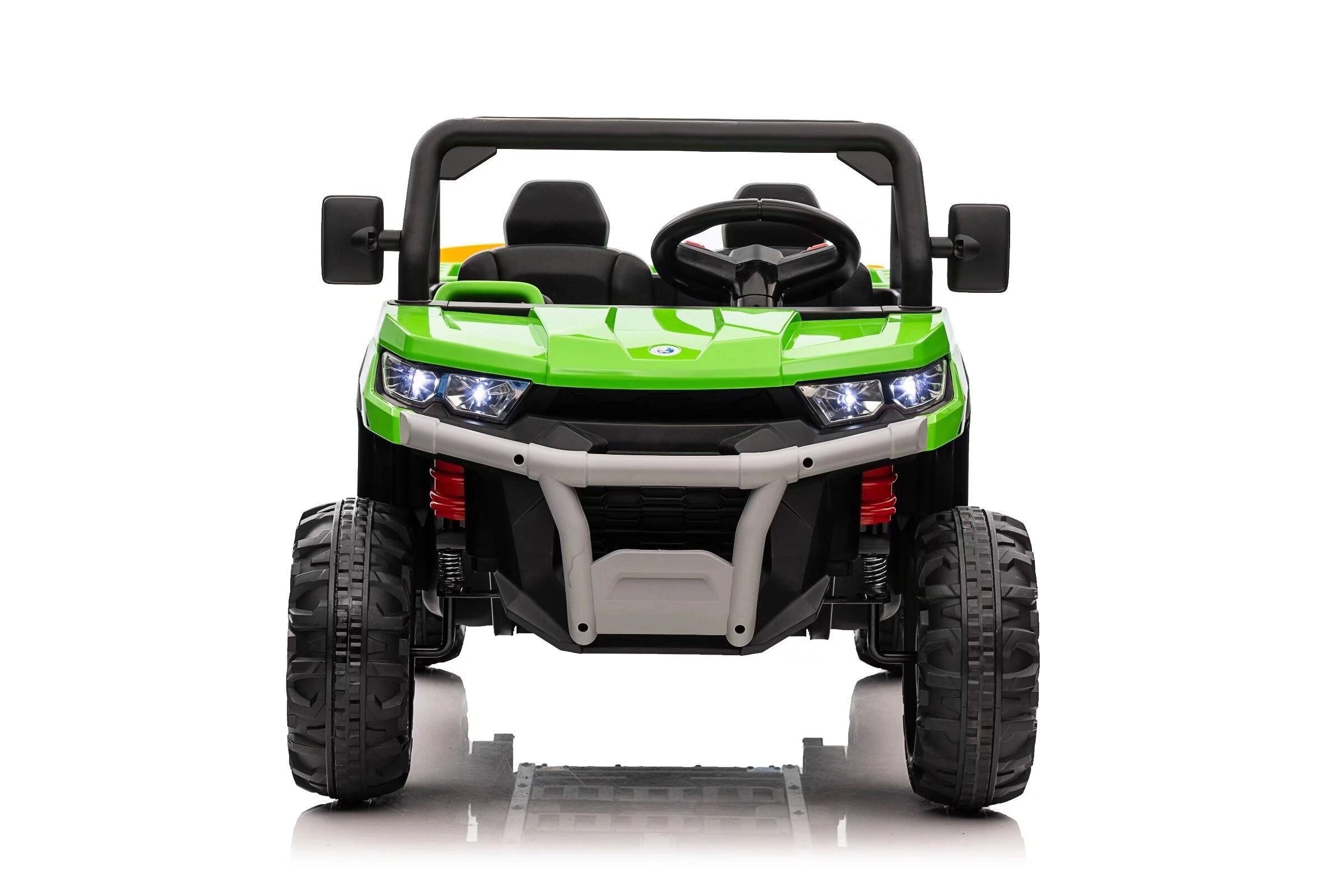
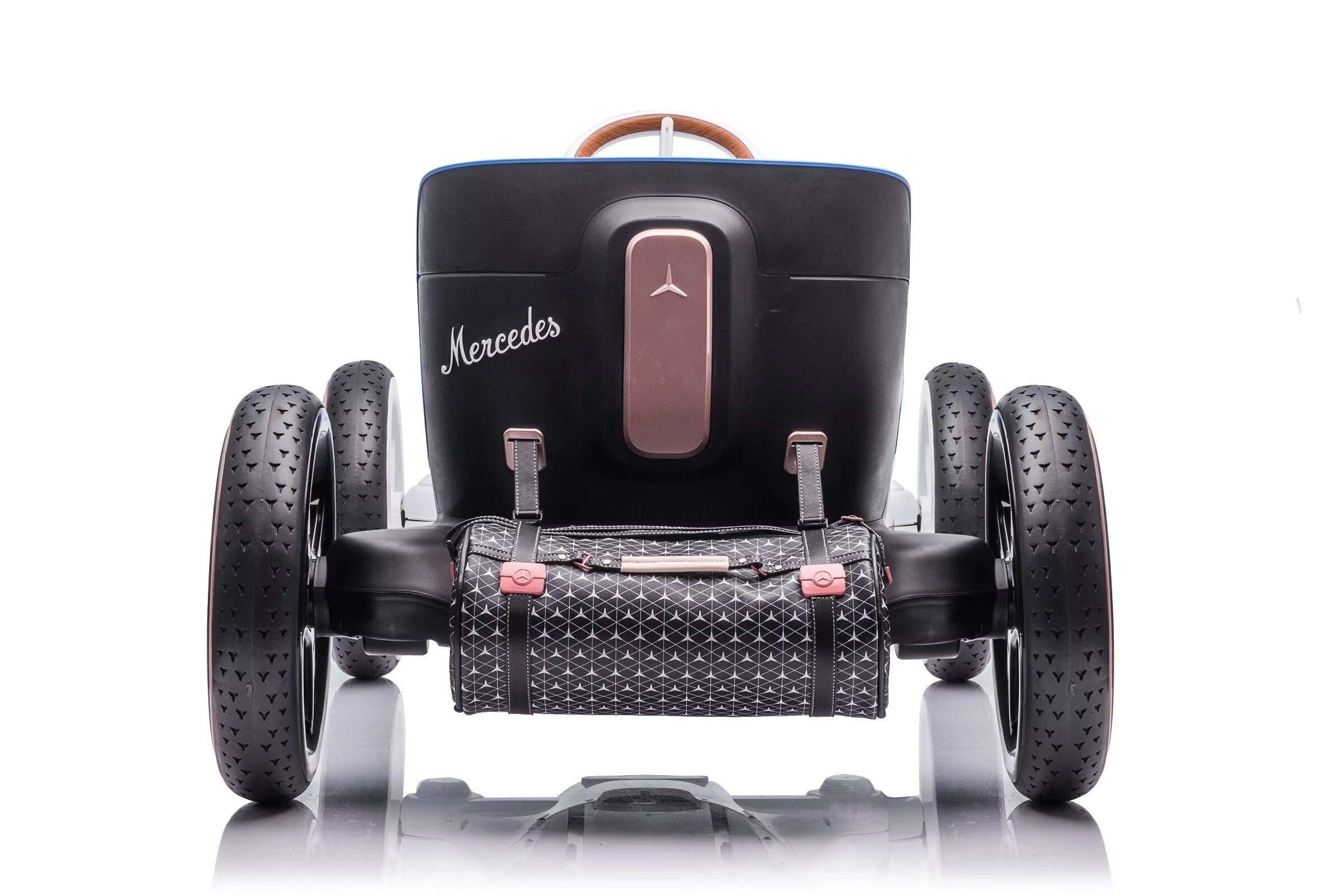
Licensed Ride on Car designs attract attention because they connect children’s play with familiar automotive styling. For families, the appeal often begins with recognisable proportions, badges, lights, dashboard details, and a vehicle story that feels more realistic than a generic toy shape. For retailers and importers, licensed formats can provide a clear way to organise a product range by brand recognition, body style, seating, voltage, and feature level. Their popularity is not only about appearance, however. A useful purchase decision still depends on age guidance, load, controls, wheels, play surface, charging requirements, and the accuracy of the licensing claim.
Key Takeaways
A licensed Ride on Car uses officially authorised vehicle styling or branding; buyers should verify the product’s actual description rather than assume every lookalike is licensed.
Familiar styling can make product selection easier for families and category planning clearer for retailers.
Licensing does not determine safety, voltage, runtime, terrain suitability, or child fit; the individual specification does.
Retail listings should explain the model’s functional features and limits as clearly as its design inspiration.
What “Licensed” Should Mean
In this category, “licensed” refers to a product presented with authorised use of a vehicle manufacturer’s design, name, or trademarks. The precise scope of a licence is a commercial and legal matter handled by the product supplier and rights holder, so product listings should state only what can be supported for the named item. A familiar grille, badge-shaped decoration, or colour alone should not be treated as proof of a licence.
For buyers, the practical benefit is recognisability. A child may be drawn to a small version of a vehicle seen in family life or popular culture. A retailer can build a coherent shelf, catalogue, or online category around familiar vehicle identities. For the supplier, licensed models can complement generic formats rather than replace them. The buying decision should remain grounded in whether the Ride on Car fits the intended user and environment.
BIG RIDE ON CARS has a dedicated Licensed Ride on Car category that presents vehicles under multiple automotive marques. Buyers should review individual product details, as each model can have a different voltage, body size, seating configuration, and feature set.
Why Families Notice Licensed Designs
Children respond to visual cues: a familiar silhouette, opening-style doors where supplied, a dashboard layout, working-style lights, or a vehicle shape that supports imaginative play. Parents may see a licensed Ride on Car as a gift with more personality than an unbranded alternative. These are reasonable preferences, but they should come after the basic checks. A highly recognisable body still needs to fit the child, operate on the available surface, and be manageable within the family’s space.
The design can also make product explanations easier. A customer can quickly distinguish a compact coupe-style car from a larger SUV, UTV, truck, or ATV format. That visual clarity helps when comparing seating, storage, wheels, and ride area. It should not encourage a customer to select a larger format merely because the real vehicle it resembles appears rugged. A children’s Ride on Car has its own stated operating conditions.
Why Retailers Use Licensed Models in a Range
Licensed lines can give a retailer clear merchandising themes. They can be grouped by recognised style, by price position, by voltage, or by target age range. The products can also create a natural route for customers who start with an aspirational design but then compare practical matters such as seats, parental remote control, sound functions, wheels, and charge procedure.
For importers, licensed formats can sit beside generic car, jeep, ATV, UTV, motorcycle, and go-kart styles. This avoids turning a category into a single aesthetic choice. BIG RIDE ON CARS also sorts products by Ride on Cars by Volts, which supports a more functional conversation after the customer has identified a preferred body style.
Buyer question
Why it matters more than the badge
Who will ride?
Age, size, seating position, and stated maximum load determine fit.
Where will it be used?
Paving, grass, gravel, slope, space, and obstacles determine suitability.
Compatible charger, dry storage, and care routine affect long-term use.
What is actually licensed?
The listing should make a supportable, model-specific claim.
This framework protects against a common retail mistake: making the licence the main product specification. It can be the reason a buyer first notices the item, but it is rarely the reason that it works well at home.
Features Still Need to Be Evaluated Individually
Licensed Ride on Car models can differ substantially. One may use a compact 12V layout suited to level, everyday play. Another may be a larger 24V vehicle with a different body type and different operating expectations. A model may include lights, sound functions, a remote control, a seat belt arrangement, or a particular wheel construction. None of those features should be assumed across a brand-inspired collection.
Compare the written specification for each model. Confirm recommended age, maximum load, seating capacity, voltage, motor configuration, wheel material, intended surface, charge procedure, and any remote-control mode. Match the vehicle to the actual play route. Avoid roads, traffic, pools, steps, steep slopes, standing water, deep loose gravel, and areas with hidden obstacles. The product’s licensed character does not change those boundaries.
An accurate retailer page benefits from clear photography, a model-specific title, feature lists that distinguish included functions from optional accessories, and an easy-to-find care section. It should not promise that a Ride on Car is “just like” a full-size vehicle or capable of the same terrain. Trust grows when the product is described for what it is designed to do.
Product Range Planning for Wholesalers and Distributors
A balanced range often has more than one route into the category. Some buyers begin with a named design. Others begin with voltage, seats, wheel type, price level, or a need for remote supervision. Organise navigation so these paths meet: a licensed category can direct customers to individual products, while voltage and vehicle-type categories help them make a practical comparison.
Ask for clear supporting documentation for branded claims, packaging requirements, usage instructions, and the model-specific specification. Keep product records aligned across catalogue copy, images, quotations, and after-sales material. This reduces customer confusion and helps a distributor support the product throughout its sales cycle.
BIG RIDE ON CARS presents licensed vehicles alongside broader product types and voltage categories. This structure is useful for buyers who need an assortment rather than one single model, because it keeps visual appeal connected to practical selection factors.
Turning Design Appeal Into a Better Purchase Decision
The strongest licensed-product presentation follows a simple order. Start with the design that attracts the shopper, then immediately help that shopper decide whether the Ride on Car is workable in their home. Put the recommended user guidance, seating layout, dimensions where supplied, control method, voltage, wheel information, approved surface description, and charging procedure in a consistent place on the page. A buyer should not need to search through decorative imagery to find the information that determines whether the vehicle fits the child and play area.
This order is valuable for physical retail as well. Staff can ask the same short set of questions: Is the main route paved or grassy? How much room is available? Will one child or more than one rider use the model within its published load guidance? Is an adult remote-control feature important during early practice? Where will the vehicle be charged and stored? The answers often narrow the choice more effectively than brand preference alone.
For online catalogues, the licence should be identified exactly as the supplier supports it, while generic language should be avoided. Do not add badges or make claims that are not connected to the listed model. Keep product images, names, packaging descriptions, and after-sales records aligned. A distributor who can identify the exact version, wheel option, charger, and control arrangement can give clearer support if a customer later asks about assembly, care, or replacement parts.
Licensed styling also needs sensible positioning in advertising. It can invite a customer to imagine a driving experience, but copy should not imply adult-vehicle performance, unrestricted terrain use, or unsupervised play. The honest message is more useful: the design offers familiar visual appeal, while the specifications explain the product’s intended role. This approach allows the product to be aspirational without creating a mismatch between promise and daily use.
Care, Safety, and Honest Expectations
The same care rules apply regardless of styling. Use the compatible charger; charge and store in dry conditions; keep electrical components away from water; inspect wheels, controls, and connectors; and follow the supplied instructions. A parental remote control, if included, should be tested before a child rides and used as an aid to close supervision.
Keep expectations realistic. A licensed Ride on Car may provide a detailed and memorable play experience, but it remains a children’s electric vehicle with defined limits. It should be chosen and operated as such. This is the approach that protects the child, helps preserve the product, and protects the credibility of the retailer or distributor who supplied it.
Keep the Comparison Honest
A family may reasonably prefer a particular automotive design, but the final shortlist should contain only models that fit the child and the play space. Compare like with like: similar seating roles, similar intended surfaces, and similar control features. A compact licensed car and a larger licensed UTV may both be attractive, yet they answer different requirements. Making this distinction early prevents styling from becoming the only reason for a purchase.
For retailers, consistency matters as much as selection. Use the same fields across every model page, including voltage, user guidance, maximum load, wheel construction, control features, charger information, and surface restrictions. Consistent comparison points make a licensed category easier to browse and keep product expectations realistic.
A Useful Display and Listing Sequence
Present the familiar vehicle design first, then immediately show the practical information that decides suitability. A clear listing order is: model identity, age and load guidance, seating role, control features, voltage and charging details, wheels and permitted surfaces, then care instructions. This sequence respects the customer’s interest in the design while making the operating limits easy to find before purchase.
Conclusion
Licensed Ride on Cars are popular because they combine imaginative play with recognisable vehicle styling and give retailers a clear, appealing way to organise a range. The licence or brand-inspired look is only the starting point. The better choice depends on child fit, load guidance, controls, wheels, approved terrain, charging routine, and the accuracy of the listing. BIG RIDE ON CARS offers a licensed category alongside voltage and vehicle-type navigation, helping buyers move from visual preference to a practical comparison. When the product is matched to the intended use, the design appeal and everyday usability can work together.
FAQs
What is a licensed Ride on Car?
It is a model presented with authorised use of a vehicle manufacturer’s design, name, or trademarks. Verify the claim in the actual product listing.
Are licensed Ride on Cars safer than generic models?
Licensing does not determine safety. Compare the individual model’s age guidance, load limit, controls, surface conditions, and instructions.
Do licensed models come in 12V and 24V versions?
They can. Voltage and other specifications vary by model, so check the individual product details rather than assuming a category-wide setup.
Why are licensed Ride on Cars useful for retailers?
Recognisable styling can make browsing and merchandising clearer, while practical product information helps customers make an appropriate selection.
What should a family check before buying?
Check age and load guidance, seating, play surface, available space, wheel and control features, charging procedure, and the model-specific licensing description.