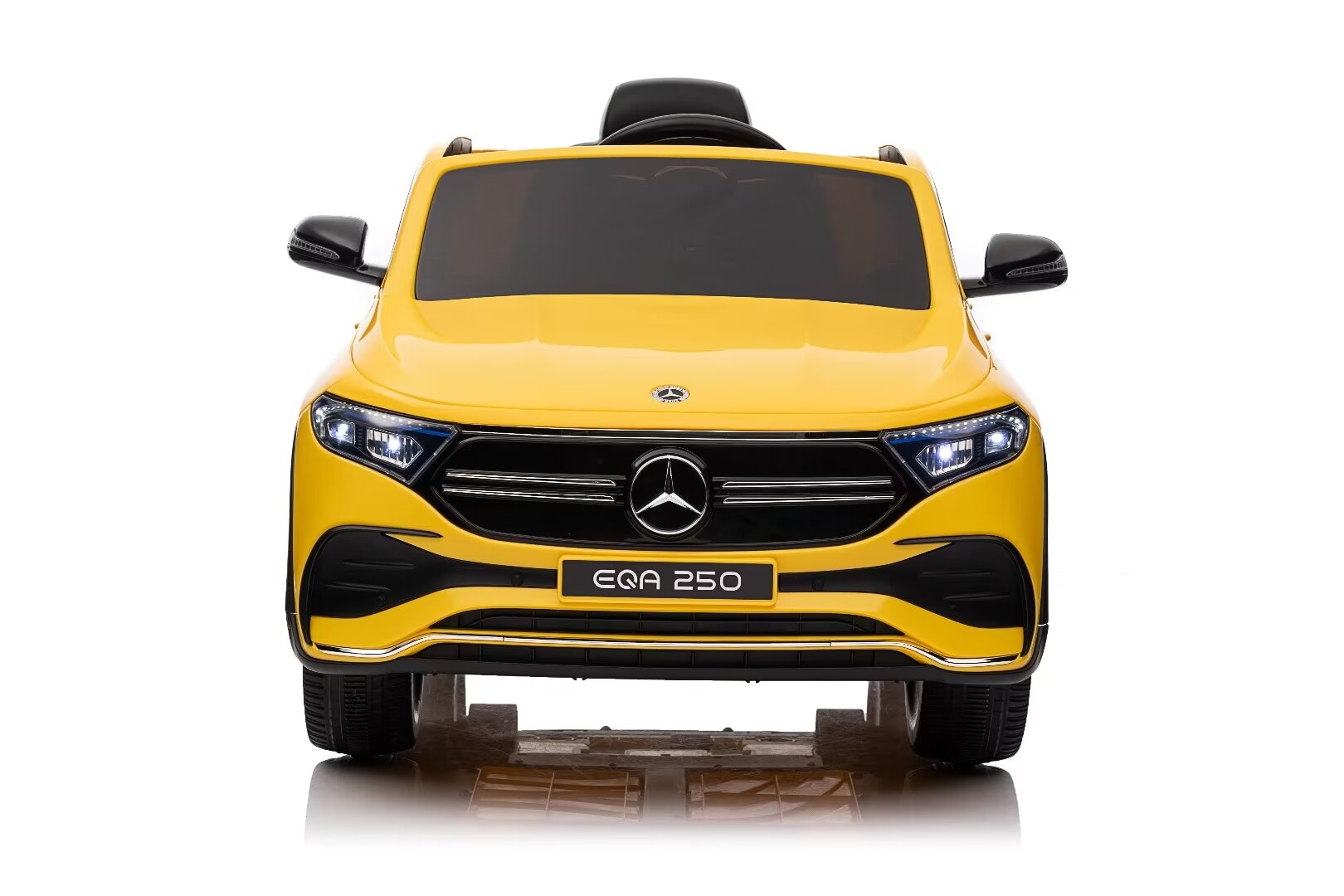
Purchasing a premium officially licensed toy carries high expectations for longevity and performance. Getting the sizing wrong becomes a costly mistake. Parents often assume standard chronological age recommendations on toy packaging guarantee a perfect fit. Sadly, these labels remain highly standardized. They prove misleading due to significant variations in child growth percentiles. What fits an average four-year-old might completely cramp a taller toddler.
This article provides a rigid, dimension-and-weight-based framework to guide your purchase. We help you ensure your chosen Mercedes Benz Ride on car delivers optimal safety and mechanical longevity. You will learn how to evaluate usable space, understand structural limits, and select models ensuring a long lifespan without premature obsolescence. Relying on concrete measurements protects your child and maximizes usability over time.
Key Takeaways
Age is secondary to physical dimensions: Legroom and maximum weight capacity dictate a ride-on car’s true lifespan.
Overloading destroys internals: Exceeding weight limits directly correlates to stripped gearbox gears, burned-out motors, and degraded battery life.
Voltage aligns with capacity: A standard 12V Mercedes Ride On Car typically supports up to 66 lbs, while 24V or higher-end two-seater models scale up to 110+ lbs.
Licensed proportions matter: Authentic Mercedes-Benz replicas often feature true-to-scale cabin designs, requiring careful attention to dashboard clearance for growing children.
The "Age vs. Size" Trap: Why Standard Recommendations Fail
Many buyers fall into the trap of reading a generic box label. Manufacturers stamp "Ages 3-5" on the carton. You naturally assume the vehicle fits perfectly. This broad categorization ignores child development realities entirely. Relying on age brackets creates significant purchase problem framing and longevity risks.
The Percentile Variance: Growth charts reveal massive physical differences among developing children. A 90th-percentile three-year-old often weighs the same as a 50th-percentile five-year-old. Their leg lengths vary drastically. Relying solely on age labels practically guarantees a sizing mismatch. You need precise physical measurements. A tall child hitting their knees against the steering wheel cannot safely operate the vehicle.
The "Growth Spurt" ROI Risk: Buying a vehicle perfectly fitting your child today leaves zero room for scalability. Children experience rapid, unpredictable growth spurts. A snug cabin today becomes physically inoperable in six to eight months. This short lifespan creates frustration. You lose out on years of potential enjoyment simply by underestimating growth speed.
Cabin Architecture Realities: Do not confuse overall footprint for usable cabin space. An impressive, large exterior does not equal a spacious interior. Authentic aerodynamic sports car replicas feature sloping hoods and thick plastic paneling. These design choices eat heavily into interior legroom. Always differentiate between exterior dimensions and actual seated capacity. Measure the real seat-to-pedal distance instead of the bumper-to-bumper length.
Decoding Weight Capacities on a Mercedes Benz Ride on car
Weight limits represent strict mechanical thresholds engineered for safety. They prevent premature structural failure. Understanding these evaluation dimensions helps you choose the correct technical specifications.
Standard 1 Seater Limits: Most single-seat models support approximately 55 to 66 lbs. They suit toddlers and early preschoolers best. Manufacturers typically power these vehicles using single or dual 12V motors. This configuration provides adequate torque for lighter passengers. Pushing beyond 66 lbs on a 12V single-seater drastically reduces speed.
Upgraded 2 Seater Limits: Larger models support 88 to 110+ lbs. Builders design these specifically for older children or sibling sharing. Moving this massive dead weight requires robust suspension systems. Upgraded power delivery becomes mandatory. You will commonly see 24V battery systems paired with quad-motor setups here.
The "Operating Weight" Equation: Maximum capacity means more than just the driver. You must account for the child’s body mass plus any extra cargo. Kids love loading trunks and passenger seats. They bring heavy toys, water bottles, and backpacks. Operating weight is the cumulative total stressing the chassis. Always factor in an extra five to ten pounds for cargo.
Authorized vs. Generic Structural Integrity: Licensed Mercedes models offer superior build quality. They often feature reinforced steel chassis components instead of pure hollow plastic. This metal foundation provides a safer, more rigid structure near maximum weight limits. Generic alternatives flex, bow, and crack under similar stress loads.
Comparison of Common Weight Capacity Specifications
Feature Category
Standard 1-Seater (12V)
Upgraded 2-Seater (24V)
Maximum Weight Limit
55 lbs – 66 lbs
88 lbs – 110+ lbs
Ideal Passenger Setup
One toddler or preschooler
Two younger kids or one older child
Motor Configuration
Dual 12V Motors
Dual or Quad 24V Motors
Chassis Construction
Reinforced High-Density Plastic
Heavy-Duty Steel Frame Elements
What Actually Happens When You Exceed the Weight Limit?
Pushing a ride-on toy past its engineered limits causes rapid deterioration. Manufacturers do not set weight maximums as mere suggestions. They base these limits on specific hardware tolerances. Ignoring them creates severe implementation realities and maintenance risks.
Drivetrain Failure: Excess weight generates immense physical friction. This friction quickly overheats the 12V and 24V wiring harnesses inside the vehicle. The intense heat eventually strips the plastic teeth inside the motor gearboxes. Once gears strip, the car emits a loud grinding noise. It then stops moving entirely. Replacing stripped gearboxes requires complex disassembly.
Accelerated Battery Drain: Load weight directly impacts voltage sag. Overloaded cars force the battery to discharge much faster to maintain speed. Deep discharging overheats the internal chemical cells. This thermal stress permanently reduces total charge cycles. Your runtimes will drop from hours to mere minutes over just a few weeks.
Suspension and Axle Stress: Heavy loads exert severe downward force on the rear axle. This constant pressure physically bends the metal rod. A bent axle causes severe steering misalignment. You will also notice rapid, uneven tire wear. The vehicle will pull sharply to one side during operation.
Braking Inefficiency: Electric ride-ons rely heavily on motor resistance to brake. They do not utilize traditional mechanical disc brakes. Excess momentum from overloading drastically increases stopping distances. The motors simply cannot halt the heavy forward momentum fast enough. This failure creates a localized safety hazard around driveways, parked cars, and street curbs.
Dimensions and Cabin Space: Measuring for Your Child’s Growth
Physical dimensions matter just as much as weight limits. Evaluating cabin space ensures a comfortable, long-lasting fit. You need specific physical evaluation criteria to guarantee scalability.
Knee-to-Dashboard Clearance: This measurement acts as the primary indicator a child has outgrown the vehicle. We strongly instruct buyers to measure the child's seated leg length. Compare this number against the manufacturer's seat-to-pedal specifications. If knees touch the dashboard, the vehicle is too small. A cramped driver cannot properly pivot their foot from the gas pedal to the floorboard.
Steering Wheel Articulation: Check the vertical space between the seat bottom and the steering column. Ensure the child’s thighs will not obstruct the turning radius. Full wheel articulation remains crucial for collision avoidance. Jammed knees prevent emergency steering maneuvers. If the child must spread their legs wide to turn the wheel, they need a larger cabin.
Seat Depth and Width: Evaluate the physical dimensions of the synthetic leather seats carefully. Narrow sport-style bucket seats offer minimal horizontal growth room. You often find these tight designs in AMG sports replicas. SUV bench seats, like those in the G-Wagon, provide wider seating surfaces. They accommodate growing bodies much better over several years.
Adjustability Features: Look for flexible design elements to maximize lifespan. Determine if the specific model offers sliding tracks under the seats. Some premium vehicles also include adjustable steering columns. These modular features easily extend the usable lifecycle. They allow the car to literally grow alongside your child.
Shortlisting Logic: Selecting the Right 12V Mercedes Ride On Car
You need a solid decision framework to narrow down your options. Applying basic shortlisting logic prevents expensive mistakes. Follow these next-step actions based on specific age and weight brackets.
For the 1–3 Year Old (Under 40 lbs): Toddlers require strict safety protocols. Prioritize parental remote-control override capabilities above all else. Look for secure 5-point harness safety belts. A compact 12V 1-seater footprint works perfectly here. It provides enough power without overwhelming the young driver.
For the 3–5 Year Old (40–65 lbs): Physical growth accelerates rapidly during this window. Focus your search on a 12V Mercedes Ride On Car featuring a wider cabin space. Prioritize active spring suspension and EVA rubber tires. These features support increasing body weight without losing essential traction on pavement or short grass.
For the 5–8 Year Old (65+ lbs): Older children demand significantly more torque. Transition your evaluation strictly to 24V systems. Seek out true 2-seater configurations with robust frames. You need maximum weight limits exceeding 100 lbs. This high capacity prevents imminent motor burnout and handles aggressive driving behaviors.
The "Size-Up" Rule: Never buy for exact current measurements. We recommend purchasing a vehicle where the child’s current weight hits only 60 to 70 percent of the maximum capacity. This vital buffer secures two or more years of highly viable use. It provides ample room for both weight gain and vertical growth spurts.
Conclusion
Evaluating a Mercedes Benz ride-on car strictly through the lens of weight limits and cabin dimensions pays off. This analytical approach directly protects your financial investment. It also guarantees the child's daily safety. Do not rely on generic age labels printed on shipping boxes.
We advise taking exact physical measurements before making your final decision. Note your child's seated height, inseam length, and exact current weight. Compare these personal figures against the detailed technical specifications of your shortlisted models.
Finally, execute one last evaluation step. Always verify the manufacturer's warranty policy regarding motor and battery replacements. Knowing your coverage terms provides ultimate peace of mind. You can confidently watch your child explore the neighborhood knowing the vehicle can handle the journey.
FAQ
Q: Can a 12V Mercedes Ride On Car carry two kids?
A: It depends strictly on the model's specified seat count and cumulative weight limit. While some larger 12V models feature wide bench seats for two small toddlers, they often lack the torque for heavy dual passengers. A 24V system is generally recommended for comfortable, reliable sibling sharing without causing immediate motor strain.
Q: Will grass or hills affect the weight limit?
A: Yes. Combining maximum weight capacity with high-resistance terrain like thick grass or steep inclines generates extreme motor friction. This combination will rapidly trigger the vehicle's thermal overload switch, abruptly stopping the car to prevent catastrophic internal wire melting.
Q: Can I upgrade the battery if my child is getting too heavy?
A: No. Upgrading the battery only increases the total runtime. It does not reinforce the physical gears, suspension, or metal axle. The mechanical weight limit remains completely unchanged. Pushing heavier kids on an upgraded battery simply burns out the internal motors much faster.
Q: How accurate are manufacturer weight limits?
A: They are highly accurate. Manufacturer limits represent strict mechanical thresholds tested thoroughly for safety and warranty compliance. They are not mere suggestions. Exceeding these specified limits directly voids warranties and causes rapid, irreversible hardware failure.