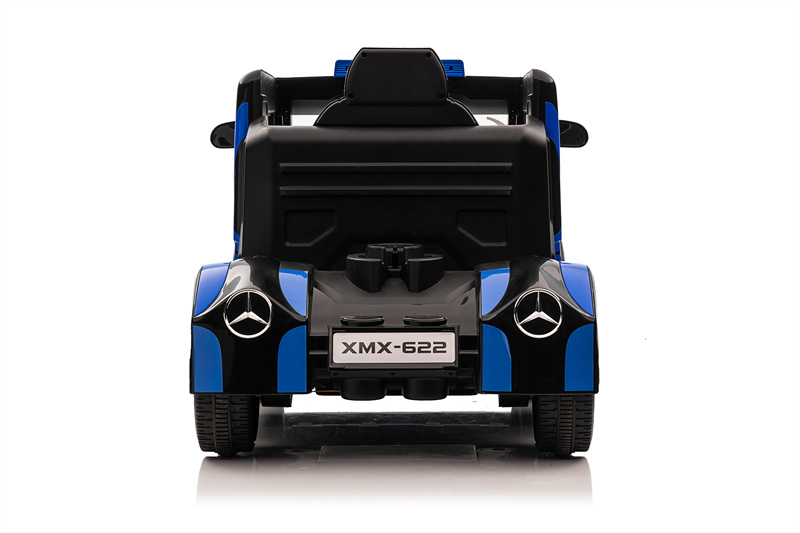
Parents often face a tough choice when shopping for a toy vehicle. You must distinguish between a premium, officially licensed Mercedes Benz Ride on car and generic, unverified alternatives. The market is flooded with knock-offs. These imitation models often promise luxury but ultimately deliver disappointment.
Licensed models definitely carry a premium upfront price tag. However, this cost translates directly to stringent manufacturing standards. It ensures rigorous safety protocols and robust durability baselines mandated by Mercedes-Benz. Ignoring these critical distinctions often leads to broken steering components, rapid battery failure, and unsafe driving conditions.
This article provides a comprehensive, feature-by-feature evaluation framework. You will learn how to align specific licensed details with your child's age, safety requirements, and intended driving terrain. By the end, you can confidently invest in a model offering genuine value, verifiable safety, and lasting joy for your young driver.
Key Takeaways
Official licensing is not just cosmetic; it dictates structural integrity, safety compliance, and material quality approved by Mercedes-Benz.
Voltage determines capability: 12V is the baseline for flat surfaces, while 24V systems are strictly required for uneven terrain or heavier payloads.
Parental override remotes and soft-start braking are non-negotiable safety features for younger drivers.
Material upgrades (EVA rubber wheels, stitched leather seating) directly correlate with the vehicle's lifespan and residual value.
How Official Licensing Impacts Manufacturing and Safety Standards
The Compliance Audit
The term "officially licensed" represents much more than a simple brand sticker. It means the toy factory must adhere strictly to Mercedes-Benz’s proprietary design and safety audits. Automotive brands protect their reputation fiercely. They require toy manufacturers to pass rigorous quality control tests before applying the famous three-pointed star. This compliance audit actively filters out the cheap, brittle plastics commonly found in generic alternatives. It also eliminates the risk of faulty, exposed wiring. Toy engineers must prove their electrical systems meet international safety standards. If a model fails these stress tests, it cannot earn the official license.
Visual Authenticity vs. Functional Reality
A licensed vehicle seamlessly blends aesthetic appeal with functional safety. Unlicensed cars often mimic the shape of a vehicle but fail in the details. You can spot the differences easily when you evaluate the exterior and interior features.
Exterior Trims: Authentic models feature properly scaled badges. They replicate the actual grill design of the real-world counterpart. Furthermore, they include functional LED arrays. These headlights and taillights improve visibility during evening play.
Interior Accuracy: Step inside a licensed model, and you see a detailed dashboard layout. The startup engine sounds mimic the actual vehicle. Licensed steering wheel designs enhance the immersive driving experience. Most importantly, manufacturers achieve this without compromising ergonomics. The steering wheel remains perfectly sized for little hands.
Best Practice: Always look for the holographic licensing sticker on the packaging. This small detail confirms you are buying an authentic product.
Warranty and Parts Availability
Durability matters, but eventual wear and tear remains inevitable. Licensed vehicles generally benefit from highly standardized replacement parts. If your battery degrades after three years, finding a compatible replacement is straightforward. The same applies to chargers, switches, and wheels. Manufacturers of licensed toys establish clearer, more reliable customer support channels. Generic models often leave you stranded when a single proprietary part breaks. Investing in an official model guarantees better long-term support. It keeps the vehicle running smoothly across multiple childhoods.
Evaluating Power Output: Matching Voltage to Terrain and Age
6V vs. 12V Systems (The Baseline)
Selecting the correct battery voltage dictates the entire driving experience. A 6V system serves a very specific, limited purpose. It is strictly for indoor, flat-surface use. Toddlers benefit from its gentle pace, but they quickly outgrow it. We consider the 12V system the true baseline for most families. A 12V battery provides enough torque for paved driveways. It can easily handle sidewalks and short, dry grass. If you plan to let your child drive in a typical suburban backyard, 12V is your starting point.
The 24V Architecture (High-Performance)
Many environments demand more power. If your property includes hills, wet grass, or packed gravel, a 12V system will struggle. The motors will stall, and the child will feel frustrated. Here, a 24V architecture becomes absolutely necessary. This high-performance system delivers superior torque. It pushes through uneven terrain effortlessly. Furthermore, 24V setups accommodate older, heavier children without losing top speed. They ensure the vehicle remains engaging as your child grows.
Real-World Battery Limitations
Even the best batteries have physical limitations. You should maintain transparent expectations regarding runtimes. Typically, a fully charged battery lasts between one and two hours. This duration fluctuates based on the payload weight and the terrain difficulty. Driving uphill drains the battery much faster than cruising on a smooth sidewalk. Proper charging cycles are vital. You must prevent severe battery degradation.
Common Mistake: Never leave the battery plugged into the wall charger for days. Overcharging ruins the internal cells. Always unplug it once it reaches full capacity.
Voltage Capability Comparison Chart
Voltage System
Recommended Terrain
Target Age Group
Typical Top Speed
6V System
Indoors, flat concrete, hardwood floors
18 months – 3 years
2 – 3 mph
12V System
Driveways, sidewalks, short dry grass
3 – 5 years
3 – 4 mph
24V System
Hills, wet grass, gravel, trails
4 – 8+ years
4 – 6 mph
Parental Control and Core Safety Architecture
2.4Ghz Parental Remote Override
Safety remains the primary concern for any parent buying a ride-on toy. The 2.4Ghz parental remote override serves as a vital safety net. This remote operates on a secure, independent frequency. It will not suffer interference from nearby garage doors or Wi-Fi routers. You need to understand the mechanics of this remote. It actively overrides the in-car steering and pedal inputs in real-time. If your child steers toward a busy street, you press a button. The car stops immediately, and you take full directional control. This feature gives parents absolute peace of mind during outdoor play.
Soft-Start Technology
Lower-tier, single-speed models often suffer from a severe flaw. When the child presses the pedal, the car jerks forward violently. This whiplash effect scares toddlers and can cause minor neck strain. Premium licensed models utilize soft-start technology to eliminate this issue. The internal computer regulates the power delivery to the motors. It ensures gradual acceleration. When the child releases the pedal, the system initiates a smooth, controlled deceleration. Soft-start mechanics transform a jerky toy into a refined, comfortable vehicle. It mimics the braking feel of a real luxury automobile.
Harness Systems
Seatbelts vary widely across different models. Standard lap belts provide basic restraint. They work fine for slower 12V models driven on flat surfaces. However, as speeds increase, you need better protection. Upgraded 3-point or 5-point harnesses secure the child's shoulders and chest. We highly recommend a 5-point harness for younger toddlers. Their core muscles are still developing, and they need the extra stability. Older children driving 24V models over bumpy terrain also require these upgraded harnesses. Evaluate the harness style based closely on your child's age and the car's top speed.
Material Upgrades That Dictate Lifespan and Comfort
Traction and Suspension
The wheels take the most abuse during outdoor play. Standard generic cars use hollow plastic wheels. These tires are incredibly loud on pavement. They lack grip on wet grass and remain highly prone to cracking under pressure. By contrast, premium licensed models often feature EVA rubber tires. These wheels utilize a dense foam rubber compound. They roll quietly, provide excellent traction, and last significantly longer.
Furthermore, independent shock absorbers play a crucial role. They are not just for show. Shocks improve rider comfort by absorbing bumps and dips. They also provide structural protection for the axles. By dampening the impacts, the suspension prevents the internal gearboxes from shattering over rough terrain.
Seating Configuration
Comfort dictates how long your child will want to play. Hard molded plastic seats cause fatigue quickly. They offer no cushioning and can get uncomfortably hot in direct sunlight. Upgraded models feature padded, faux-leather seats. This material upgrade completely changes the driving experience. It feels plush, wipes clean easily, and adds an undeniable touch of luxury. When shopping, prioritize a stitched leather seat if you want maximum comfort.
Capacity Planning
You must read weight limits accurately before making a purchase. Do not just look at your child's current weight. You must factor in their growth rate. If a car has a maximum capacity of 66 lbs, and your child already weighs 55 lbs, they will outgrow it fast. Ensure a multi-year usage window by buying a model with a higher weight threshold. A larger capacity also reduces strain on the 12V or 24V motors, extending the lifespan of the entire drivetrain.
Selecting the Right Chassis: From Sedans to Heavy-Duty Trucks
Compact Models
Licensed models come in various shapes and sizes. Compact models, such as AMG Sedans and Roadsters, represent the classic sports car aesthetic. These cars sit low to the ground. They are exceptionally best for smooth surfaces like asphalt and concrete. Parents love them because they offer easy storage in tight garages. Due to their smaller cabin space, they are strictly ideal for younger, smaller drivers.
SUVs
If you need more space, look toward SUV variants, like the iconic G-Wagon replicas. SUVs feature a much larger footprint. They offer higher ground clearance, allowing them to navigate over small rocks and thick grass easily. Typically, these models provide wider seating arrangements. Many are designed as genuine two-seaters. This makes them perfect for siblings who want to ride together.
Heavy-Duty and Utility Models
Some children want a working vehicle rather than a luxury cruiser. Heavy-duty utility models fill this specific niche perfectly. Frame your evaluation around impressive machines like the 24V Mercedes Axor Ride On Truck. This specific form factor changes all the rules. It requires higher voltage to move its own bulk. Manufacturers install upgraded, heavy-duty gearboxes inside these trucks. They use reinforced steel chassis components to support significantly heavier payloads. If your child wants to haul toys, dirt, or navigate challenging multi-terrain environments, a utility truck is the ultimate choice. They offer unparalleled durability and a distinctly different style of imaginative play.
Conclusion
The "licensed" tag on a ride-on vehicle is much more than a simple brand flex. It serves as a strict benchmark for safety, quality control, and engineering excellence. When you choose an officially approved model, you protect your child while securing a better long-term investment.
To finalize your shortlisting logic, follow these actionable steps. First, prioritize your voltage based entirely on your local terrain. Second, ensure the vehicle includes a 2.4Ghz parental remote for emergency overrides. Finally, opt for EVA rubber tires and padded seats if your budget allows. These upgrades drastically improve comfort and vehicle lifespan. Take these criteria, compare your favorite models, and confidently select the perfect vehicle for your young driver.
FAQ
Q: How can I verify if a Mercedes Benz Ride on car is officially licensed?
A: Look for official holographic stickers on the exterior packaging. Authentic models feature accurate, scaled logos on the steering wheel, grill, and rear trunk. Furthermore, you will find explicit licensing wording printed on the front of the product manual. Generic brands legally cannot use these exact trademarked names or emblems.
Q: Is a 24V battery actually faster than a 12V?
A: A 24V battery primarily offers more torque and sustained power over uneven terrain. While it can support a higher top speed, that speed is often electronically governed for safety. It maintains a steady 4-6 mph even when driving uphill, whereas a 12V system will slow down under heavy loads.
Q: Can the parental remote be used if the child is steering?
A: Yes, it can. The parental remote maintains ultimate override priority. If the child steers left, you can press the remote to steer right or apply the emergency brake. The remote signal instantly cuts the child's input, ensuring you always have complete control over the vehicle's movements.
Q: How difficult is the assembly process for licensed models?
A: Assembly is generally straightforward. You should expect a realistic timeframe of 30 to 45 minutes. The main body arrives pre-assembled. You will only need basic hand tools, like a screwdriver, to attach the wheels, secure the steering column, and connect the battery terminals.