Buying a miniature toy vehicle often brings immediate joy to a child. However, this excitement quickly turns into frustration when parents misjudge the physical size of the toy. Underestimating space requirements remains the leading cause of post-purchase buyer's remorse. Furthermore, this miscalculation frequently causes premature battery degradation due to improper and exposed storage conditions.
We must define this spatial challenge in two distinct dimensions. First, consider the active play area. This includes turning radius limitations and terrain compatibility. Second, you must evaluate the inactive footprint. This covers daily storage solutions and charging logistics inside your home or garage.
Our ultimate goal is to provide a highly realistic, measurement-based framework. You will learn exactly how to map your available real estate. By following these guidelines, you can perfectly match your physical environment with the correct vehicle class before spending your money.
Key Takeaways
Footprint Baseline: A standard 12V single-seater requires about the same floor space as a large coffee table; a 24V two-seater is comparable to a standard riding lawnmower.
Indoor vs. Outdoor: Indoor use demands a minimum 5-foot hallway width for three-point turns; outdoor use requires at least 200 square feet of flat, unobstructed terrain.
Storage Reality: Ride on car storage cannot be purely outdoors; temperature-controlled spaces are mandatory to prevent lead-acid/lithium battery failure.
The Turning Radius Rule: Always double the vehicle’s length to calculate the absolute minimum space required for comfortable steering.
Standard Ride On Car Dimensions: Establishing Your Baseline
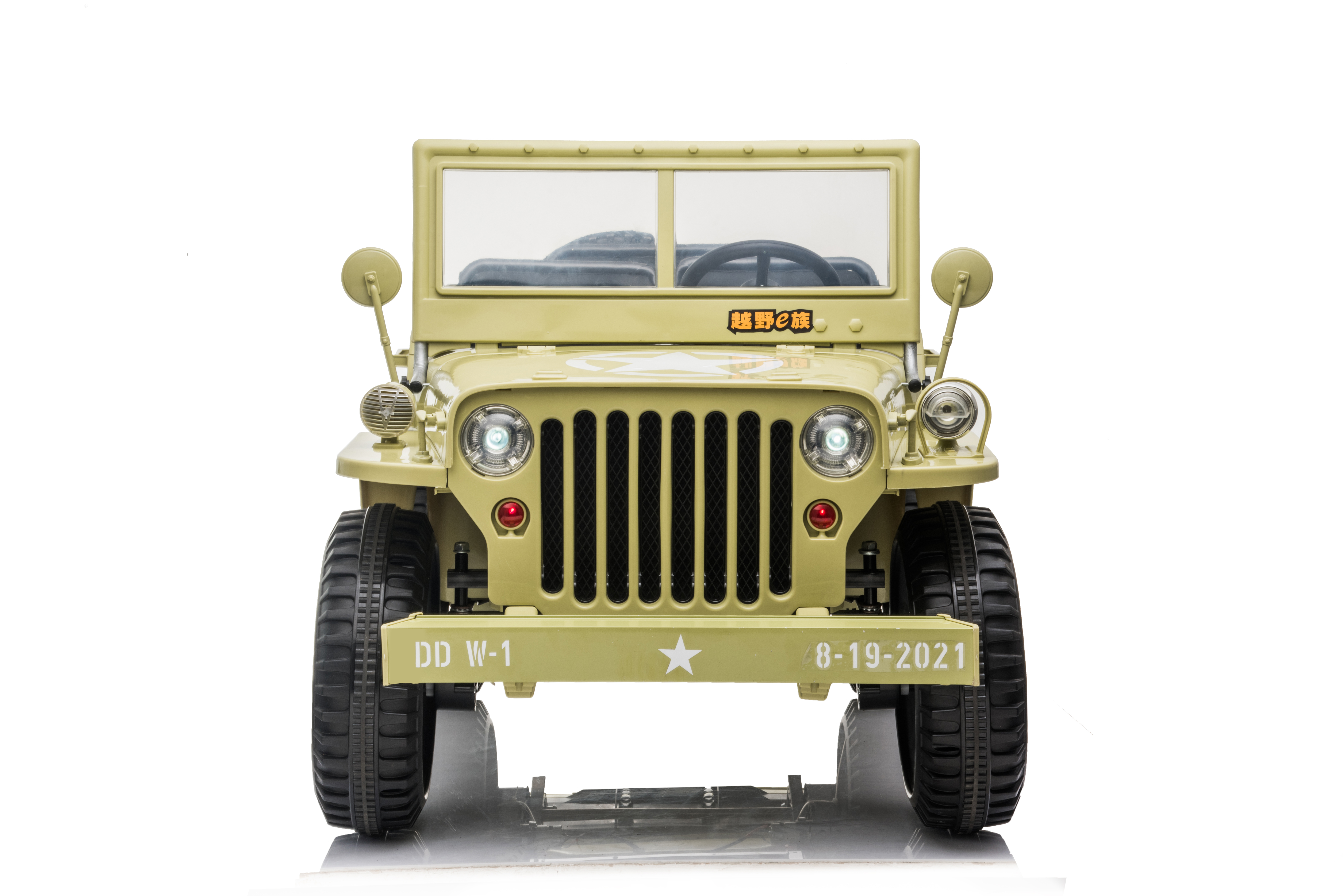
Buyers often gauge vehicle size by looking at product photos online. These isolated images completely lack spatial context. A beautifully photographed toy might look compact on your screen. In reality, it might block your entire hallway. Understanding accurate ride on car dimensions dictates both your daily storage capacity and the toy's overall usability.
Category 1: 6V to 12V Single-Seaters
This category generally targets toddlers and early years. These compact models prioritize tight maneuverability. Their typical footprint ranges from 35 to 45 inches in length. They usually span 20 to 25 inches in width. Because of their modest size, they fit easily onto apartment patios. They also excel when acting as an indoor ride on car during rainy seasons. You can tuck them into bedroom corners or small closets easily.
Category 2: 12V to 24V Two-Seaters
These larger models serve older kids and siblings. Their typical footprint jumps significantly to 48–55 inches in length. They also widen out to 30–35 inches. You must heed a serious warning here. A standard two-seater ride on car often requires double doors for indoor transit. It will absolutely not fit through standard 28-inch interior residential doors. Many parents discover this fact only after assembling the toy inside the living room.
Weight as a Spatial Constraint
Dimensions are not the only physical barrier. Weight plays a massive role in spatial planning. Heavier 24V models often weigh over 60 pounds. You cannot easily carry them up narrow apartment stairs. You will also struggle to lift them over large door thresholds. If you cannot roll the vehicle into its designated parking spot, you will quickly stop using it.
Active Play Zones: Indoor vs. Backyard Space for Kids
Purchasing the toy requires evaluating where the child will actually drive it. You must analyze the play surfaces carefully.
Evaluation Dimensions for Indoor Use
Indoor environments introduce unique mechanical challenges. We must look closely at floor surfaces. Hardwood floors and smooth tile often allow hard plastic wheels to slip. This slipping reduces control and frustrates the driver. Conversely, low-pile carpet provides excellent grip. However, carpet creates high friction. This friction forces the motor to work harder and drains the battery much faster.
Clearance is another major factor. You require a minimum 5 to 6-foot wide clearing for smooth indoor navigation. Narrow hallways force kids to make endless three-point turns. Without adequate space, bumpers will repeatedly scrape and damage your baseboards or drywall.
Evaluation Dimensions for Outdoor Use
Outdoor driving provides freedom, provided you have adequate real estate. We recommend securing sufficient backyard space for kids before buying a larger model. You need a minimum of 15x15 feet of continuous, obstacle-free space. This equals 225 square feet. Anything less turns the driving experience into a repetitive, frustrating loop.
Terrain compatibility also dictates your vehicle choice. Standard 12V motors perform beautifully on flat pavement. They handle very short, dry grass adequately. However, they bog down quickly on uneven terrain. You need powerful 24V motors to conquer inclines, thick grass, or muddy backyard paths.
Ride On Car Storage and Charging Logistics
Proper storage involves much more than simply finding empty floor space. It requires strict compliance checks for battery preservation and fire safety. Leaving a toy outside to face the elements guarantees a short lifespan. Reliable ride on car storage demands climate control.
Apartment and Small Home Storage
Small homes require creative scaling, but you face strict physical limits. Many buyers try vertical storage to save room. Unfortunately, you generally cannot store these vehicles on their sides. Side storage stresses the plastic body panels. It also risks battery fluid leaks in older lead-acid models.
Balcony storage presents another massive risk. Many apartment dwellers leave the toy on an open balcony. Exposure to morning dew, heavy rain, and extreme temperature swings destroys batteries rapidly. Moisture corrodes wiring harnesses. Extreme heat warps plastic tires. These environmental damages instantly void manufacturer warranties.
Garage and Shed Best Practices
If you own a house, the garage or garden shed offers the best storage solution. Follow these proven best practices to protect your investment:
Allocate a Parking Pad: Tape off a dedicated 4x3 foot space on your garage floor. Keep this area clear of other tools.
Ensure Proximity to Power: Position this pad within three feet of a grounded electrical outlet. You do not want trip hazards from long extension cords.
Elevate the Vehicle: Place a rubber mat under the toy. This prevents cold concrete from sapping the battery voltage overnight.
Execute Proper Winterization: Batteries hate freezing temperatures. If your garage drops below 32°F, you must remove the battery. Store it indoors between 50°F and 75°F. Maintain a monthly charge cycle throughout winter.
Implementation Risks: What Buyers Routinely Overlook
Even meticulous planners sometimes miss hidden spatial traps. Understanding these common pitfalls prevents serious headaches later.
The "Turning Radius" Trap
Many parents measure the vehicle's length and assume it fits their patio perfectly. They forget the physics of steering. A vehicle measuring 4 feet long requires at least 8 feet of depth to execute a continuous circle. Steering angles limit how sharply the car can pivot. Avoid assuming a small concrete patio is sufficient for active play. The child will constantly hit the perimeter fence.
Doorway Bottlenecks
Getting the toy from the garage to the backyard often involves passing through gates or doors. Standard exterior residential doors range from 32 to 36 inches wide. Many modern UTV-style vehicles feature aggressively wide wheelbases. They easily exceed 34 inches. They will get stuck in the doorframe. Always measure the narrowest pinch-point between your planned storage area and the designated play zone.
The Up-Sizing Fallacy
Parents love buying clothes a size up so children can grow into them. Applying this logic to a ride on car usually backfires. Buying a massive 24V truck for a small suburban yard results in an unusable toy. The child will lack the necessary maneuvering space. The vehicle will become an expensive, immovable yard ornament. Always buy the vehicle size matching your current terrain, not your child's future height.
The Decision Framework: Shortlisting the Right Vehicle
You now understand footprint baselines, turning radiuses, and storage mandates. It is time to apply this data. Use the following framework to shortlist the perfect vehicle for your specific living situation.
For Apartment and Condo Residents: Limit your search strictly to 6V or compact 12V single-seaters. These models navigate tight corners easily. Prioritize vehicles featuring quick-release batteries. This feature allows you to leave the car in a shared parking space while charging the battery safely inside your apartment.
For Townhomes and Small Yards: Target standard 12V single-seaters. They offer enough speed for fun but remain compact enough for narrow fence gates. Ensure you have a dedicated garage corner or a weather-proof, insulated shed for proper overnight storage.
For Large Properties and Detached Garages: You have the freedom to scale up. It is safe to evaluate a massive 24V two-seater equipped with off-road tires. Your expansive lawn provides adequate turning depth. Your detached garage easily accommodates the bulky inactive footprint.
Next Step Action: Grab a measuring tape right now. Measure your primary exterior doorway width. Next, measure your intended indoor storage footprint. Complete these two physical steps before opening any product page online.
Conclusion
The physical footprint of a miniature vehicle is only half the spatial equation. Real-world space requirements heavily depend on turning clearance, terrain types, and climate-controlled storage access. Ignoring these factors leads to damaged baseboards, ruined batteries, and frustrated children.
Always measure your doorways to avoid unexpected bottlenecks. Ensure your chosen play area offers double the vehicle's length for safe turning. Most importantly, commit to a dedicated, temperature-safe parking spot near an electrical outlet.
You are now equipped with accurate measurements and realistic storage plans. Take the next step confidently. Browse compact 12V models for your apartment, or explore expansive 24V dual-seaters for your large backyard property. Make your purchase based on hard data, not just flashy product photos.
FAQ
Q: Can you store a ride-on car outside?
A: We strongly advise against permanent outdoor storage. High-quality covers do protect the plastic body against rain and UV rays. However, covers do not insulate against temperature extremes. Freezing cold or blistering heat will rapidly degrade lead-acid and lithium batteries, leading to premature failure.
Q: Will a two-seater ride-on car fit in my car's trunk?
A: Standard sedans rarely accommodate two-seater models. Most two-seaters exceed 48 inches in length and 30 inches in width. These dimensions surpass typical sedan trunk openings. You typically require an SUV with folded rear seats, a minivan, or a pickup truck for safe transport.
Q: Can an indoor ride-on car scratch hardwood floors?
A: Yes, hard plastic tires can scuff or scratch delicate hardwood finishes. Dirt trapped in plastic treads exacerbates floor damage. To protect your floors, select models equipped with EVA rubber tires. Alternatively, you can modify plastic wheels by adding aftermarket rubber traction bands.