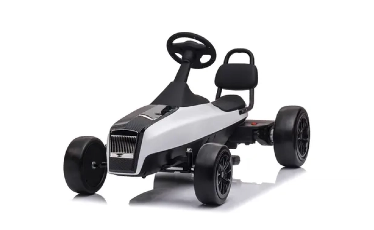
The moment you decide to surprise your child with their very first electric vehicle is thrilling. Amidst the excitement of choosing colors and body styles, parents face a critical mechanical dilemma. You must select the right drivetrain. Understanding the exact nuances of a 4WD vs 2WD ride on car fundamentally transforms how the toy performs in real-world scenarios. It dictates where the vehicle can roam, how it handles inclines, and how long the battery actually lasts.
In this engineering-focused guide, we break down the core differences in traction, torque, and overall driving dynamics. We will empower you to make a smart, informed decision tailored perfectly to your family's backyard environment.
Key Takeaways
Terrain Dictates the Drivetrain: Two-wheel drive models are engineered specifically for flat, paved surfaces and indoor environments. Four-wheel drive is an absolute necessity for navigating uneven terrain, thick grass, loose gravel, and steep hills without stalling.
Torque Over Speed: 4WD ride-on cars utilize four independent electric motors. This setup offers superior rotational force and climbing ability compared to the standard two-motor setup found in a 2WD car.
The Battery Trade-Off: 4WD vehicles distribute power to four separate motors simultaneously. They require larger battery capacities and may exhibit shorter run times compared to highly efficient 12V 2WD models.
Cost vs. Capability: 2WD cars are budget-friendly with simpler mechanics. Meanwhile, 4WD models represent a higher upfront investment but deliver unmatched versatility, higher payload capacities, and true off-road performance.
Understanding the Basics: Mechanical Differences
Before diving into complex performance metrics, you need to grasp the mechanical foundation of these miniature vehicles. The drivetrain essentially dictates how electrical energy from the battery translates into physical motion on the ground.
How a 2-Wheel Drive Kids Car Works
In a standard two-wheel drive setup, electrical power is directed exclusively to two wheels. In children's toys, these are almost universally the rear wheels. The mechanical architecture typically involves two independent DC electric motors—usually rated between 35W and 45W each—attached directly to the rear axle gearboxes.
When your little driver presses the accelerator pedal, the PWM motor controller signals the battery to send voltage exclusively to these rear motors. This configuration remains the industry standard for most entry-level 12V ride-on cars. The system is highly efficient because there are only two gearboxes drawing current. It requires less complex wiring, places minimal strain on the battery, and keeps the overall vehicle weight low. Picture your child cruising smoothly down a sunlit suburban sidewalk. This is the exact scenario where a 2WD setup shines.
How a 4-Wheel Drive Kids Car Works
Conversely, a four-wheel drive ride-on car operates on a much more robust mechanical principle. Power is distributed equally to all four wheels simultaneously. To achieve this synchronized pulling power, the vehicle utilizes four separate motors and gearboxes, dedicating one to each wheel hub.
You will typically find these heavy-duty 4WD systems in premium UTV-style ride-ons and large off-road buggies. Four motors demand double the electrical current. To handle this massive load without overheating, manufacturers pair these vehicles with heavy-duty motherboards and high-capacity power systems.
Traction and Terrain: Where Will Your Child Drive?
The single most critical factor in choosing between these drivetrains is the physical landscape of your property. Traction refers to the physical grip the tires maintain on the ground. Your drivetrain selection directly impacts this essential grip.
2WD for Pavement and Flat Surfaces
A 2WD ride-on car excels on concrete, asphalt, smooth driveways, and very short, dry grass. On these high-friction surfaces, the rear motors possess plenty of grip to push the car forward without the wheels slipping. The lightweight nature of a 2WD car actually becomes a distinct advantage here, allowing for nimble steering and highly efficient cruising.
However, 2WD models quickly reveal their limitations when the terrain degrades. On wet grass, loose dirt, or mud, the rear wheels frequently lose traction. There is no active power going to the front wheels to help pull the car out of a slippery spot. Consequently, a 2WD car will often experience frustrating wheel spin, leaving the child stuck in place.
4WD for Off-Road and Uneven Grass
This is precisely where the 4WD system proves its engineering value. A 4WD ride-on car is intentionally designed to prevent getting bogged down in challenging environments. The physics of traction dictate that if one or two wheels lose grip in a patch of mud, the remaining powered wheels will continue to rotate. They actively pull and push the vehicle forward.
Recent market data reveals a massive shift in consumer behavior regarding ride-on toys. Over the past few years, demand for all-terrain, high-voltage ride-on vehicles has surged dramatically. Families are moving away from purely pavement-bound toys, prioritizing outdoor recreation and backyard adventures. Manufacturers are responding to this trend by integrating robust four-wheel-drive architectures, upgraded gear ratios, and multi-link suspension systems into their flagship models. If you live on a farm property, in a hilly neighborhood, or have an expansive yard with uneven grass, a 4WD vehicle is practically mandatory.
The Role of Tire Material
Traction is not solely determined by the drivetrain. The material of the wheels plays a massive role in performance. Standard hard plastic tires offer very little natural grip. In contrast, premium vehicles often utilize EVA rubber tires. These upgraded tires provide a significantly higher coefficient of friction. When you pair a 4WD system with premium rubber tires, you achieve maximum grip, allowing the toy to conquer backyard obstacles with ease.
Power, Speed, and Driving Dynamics
A common misconception among parents is that adding more motors automatically equates to a faster top speed. In the realm of children's electric vehicles, performance is measured by pulling power rather than sheer velocity.
Torque and Hill Climbing
Top speed is primarily determined by the voltage of the battery and the RPM rating of the motors. Torque, however, is the rotational force that determines how well the car can pull a heavy load from a dead stop. A 4WD system provides significantly more torque.
Specifically, when a 2WD car approaches a steep incline, the two rear motors may lack the torque necessary to push the vehicle's weight up the hill. This can cause the motors to stall or the gearboxes to strip. A 4WD car distributes this heavy workload across four motors. This balanced distribution allows the vehicle to carry heavier payloads smoothly without overloading the electrical system.
Handling and Weight Distribution
Driving dynamics differ significantly between the two setups. A 4WD vehicle generally offers smoother, more steady acceleration. All four wheels engage the ground at the exact same time, pulling the car forward confidently. A 2WD car can sometimes exhibit a jerky start on slick surfaces, as the rear wheels might spin briefly before finally catching traction.
Furthermore, 4WD cars are inherently heavier due to the extra gearboxes and larger batteries. This added mass lowers the vehicle's center of gravity. It makes the toy feel more grounded, stable, and less prone to tipping over when navigating rugged terrain.
Core Comparison: 2WD vs 4WD
Feature
2WD Ride-On Cars
4WD Ride-On Cars
Ideal Terrain
Concrete, asphalt, indoors, flat dry grass
Thick grass, mud, gravel, steep hills, trails
Motor Setup
2 rear motors, typically 35W-45W each
4 independent motors, up to 200W each on premium models
Typical Battery
12V 7Ah (High efficiency)
24V 7Ah or 9Ah (High output)
Weight Capacity
Usually up to 66 lbs
Often supports 110 lbs to 200+ lbs
Price Range
$150 - $300
$350 - $800+
Battery Life and Voltage Systems
Powering four independent motors requires a substantial electrical reserve. You must carefully weigh the trade-offs between aggressive off-road capability and overall battery endurance.
12V vs. 24V Architecture
The vast majority of 2WD cars run highly efficiently on standard 12V batteries. Twelve volts provide ample energy to run two motors, an onboard radio, and LED headlights without draining the power cell too rapidly.
Conversely, a true 4WD ride-on car requires robust 24V battery systems to function effectively. If a manufacturer attempts to power four motors on a standard 12V battery, the amp draw becomes overwhelmingly high. This results in sluggish performance and a battery that dies in a matter of minutes. Upgrading to a 24V architecture ensures that all four motors receive adequate voltage to maintain high torque.
Run Time Expectations
When comparing average driving times, look closely at the Amp-hour rating of the battery. Even equipped with a larger 24V battery, a 4WD car might drain its power faster than a 12V 2WD car if driven aggressively. Pushing four motors through thick grass requires massive energy expenditure. On average, a well-maintained 2WD car on flat pavement might run for 90 to 120 minutes. Meanwhile, a 4WD car tackling rugged terrain may deplete its battery in 45 to 90 minutes.
Safety, Stability, and Multi-Passenger Use
When purchasing a motorized vehicle for a child, safety remains the paramount concern. The differing power dynamics of 2WD and 4WD systems require careful consideration based on the child's age.
The 2WD/4WD Toggle Switch
Parents often worry that a 4WD vehicle will be too aggressive for a younger toddler to safely control. Manufacturers have engineered a clever solution for this. Many premium 4WD models come equipped with a dashboard switch that allows users to toggle between 2WD and 4WD modes. This enables you to restrict the car to a gentler 2WD mode while the child is still mastering steering. You can reserve the full 4WD power for when they grow older and more confident.
Parental Remote Control Features
Regardless of the chosen drivetrain, parental peace of mind is preserved through remote control technology. Both setups typically include 2.4GHz parental remote controls, allowing adults to override the steering and speed instantly.
Interestingly, 4WD vehicles respond much better to remote steering in outdoor environments. Imagine the frustration of navigating a 2WD car remotely into a patch of thick mud, only for it to get stuck. A 4WD car, with its superior traction, will easily power through the obstacle under your remote guidance.
Weight Capacity and 2-Seater Models
For families with multiple children, the drivetrain is a critical specification. 4WD is almost always the superior choice for 2-seater ride-on cars. The combined weight of two children places a heavy burden on the vehicle's mechanics. Two rear motors may struggle to move that payload efficiently. Four motors ensure that the vehicle has the necessary force to carry multiple passengers without overheating the wiring harness.
Actionable Buying Guide: Making the Right Choice
Selecting the perfect ride-on car requires analyzing your specific living situation. Follow these practical engineering standards to ensure you make the best choice.
Step 1: Audit Your Terrain Walk around the areas where your child will drive. If they are restricted to a concrete driveway or a paved cul-de-sac, a 2WD ride-on car is perfectly adequate. If you have a backyard with grass taller than two inches, loose gravel, or steep inclines, a 4WD model is absolutely essential.
Step 2: Calculate the Payload Age and physical weight play a massive role in vehicle performance. For a lightweight toddler under 50 lbs, a 12V 2WD car provides gentle acceleration. If you are buying for an older child, or if you have two children riding together exceeding 80 lbs, you must upgrade. A 4WD 24V system generates the necessary torque to move heavier payloads without stripping the plastic gears.
Step 3: Evaluate Long-Term Value While a 2WD car is cheaper today, you might find yourself needing to buy a larger, more powerful car in two years as your child grows. Investing in a robust 4WD model with a high weight capacity ensures the toy remains usable and highly entertaining for several more years.
Conclusion
Ultimately, the battle of the drivetrains comes down to terrain, payload, and long-term power needs. We highly recommend a 2WD model for city dwellers with paved driveways and younger toddlers. It saves money and offers excellent battery efficiency. In contrast, a 4WD vehicle is the undeniable champion for families with large grassy yards, uneven terrain, or multiple children. Evaluate your backyard, consider your little driver's ambitions, and choose the drivetrain that will deliver years of uninterrupted outdoor adventures.
Ready to find the perfect vehicle for your child? Explore the ultimate collection of premium, high-performance models at Big Ride On Cars and bring the thrill of off-road driving straight to your backyard today.
Frequently Asked Questions
Can I upgrade a 2WD ride-on car to a 4WD?
While technically possible for dedicated DIY engineers, upgrading a 2WD car to 4WD is highly complicated and generally not recommended. It requires purchasing two additional front gearboxes, modifying the front axle to accommodate them, and completely overhauling the wiring harness. More importantly, a standard 12V motherboard is not designed to handle the massive amp draw of four motors and will likely burn out. It is far more cost-effective to purchase a purpose-built 4WD car from the start.
Does a 4WD ride-on car go faster than a 2WD?
Not necessarily. The top speed of an electric ride-on toy is determined by the battery voltage and the RPM rating of the motors, rather than how many wheels are actively driving the car. A 12V 2WD car and a 12V 4WD car might both share a top speed of 4 mph. However, 4WD provides superior torque. While a 2WD car will slow down significantly when driving uphill, a 4WD car maintains its top speed much better under heavy loads.
Which is better for driving on thick grass: 2WD or 4WD?
4WD is significantly better for navigating thick grass. Grass creates a very high level of rolling resistance. When a 2WD car enters thick grass, the unpowered front wheels act as dead weight, pushing against the turf while the rear wheels lose traction and spin. A 4WD car solves this physics problem by actively powering the front wheels, allowing them to pull the vehicle over the grass while the rear wheels push.
Do 4WD ride-on cars have a switch to change to 2WD?
Yes, many modern premium 4WD ride-on cars feature a convenient dashboard switch that allows kids to toggle between two-wheel drive and four-wheel drive. When switched to 2WD, the electrical current to the front motors is cut off, allowing them to spin freely. This is ideal for driving on smooth pavement because it conserves battery power.
How long does the battery last on a 4WD kids car?
Depending on the battery capacity and the terrain, most 4WD cars run for 45 to 90 minutes per charge. Because 4WD cars supply electricity to four separate motors simultaneously, they draw power much faster than a 2WD car. Driving continuously in 4WD mode on rough terrain or steep hills will deplete the battery on the faster end of that spectrum.
Are 4WD ride-on cars safe for 3-year-olds?
Yes, they are highly safe for younger children when utilized correctly. Most premium 4WD models include a 2.4GHz parental remote control, allowing adults to completely override the vehicle's steering and speed. Additionally, parents can use the 2WD/4WD toggle switch to lower the vehicle's torque, providing a gentler, smoother ride for toddlers just learning to drive.
How much weight can a 24V 4WD ride-on car hold?
A true 24V 4WD ride-on car is built with a reinforced steel frame and heavy-duty suspension, allowing it to hold significantly more weight than standard models. While basic 12V cars max out around 66 lbs, a premium 24V 4WD model can typically support payloads ranging from 110 lbs to over 200 lbs, easily accommodating two older children simultaneously.