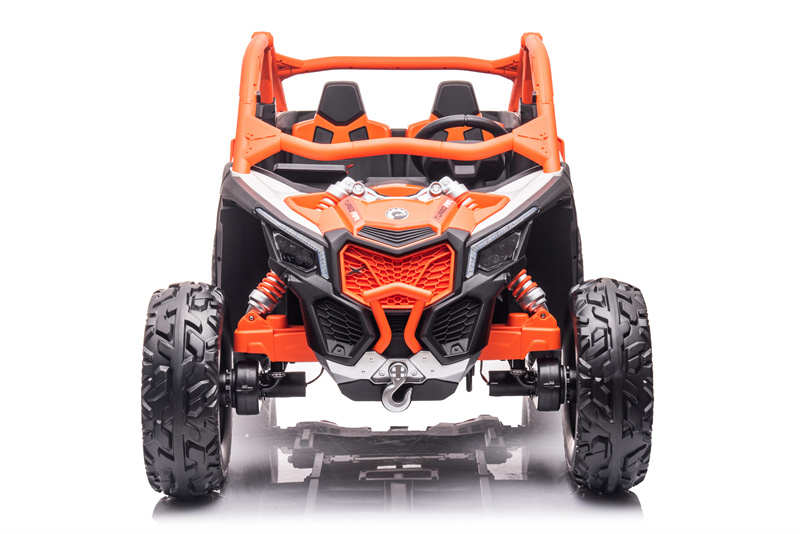
Purchasing a motorized toy often forces parents into a stressful guessing game. Buying a vehicle too small limits its usability almost instantly. Conversely, selecting one too large creates immediate and severe safety hazards. Sizing a ride on car goes far beyond a child’s physical height. You must align their motor skills and cognitive development against the vehicle's voltage, top speed, and control mechanisms. Many buyers overlook how aggressive torque or inadequate pedal reach affects a young driver's confidence.
We provide an evidence-based evaluation framework to simplify your decision. You will learn how to accurately match the proper vehicle class to specific ages, weight limits, and developmental stages. We explore why specific steering mechanisms suit toddlers better than others. We also highlight the hidden dangers of buying oversized models. This guide empowers you to make a secure choice. You will confidently encourage outdoor play without compromising daily safety.
Key Takeaways
Ages 1–3 (Up to 30kg): Require 6V systems (under 3 mph) with mandatory Parental Remote Control and 5-point harnesses.
Ages 3–6 (Up to 60kg): The ideal window for a standard 12V electric car for kids, balancing independent steering with moderate speeds (3–5 mph).
Ages 6+ (Up to 120kg+): Require 24V–36V systems, metal chassis construction, and advanced suspension for heavier weights and outdoor terrain.
Safety Reality: Never "buy a size up" to maximize lifespan; mismatched vehicle scale significantly alters the center of gravity and rollover risk.
The Core Framework: Matching Age, Voltage, and Weight Capacities
Selecting the correct vehicle requires understanding the underlying power system. Manufacturers categorize these toys by battery voltage. The voltage directly dictates the motor's top speed, torque, and weight capacity. You must view voltage as a developmental phase rather than just a speed limit.
6V Systems (Ages 1–3): Engineers design these systems for introductory, flat-surface use. They reach a maximum speed of 2 to 3 mph. This matches a slow walking pace. These models focus heavily on simple push-pedal operation. They prioritize parental override capabilities. The low power output prevents sudden jerks. This keeps easily startled toddlers calm during their first driving experiences.
12V Systems (Ages 3–6): This tier represents the industry standard for an electric car for kids. Vehicles in this class achieve maximum speeds around 5 mph. They introduce dual-motor setups. This provides enough torque to handle mild inclines and short grass. Children at this stage learn forward and reverse gearing. They develop spatial awareness by navigating backyard obstacles.
24V to 36V Systems (Ages 6–10+): These models form the high-performance tier. Speeds range broadly from 7 to 15+ mph. Manufacturers build them specifically for older children. Drivers need fully developed reaction times. These vehicles feature robust construction. They require higher weight limits, often supporting up to 120kg. This accommodates rapid growth spurts during pre-teen years.
You must adopt a strict evaluation metric. Always evaluate both the manufacturer’s recommended age and the maximum weight capacity. Age dictates the cognitive capability needed for the controls. Weight capacity dictates the physical strain placed on the motor.
Summary Comparison Chart
Voltage System
Target Age Group
Max Speed (mph)
Weight Capacity
Ideal Terrain
6V
1 - 3 Years
2 - 3
Up to 30kg (66 lbs)
Indoors, Pavement
12V
3 - 6 Years
3 - 5
Up to 60kg (132 lbs)
Pavement, Short Grass
24V - 36V
6 - 10+ Years
7 - 15+
Up to 120kg (264 lbs)
Uneven Terrain, Gravel
Common Mistake: Many buyers purchase a 12V model for a heavy two-year-old. The child might meet the weight requirement. However, they lack the cognitive ability to steer away from hazards. Always align both metrics simultaneously.
Developmental Milestones: Evaluating Steering and Control Types
Children develop motor skills at predictable rates. The vehicle's control layout must match their current physical coordination. A mismatch frustrates the child. It also increases collision risks significantly.
Handlebars vs. Steering Wheels (Ages 1-2): Toddlers excel at gross motor movements. They push and pull objects using their whole arms. Quad or ATV styles utilize motorcycle-style handlebars. These feel cognitively easier for toddlers to master. Traditional steering wheels require fine motor skills. The hand-over-hand rotation often confuses a two-year-old. They tend to turn the wheel slightly and freeze. Handlebars provide direct, intuitive feedback.
The Role of Parental Remote Control (Ages 1-3): Remote capabilities are absolutely essential for children under three. Young toddlers lack pedal discipline. They do not understand braking distances. A 2.4GHz parental remote allows the child to sit comfortably. They adapt to the physical sensation of moving. You control the steering and braking completely. This builds their confidence before they take manual control.
Cooperative Play Transition (Ages 3+): Around age three, children shift developmental phases. They move from parallel play into cooperative play. They want to interact directly with peers. Two-seater models become highly viable at this stage. You must evaluate the cabin width carefully. Verify the presence of dual-seatbelt configurations. This ensures safe passenger transport. It also encourages social sharing and role-playing games.
Best Practice: When testing a steering wheel, check its turning radius. High-quality models restrict the wheel from spinning a full 360 degrees. This prevents the internal steering column from snapping if the child turns it too aggressively.
The Safety Trap: Why You Shouldn't "Buy Big to Grow Into It"
Parents naturally want to maximize their investment. They often purchase oversized clothing so a child can grow into it. Applying this logic to motorized vehicles creates catastrophic safety failures. You should never buy a size up.
Center of Gravity Risks: Vehicle engineers calculate a precise center of gravity based on an average occupant. A three-year-old sitting in a vehicle scaled for an eight-year-old sits far too low. Their light weight fails to compress the suspension properly. This alters the vehicle's center of gravity. It drastically increases tipping hazards during sudden lateral turns.
Pedal Reach and Posture: Children must reach the pedal while sitting fully against the backrest. Inadequate reach forces them to slide to the seat edge. This renders the safety harnesses completely ineffective. If the vehicle stops suddenly, the child lacks upper body restraint. The risk of whiplash or facial impact multiplies.
Speed Overwhelm: Putting a toddler in a 24V vehicle risks severe developmental fear. Larger motors produce an aggressive torque curve. Even if you engage a low-speed setting, the initial acceleration feels violent. Tiny bodies absorb this shock poorly. This physical jolt creates psychological fear. The child often refuses to ride the toy again.
Buy the vehicle for your child's exact size today. The safety benefits far outweigh the cost of upgrading a few years later.
Hardware Quality Indicators for a Safe Ride On Car
Physical size and voltage only tell part of the story. You must inspect the structural components. Cheaply manufactured toys compromise on hidden materials. We recommend evaluating these four mandatory quality indicators.
Gradual Acceleration (Soft-Start Technology): This represents a mandatory evaluation criterion. Traditional motors send full power to the wheels instantly. This causes abrupt lurching. Soft-start technology uses internal modulators to ramp up power gradually. This prevents the neck strain caused when a child stomps the pedal.
Tire Material (EVA Rubber vs. Hard Plastic): Hard plastic tires dominate the budget market. They slip wildly on smooth surfaces. They lack any real shock absorption. Ethylene-Vinyl Acetate (EVA) rubber tires solve these issues. They provide necessary traction on damp concrete. They also offer crucial acoustic dampening, saving your ears during indoor play.
Chassis Integrity: Evaluate the frame construction closely. For 24V+ models intended for ages six and up, demand all-metal frames. Plastic frames degrade over time. UV exposure makes them brittle. They suffer from suspension failure under heavier weights. A tubular steel chassis absorbs impacts safely.
Compliance and Certification: Never purchase unverified electronics for children. Verify the presence of ASTM F963 or CPSIA safety certifications. These badges ensure the plastics contain non-toxic materials. They also verify proper electrical shielding. This prevents battery fires and short circuits.
Checking these four elements ensures you purchase a durable machine. It protects the rider from both physical impacts and electrical malfunctions.
Implementation Risks: Terrain, Maintenance, and Battery Lifespan
Ownership extends beyond the initial purchase. Where you drive matters just as much as what you drive. Environmental factors dictate the vehicle's lifespan.
Terrain Limitations: You must respect rolling resistance. 6V models belong strictly indoors or on smooth-paved surfaces. Driving them on thick grass forces the single motor to overwork. The wiring melts rapidly. Grass and mild off-roading require a minimum of 12V power. You also need spring suspension to prevent motor burnout across uneven dirt.
Battery Degradation Realities: Power systems require active management. Most toys use sealed lead-acid batteries. These batteries degrade permanently if left uncharged for months. Lithium options perform better but still require maintenance. Always assess the availability of OEM replacement batteries before purchasing. A vehicle becomes useless if you cannot source a replacement battery two years later.
Storage Requirements: Electric ride-on toys rarely feature waterproof designs. Rain destroys dashboard electronics. Moisture corrodes steering columns. We must outline the absolute necessity of indoor storage. Keep them in a dry garage. If indoor space runs short, you must purchase heavy-duty, waterproof covers. This prevents electrical shorts and stops frame rust before it starts.
Maintenance Best Practice: Teach older children to care for their vehicles. Have them wipe down the tires after outdoor use. Make plugging in the charger part of their post-play routine. This builds responsibility and extends battery life.
Conclusion
Choosing the right motorized toy requires honest assessment over wishful thinking. Base your final decision on the child’s current weight and their ability to follow steering logic. Never base it on their age a year from now.
Action-oriented next steps:
Select the appropriate voltage tier (6V, 12V, or 24V) based strictly on today's physical and cognitive capabilities.
Verify the inclusion of Soft-Start technology and EVA rubber tires to guarantee a smooth, safe ride.
Confirm the warranty period covers at least 90 days to protect against immediate electrical defects.
Establish a dry storage location and a consistent battery charging routine before assembling the vehicle.
FAQ
Q: Can a 9-month-old or 1-year-old use a ride-on car?
A: Yes, provided it is a 6V model equipped with a 5-point harness and a strict parental remote control system. The child must be able to sit up unassisted. Parents should only operate the vehicle on completely flat surfaces at the lowest possible speed.
Q: Can you limit the speed on a 12V electric car for kids?
A: Most 12V models feature a parental high/low-speed switch near the dashboard. For analog limitations, parents often install physical pedal blocks. Placing a dense foam block under the pedal physically limits the depression depth, capping the maximum speed effectively.
Q: Are there ride-on cars suitable for 10-year-olds?
A: Yes, but standard 12V toy cars are too small. Look for 24V, 36V, or petrol-powered go-karts and UTVs with weight capacities exceeding 120 lbs (54kg). These advanced models should always include features like remote kill switches and reinforced steel frames.